


Applied Spectroscopy Reviews
基本信息
期刊简写:
APPL SPECTROSC REV
影响因子:
5.4
ISSN:
0570-4928
研究领域:
CHEMICAL
h-index:
55
自引率:
11.1%
年发文量:
27
SCI收录来源:
Science Citation Index Expanded
期刊官网:
https://www.tandfonline.com/journals/laps20
期刊介绍:
Applied Spectroscopy Reviews (ASR) is an international and interdisciplinary journal that provides the latest information on the principles, methods, and applications of a number of diverse branches of spectroscopy, primarily from X-ray, infrared, Raman, atomic, mass, and NMR, luminescence/fluorescence, optical sensing, and microspectrometry. The journal presents discussions that relate physical concepts to chemical applications for chemists, physicists, biologists, and other scientists including clinicians and non-clinicians using spectroscopic techniques. Whilst ASR publishes papers on interdisciplinary fields, the journal has a strong focus on the following topics of medicinal disciplines and welcomes papers with the following keywords. Medical investigations of various disease processes Cancer research Analysis of clinical biofluids Microbiology; Understanding bacteria, viruses and biofilms Immunology studies Histopathology, Spectroscopy of fresh and fixed tissues Understanding chemical pathway to the progression of various diseases Pharmacokinetics; Drug delivery and drug development While the primary article type ASR publishes is reviews (both full and comprehensive reviews as well as mini-reviews), the journal will also consider very selected and unique experimental applications, particularly on the use of spectroscopy to solve problems such as diagnostic studies in basic sciences and medicine. In these cases, the results obtained and what they mean are more important than the method. Occasionally the journal will present special issues. The submitting author should establish their scientific credentials and qualifications to write a review. This can be achieved by providing evidence of recent experimental publications from the last three years in your cover letter. Otherwise, the review may be rejected. The review should be a critical review of referenced literature. Contact the Editor or Associate Editors for further information/clarification. Please note, a positive reply does not mean acceptance as all papers are subject to review.
CiteScore
CiteScore
13.8
SJR
0.868
SNIP
2.063
| 学科 | 排名 | 百分位 |
|---|---|---|
Physics and AstronomyInstrumentation |
5 / 141 | 96% |
期刊统计
Tri-annual
期/年
4 days avg. from submission to first decision
24 days avg. from submission to first post-review decision
审稿周期
论文处理费
投稿信息
投稿网址:
http://www.tandfonline.com/toc/laps20/current相关文献
Enhanced energy transfer efficiency and stability of europium β-diketonate complex in ionic liquid-based lyotropic liquid crystals
Sijing Yi, Jiao Wang, Xiao Chen
2015-07-13
Paper
DOI: 10.1039/C5CP03659C
Hydrogen-doping induced reduction in the phase transition temperature of VO2: a first-principles study
Yuanyuan Cui, Lanli Chen, Yanfeng Gao
2015-07-27
Paper
DOI: 10.1039/C5CP03267A
Conformational preferences of monohydrated clusters of imidazole derivatives revisited
Aditi Bhattacherjee, Sanjay Wategaonkar
2015-06-15
Paper
DOI: 10.1039/C5CP02422F
Molecular basis for competitive solvation of the Burkholderia cepacia lipase by sorbitol and urea
Ivan P. Oliveira, Leandro Martínez
2016-07-08
Paper
DOI: 10.1039/C6CP01789D
Light-induced water splitting by titanium-tetrahydroxide: a computational study
Andranik Kazaryan, Rutger van Santen, Evert Jan Baerends
2015-07-13
Paper
DOI: 10.1039/C5CP01812A
From underwear to non-equilibrium thermodynamics: physical chemistry informs the origin of life
Mattanjah S. de Vries
2016-07-08
Editorial
DOI: 10.1039/C6CP90169G
Experimental approach to the fundamental limit of the extinction coefficients of ultra-smooth and highly spherical gold nanoparticles
Dong-Kwan Kim, Yoon Jo Hwang, Cheolho Yoon, Hye-On Yoon, Ki Soo Chang, Gi-Ra Yi
2015-07-17
Paper
DOI: 10.1039/C5CP02968F
Complexes of a naphthalimide photoacid with organic bases, and their excited-state dynamics in polar aprotic organic solvents
Tatu Kumpulainen, Bert H. Bakker, Albert M. Brouwer
2015-07-17
Paper
DOI: 10.1039/C5CP02556G
An ultrafast spectroscopic and quantum mechanical investigation of multiple emissions in push–pull pyridinium derivatives bearing different electron donors
B. Carlotti, E. Benassi, A. Cesaretti, C. G. Fortuna, A. Spalletti, V. Barone, F. Elisei
2015-07-08
Paper
DOI: 10.1039/C5CP03207E
Electromagnetic interference shielding in 1–18 GHz frequency and electrical property correlations in poly(vinylidene fluoride)–multi-walled carbon nanotube composites
G. Sudheer Kumar, D. Vishnupriya, Anupama Joshi, Suwarna Datar, T. Umasankar Patro
2015-07-07
Paper
DOI: 10.1039/C5CP02585K
您可能还喜欢
化合物问答
4-[4-三氟甲基苯基]恶唑(CAS号:1126636-40-5)通常如何合成?
4-[4-三氟甲基苯基]恶唑通常通过将4-三氟甲基苯酚与异硫氰酸苯酯在有机溶剂中进行酯化反应合成。该反应可在无水条件下,使用适当的催化剂,如四丁基氢氧化铵,以提...
1126636-40-54-(4-(Trifluoromethy...
59729-32-71-[3-(Dimethylamino)...
化合物问答
RockPhos Pd G3(CAS号:2009020-38-4)通常如何合成?
RockPhos Pd G3 通常通过钯催化偶联反应合成,使用配体 (2'-Amino-2-biphenylyl)(methanesulfonato-kappa...
2009020-38-4(2'-Amino-2-biphenyl...
化合物问答
1-哌啶甲酰胺(CAS号:2158-03-4)的市场或研究趋势如何?
1-哌啶甲酰胺作为有机合成中的重要中间体,其市场需求主要受医药、农药、染料等行业推动。近年来,随着新药开发和绿色化学的发展,该化合物的研究趋势集中在开发更高效、...
2158-03-41-Piperidinecarboxam...
化合物问答
2-(二苯基膦基)乙胺(CAS号:4848-43-5)适用哪些法规指南?
2-(二苯基膦基)乙胺适用于多种法规指南,包括但不限于《全球化学品统一分类和标签制度》(GHS),欧盟《化学品注册、评估、授权和限制》法规(REACH),以及美...
4848-43-52-(Diphenylphosphino...
化合物问答
如何储存间苯二甲酸二烯丙酯(CAS号:1087-21-4)?
间苯二甲酸二烯丙酯应储存在阴凉、干燥、通风良好的地方,远离火源和热源。储存容器应密封,避免光照和高温。储存温度应控制在25℃以下,相对湿度应低于80%。避免与其...
1087-21-4Diallyl isophthalate
化合物问答
什么是间甲苯异硫代异氰酸酯(CAS号:621-30-7)?
间甲苯异硫代异氰酸酯是一种有机化合物,分子式为C7H7NO2S,具有刺激性气味。它是一种重要的有机合成中间体,在合成其他化合物时广泛应用。
621-30-71-Isothiocyanato-3-m...
化合物问答
在合成中是否有N-Boc-D-苯丙氨醇(CAS号:106454-69-7)的替代品?
在合成中,可以考虑使用N-Cbz-D-苯丙氨醇或N-Fmoc-D-苯丙氨醇作为替代品。这些化合物同样具有保护氨基的功能,且在合成过程中表现出良好的反应性能。
106454-69-72-Methyl-2-propanyl ...
化合物问答
3-羟甲基-2-氧异丙基吡啶(CAS号:954240-50-7)的主要用途是什么?
3-羟甲基-2-氧异丙基吡啶主要用于有机合成领域,可以作为合成其他药物、农药或精细化学品的中间体。此外,它还可能在实验室研究中作为特定反应的前体或溶剂。
954240-50-7(2-Isopropoxy-3-pyri...
化合物问答
6-氨基-9-甲基嘌呤(CAS号:700-00-5)应用于哪些行业?
6-氨基-9-甲基嘌呤目前主要应用于医药行业,作为某些药物的中间体。此外,它还可能用于聚合物、传感器和半导体的某些领域,作为功能性单体或掺杂剂。
700-00-59-Methyl-9H-purin-6-...
推荐化合物
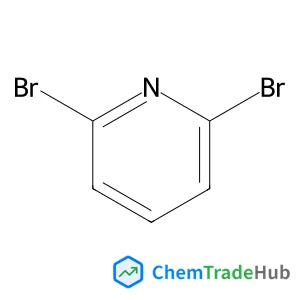
![Bis[(1,2,3,4,5-eta)-1-(diphenylphosphino)cyclopentadienyl]iron structure](https://cnstatic.chemtradehub.com/structs/121/12150-46-8-ecd2.webp "Bis[(1,2,3,4,5-eta)-1-(diphenylphosphino)cyclopentadienyl]iron structure")
![2-Bromodibenzo[b,d]furan structure](https://cnstatic.chemtradehub.com/structs/86-/86-76-0-1814.webp "2-Bromodibenzo[b,d]furan structure")
推荐供应商






免责声明
本页面提供的学术期刊信息仅供参考和研究使用。我们与任何期刊出版商均无关联,也不处理投稿事宜。如有投稿相关咨询,请直接联系相关期刊出版商。
如发现页面信息有误,请发送邮件至 support@chemtradehub.com 联系我们。我们将及时核实并处理您的问题。