






![[2',6'-bis(propan-2-yloxy)-[1,1'-biphenyl]-3-yl]dicyclohexylphosphane structure](https://cnstatic.chemtradehub.com/structs/787/787618-22-8-dda2.webp "[2',6'-bis(propan-2-yloxy)-[1,1'-biphenyl]-3-yl]dicyclohexylphosphane structure")
[2',6'-bis(propan-2-yloxy)-[1,1'-biphenyl]-3-yl]dicyclohexylphosphane
CAS号:
787618-22-8
分子式:
C30H43O2P
Ecotoxicology and Environmental Safety is a multi-disciplinary journal that focuses on understanding the exposure and effects of environmental contamination on organisms including human health. The scope of the journal covers three main themes. The topics within these themes, indicated below, include (but are not limited to) the following: Ecotoxicology Aquatic and terrestrial ecotoxicology of organisms including microbes, invertebrates, vertebrate animals and plants. Also, mesocosm or field studies informing on fate and effects. Mechanistic studies relating exposure, bioavailability and effects. Molecular to whole organism studies, including animal behaviour and population effects. Methods in ecotoxicology that address modes of action including omics, systems biology, quantitative measurements in living cells/tissues, biomarkers, histopathology, ecophysiology. Environmental Chemistry Soil, sediment and water chemistry that explains the fate, behaviour, sinks and effects of toxic substances such as metals, industrial and agrochemicals, nanomaterials, plastics and emerging contaminants. Mechanistic studies that identify source apportionment, spatial or temporal distribution of toxic substances, chemical speciation, persistence and transformations in the environment. Mixtures effects and interaction with environmental factors such as pH, organic matter, temperature and salinity. Mechanistic studies on remediation of wastewater and sludge, on biosorbants, biochars, green chemistry, chemical sensors and biosensor technology. Environmental Safety Epidemiological studies linking environmental contamination to human health effects. Molecular mechanism-based environmental toxicological studies using cell or animal models to evaluate hazards of air pollution, groundwater and drinking water contaminations, and environmental health and safety impacts from persistent toxic substances in the environment and food chain. Mechanistic elucidation of detrimental effects upon exposure to various contaminants at cellular and molecular levels and novel method development for ecotoxicological and environmental toxicological research. Evaluation of exposure, toxicity, and environmental risk using computational methods, such as big data, machine learning, and quantitative structure toxicity relationship modeling. The journal publishes hypothesis- or observation-driven research, with emphasis on mechanistic understanding and/or reporting new phenomena. Therefore, the following types of routine reports are out of scope of the journal and should not be submitted: Routine monitoring-style reports of pollutant concentration in the environment or biota. Routine measurements of biomolecules in an organism without mechanistic studies or an experimental context. Routine reports of adsorption isotherms, catalytic reactions, remediation method, and other very well-known phenomena of chemicals or materials. Studies on general environmental parameters that affect the physiology of organisms, such as salt or draught effects on plants without an environmental pollution aspect to study design. Agronomy studies, natural geochemistry studies, and animal biology studies that do not have an environmental contamination aspect to the research.
| 学科 | 排名 | 百分位 |
|---|---|---|
MedicinePublic Health, Environmental and Occupational Health |
26 / 665 | 96% |
Akihiro Ito, Yuko Yamagishi, Koji Fukui, Syuuzi Inoue, Yasukazu Hirao, Ko Furukawa, Tatsuhisa Kato
DOI: 10.1039/B816311A
Gregory Giannone
DOI: 10.1039/B812398E
Benoit M. Lienard, Ana Conejo-García, Ineke Stolze, Christoph Loenarz, Neil J. Oldham, Peter J. Ratcliffe, Christopher J. Schofield
DOI: 10.1039/B814440K
Ilona Papp, Jens Dernedde, Sven Enders, Rainer Haag
DOI: 10.1039/B813414F
Gustavo Fernández, Fátima García, Luis Sánchez
DOI: 10.1039/B818378C
Jian Zhang, Jan Mizera, Frank Girgsdies, Ning Wang, Sharifah Bee Abd Hamid, Robert Schlögl, Dang Sheng Su
DOI: 10.1039/B815335C
Petteri Elsner, Hao Jiang, Johanne B. Nielsen, Filippo Pasi, Karl Anker Jørgensen
DOI: 10.1039/B812698D
Katsuyuki Hirai, Hideo Tomioka, Kenkichi Sakamoto, Mitsuo Kira
DOI: 10.1039/B814801E
Chi-Hui Chen, Chi-Fen Chen, Gene-Hsiang Lee
DOI: 10.1039/B817032K
Albrecht Metzger, Fabian M. Piller, Paul Knochel
DOI: 10.1039/B812396A
4-[4-三氟甲基苯基]恶唑通常通过将4-三氟甲基苯酚与异硫氰酸苯酯在有机溶剂中进行酯化反应合成。该反应可在无水条件下,使用适当的催化剂,如四丁基氢氧化铵,以提...
RockPhos Pd G3 通常通过钯催化偶联反应合成,使用配体 (2'-Amino-2-biphenylyl)(methanesulfonato-kappa...
1-哌啶甲酰胺作为有机合成中的重要中间体,其市场需求主要受医药、农药、染料等行业推动。近年来,随着新药开发和绿色化学的发展,该化合物的研究趋势集中在开发更高效、...
2-(二苯基膦基)乙胺适用于多种法规指南,包括但不限于《全球化学品统一分类和标签制度》(GHS),欧盟《化学品注册、评估、授权和限制》法规(REACH),以及美...
间苯二甲酸二烯丙酯应储存在阴凉、干燥、通风良好的地方,远离火源和热源。储存容器应密封,避免光照和高温。储存温度应控制在25℃以下,相对湿度应低于80%。避免与其...
间甲苯异硫代异氰酸酯是一种有机化合物,分子式为C7H7NO2S,具有刺激性气味。它是一种重要的有机合成中间体,在合成其他化合物时广泛应用。
在合成中,可以考虑使用N-Cbz-D-苯丙氨醇或N-Fmoc-D-苯丙氨醇作为替代品。这些化合物同样具有保护氨基的功能,且在合成过程中表现出良好的反应性能。
3-羟甲基-2-氧异丙基吡啶主要用于有机合成领域,可以作为合成其他药物、农药或精细化学品的中间体。此外,它还可能在实验室研究中作为特定反应的前体或溶剂。
6-氨基-9-甲基嘌呤目前主要应用于医药行业,作为某些药物的中间体。此外,它还可能用于聚合物、传感器和半导体的某些领域,作为功能性单体或掺杂剂。

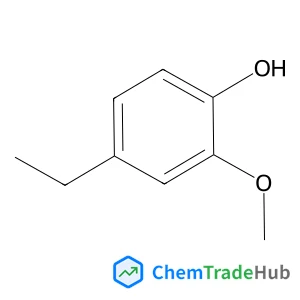
![2-Bromodibenzo[b,d]furan structure](https://cnstatic.chemtradehub.com/structs/86-/86-76-0-1814.webp "2-Bromodibenzo[b,d]furan structure")
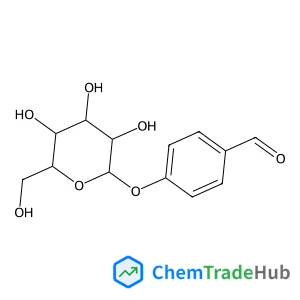

![2-{3-[4-(3-Chlorophenyl)-1-piperazinyl]propyl}[1,2,4]triazolo[4,3-a]pyridin-3(2H)-one hydrochloride (1:1) structure](https://cnstatic.chemtradehub.com/structs/253/25332-39-2-496e.webp "2-{3-[4-(3-Chlorophenyl)-1-piperazinyl]propyl}[1,2,4]triazolo[4,3-a]pyridin-3(2H)-one hydrochloride (1:1) structure")





