


Journal of Analytical and Applied Pyrolysis
基本信息
期刊简写:
J ANAL APPL PYROL
影响因子:
5.8
ISSN:
0165-2370
研究领域:
CHEMICAL
h-index:
115
自引率:
12.1%
年发文量:
410
SCI收录来源:
Science Citation Index Expanded
期刊官网:
https://www.sciencedirect.com/journal/journal-of-analytical-and-applied-pyrolysis
期刊介绍:
The Journal of Analytical and Applied Pyrolysis (JAAP) is devoted to the publication of papers dealing with innovative applications of pyrolysis processes, the characterization of products related to pyrolysis reactions, and investigations of reaction mechanism. To be considered by JAAP, a manuscript should present significant progress in these topics. The novelty must be satisfactorily argued in the cover letter. A manuscript with a cover letter to the editor not addressing the novelty is likely to be rejected without review. More specifically, the Scope of the Journal includes: Fundamental pyrolysis research on chemical substances and materials comprising: - experimental studies of pyrolysis reactions such as chemical mechanism and kinetic investigations; this includes preparative pyrolysis methods for the synthesis of novel compounds and mechanisms of high temperature reactions; - computational and theoretical studies of reaction mechanism, kinetics, and thermodynamics are acceptable, provided they are directly related to experimental data, either new or previously published, but they must be described adequately in the paper; - computational processing of pyrolysis data, such as advanced pattern recognition and principal component analysis and other multivariate analyses. Analytical pyrolysis, i.e. the characterization of a material in inert atmosphere by thermally induced degradation reactions; - exploring chemical composition and structure of materials by revealing thermal and chemical decomposition reactions leading to products fully identified by chemical and spectroscopic methods; - applications of analytical pyrolysis in environmental, biological, medical, forensic, cultural heritage, food, geochemical, polymer, and materials science; - new instrumentation and new analytical methods using pyrolysis reactions or to unravel the chemical composition of pyrolysis products. Applied pyrolysis dealing with the development of pyrolysis processes for producing valuable chemicals and/or energy carriers (gas, liquid, solid or electricity) and/or materials from fossil or renewable feedstock or waste, the recycling of materials, and the disposal of toxic substances. The manuscript must discuss the relationships between pyrolysis conditions and product characteristics. This topic includes: - various feedstock (fossil fuels, biomass, wastes, polymers, etc.) and the co-processing of different feedstock; - various thermal processes (slow and fast pyrolysis, torrefaction, carbonization, high pressure pyrolysis, catalytic pyrolysis, deoxygenation, hydropyrolysis, solvent liquefaction). The combination of a pyrolysis process with other types of treatment (mechanical, biological, or chemical) or materials characterization is within the scope of the journal only if the main focus of the manuscript is the pyrolysis process. Integrated processes combining pyrolysis reactors and products purification are welcome, if different pyrolysis conditions are studied. The computational modeling of pyrolysis reactors or processes should be related to experimental data, either new or previously published, but they must be described adequately in the paper. The pyrolysis conditions should be described thoroughly (residence times of solid and vapors, temperature distributions, etc.). The pyrolysis products must be chemically characterized. Catalysts should be physically and chemically characterized before reaction, and, when feasible analysis of catalysts after reaction is also desirable. While this may not always be possible, at least qualitative assessments should be made. The investigation of pyrolysis of a new feedstock or material with conventional methods, but without new development of the pyrolysis process is not sufficiently novel to be considered by JAAP. Review articles are invited by the Editors but may also be proposed in writing to the Review Editor. The subject of review articles should be broad enough to appeal to a wide range of readers. Discussion should be concise, but adequate. More detailed discussion may be appropriate in some cases. It is expected that reviews should be critical rather than just catalogs of published data. They should include the most important, recent advances in the topic, whereas papers of low scientific significance should be given very limited coverage. Out of the scope of JAAP The Journal does not consider studies based on: - the activation of carbons and characterization of activated carbons; - thermal analysis, mass yields without characterization of the pyrolysis products by chemical and spectroscopic methods; - characterization and application of pyrolysis products, unless clearly related to/aimed at understanding the influence/details of pyrolysis processes and conditions; - theoretical studies, kinetic modelling etc. which are not complemented with or validated by experimental data - combustion, gasification or incineration unless specifically related to the interplay between pyrolysis and oxidation reactions.
CiteScore
CiteScore
9.1
SJR
1.146
SNIP
1.211
| 学科 | 排名 | 百分位 |
|---|---|---|
ChemistryAnalytical Chemistry |
21 / 156 | 86% |
期刊统计
Bimonthly
期/年
Time to first decision: 17days
Review time: 62days
Submission to acceptance: 83days
Acceptance to publication: 4days
审稿周期
$3660
论文处理费
投稿信息
投稿网址:
https://www.editorialmanager.com/JAAP/default.aspx期刊推荐
Coloration Technology
Journal of Medical Biochemistry
Mini-Reviews in Medicinal Chemistry
Contact Lens & Anterior Eye
Angewandte Chemie International Edition
Photochemical & Photobiological Sciences
Lab on a Chip

Physical Chemistry Chemical Physics
Journal of Enzyme inhibition and Medicinal Chemistry
Faraday Discussions
相关文献
Proceedings of the Society of Public Analysts and other Analytical Chemists
Other
DOI: 10.1039/AN939640077A
Department of Scientific and Industrial Research. Investigation of atmospheric pollution
Other
DOI: 10.1039/AN942670229A
您可能还喜欢
化合物问答
4-[4-三氟甲基苯基]恶唑(CAS号:1126636-40-5)通常如何合成?
4-[4-三氟甲基苯基]恶唑通常通过将4-三氟甲基苯酚与异硫氰酸苯酯在有机溶剂中进行酯化反应合成。该反应可在无水条件下,使用适当的催化剂,如四丁基氢氧化铵,以提...
1126636-40-54-(4-(Trifluoromethy...
59729-32-71-[3-(Dimethylamino)...
化合物问答
RockPhos Pd G3(CAS号:2009020-38-4)通常如何合成?
RockPhos Pd G3 通常通过钯催化偶联反应合成,使用配体 (2'-Amino-2-biphenylyl)(methanesulfonato-kappa...
2009020-38-4(2'-Amino-2-biphenyl...
化合物问答
1-哌啶甲酰胺(CAS号:2158-03-4)的市场或研究趋势如何?
1-哌啶甲酰胺作为有机合成中的重要中间体,其市场需求主要受医药、农药、染料等行业推动。近年来,随着新药开发和绿色化学的发展,该化合物的研究趋势集中在开发更高效、...
2158-03-41-Piperidinecarboxam...
化合物问答
2-(二苯基膦基)乙胺(CAS号:4848-43-5)适用哪些法规指南?
2-(二苯基膦基)乙胺适用于多种法规指南,包括但不限于《全球化学品统一分类和标签制度》(GHS),欧盟《化学品注册、评估、授权和限制》法规(REACH),以及美...
4848-43-52-(Diphenylphosphino...
化合物问答
如何储存间苯二甲酸二烯丙酯(CAS号:1087-21-4)?
间苯二甲酸二烯丙酯应储存在阴凉、干燥、通风良好的地方,远离火源和热源。储存容器应密封,避免光照和高温。储存温度应控制在25℃以下,相对湿度应低于80%。避免与其...
1087-21-4Diallyl isophthalate
化合物问答
什么是间甲苯异硫代异氰酸酯(CAS号:621-30-7)?
间甲苯异硫代异氰酸酯是一种有机化合物,分子式为C7H7NO2S,具有刺激性气味。它是一种重要的有机合成中间体,在合成其他化合物时广泛应用。
621-30-71-Isothiocyanato-3-m...
化合物问答
在合成中是否有N-Boc-D-苯丙氨醇(CAS号:106454-69-7)的替代品?
在合成中,可以考虑使用N-Cbz-D-苯丙氨醇或N-Fmoc-D-苯丙氨醇作为替代品。这些化合物同样具有保护氨基的功能,且在合成过程中表现出良好的反应性能。
106454-69-72-Methyl-2-propanyl ...
化合物问答
3-羟甲基-2-氧异丙基吡啶(CAS号:954240-50-7)的主要用途是什么?
3-羟甲基-2-氧异丙基吡啶主要用于有机合成领域,可以作为合成其他药物、农药或精细化学品的中间体。此外,它还可能在实验室研究中作为特定反应的前体或溶剂。
954240-50-7(2-Isopropoxy-3-pyri...
化合物问答
6-氨基-9-甲基嘌呤(CAS号:700-00-5)应用于哪些行业?
6-氨基-9-甲基嘌呤目前主要应用于医药行业,作为某些药物的中间体。此外,它还可能用于聚合物、传感器和半导体的某些领域,作为功能性单体或掺杂剂。
700-00-59-Methyl-9H-purin-6-...
推荐化合物
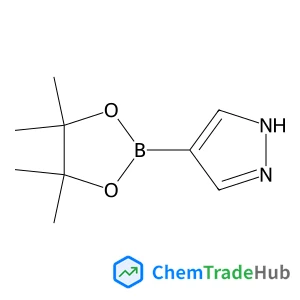
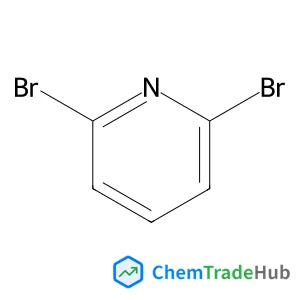
![1-(Hexopyranosyloxy)-4a,5-dihydroxy-7-methyl-1,4a,5,6,7,7a-hexahydrocyclopenta[c]pyran-7-yl 3-phenylacrylate structure](https://cnstatic.chemtradehub.com/structs/192/19210-12-9-ecae.webp "1-(Hexopyranosyloxy)-4a,5-dihydroxy-7-methyl-1,4a,5,6,7,7a-hexahydrocyclopenta[c]pyran-7-yl 3-phenylacrylate structure")
推荐供应商




免责声明
本页面提供的学术期刊信息仅供参考和研究使用。我们与任何期刊出版商均无关联,也不处理投稿事宜。如有投稿相关咨询,请直接联系相关期刊出版商。
如发现页面信息有误,请发送邮件至 support@chemtradehub.com 联系我们。我们将及时核实并处理您的问题。