









Journal of Food Biochemistry
基本信息
期刊简写:
J FOOD BIOCHEM
影响因子:
3.5
ISSN:
0145-8884
研究领域:
BIOLOGICAL
h-index:
40
自引率:
11.9%
年发文量:
106
SCI收录来源:
Science Citation Index Expanded
期刊官网:
https://www.hindawi.com/journals/jfbc
期刊介绍:
The Journal of Food Biochemistry publishes fully peer-reviewed original research and review articles on the effects of handling, storage, and processing on the biochemical aspects of food tissues, systems, and bioactive compounds in the diet. Researchers in food science, food technology, biochemistry, and nutrition, particularly based in academia and industry, will find much of great use and interest in the journal. Coverage includes: Biochemistry of postharvest/postmortem and processing problems Enzyme chemistry and technology Membrane biology and chemistry Cell biology Biophysics Genetic expression Pharmacological properties of food ingredients with an emphasis on the content of bioactive ingredients in foods Examples of topics covered in recently-published papers on two topics of current wide interest, nutraceuticals/functional foods and postharvest/postmortem, include the following: Bioactive compounds found in foods, such as chocolate and herbs, as they affect serum cholesterol, diabetes, hypertension, and heart disease The mechanism of the ripening process in fruit The biogenesis of flavor precursors in meat How biochemical changes in farm-raised fish are affecting processing and edible quality
CiteScore
CiteScore
7.8
SJR
0.696
SNIP
0.87
| 学科 | 排名 | 百分位 |
|---|---|---|
Agricultural and Biological SciencesFood Science |
54 / 389 | 86% |
期刊统计
Bimonthly
期/年
Submission to first decision:39 days
Submission to acceptance:112 days
审稿周期
$2570 USD
论文处理费
投稿信息
投稿网址:
http://mc.manuscriptcentral.com/jfbc相关文献
Reversible molecular switching of molecular beacon: controlling DNA hybridization kinetics and thermodynamics using mercury(ii) ions
Jianyu Jin, Yongxiang Wang, Hao Wang
2008-11-20
Communication
DOI: 10.1039/B816638B
An alternative approach to develop a highly sensitive and selective chemosensor for the colorimetric sensing of cyanide in water
Xiaoding Lou, Liyao Zhang, Jingui Qin, Zhen Li
2008-10-01
Communication
DOI: 10.1039/B812746H
One single catalyst, Pd(OAc)2, for two sequential very different steps: allylic alcohol oxidation–Heck reaction. Access to functionalised α,β-unsaturated ketones
Frédéric Batt, Christel Gozzi, Fabienne Fache
2008-09-30
Communication
DOI: 10.1039/B810538C
Selectivity control in enantioselective four-component reactions of aryl diazoacetates with alcohols, aldehydes and amines: an efficient approach to synthesizing chiral β-amino-α-hydroxyesters
Xinfang Xu, Jing Zhou, Liping Yang, Wenhao Hu
2008-11-11
Communication
DOI: 10.1039/B816104F
Tandem conjugate addition–elimination reaction promoted by chiral pyrrolidinyl sulfonamide (CPS)‡
2008-09-24
Communication
DOI: 10.1039/B810905M
Azaarene cis-dihydrodiol-derived 2,2′-bipyridine ligands for asymmetric allylic oxidation and cyclopropanation
Derek R. Boyd, Narain D. Sharma, Lenuta Sbircea, Deirdre Murphy, Tayeb Belhocine, John F. Malone, Stuart L. James, Christopher C. R. Allen
2008-10-09
Communication
DOI: 10.1039/B814678K
Dynamic kinetic resolution of β-keto sulfonesvia asymmetric transfer hydrogenation
Zhenhua Ding, Jin Yang, Ting Wang, Zongxuan Shen, Yawen Zhang
2008-12-19
Communication
DOI: 10.1039/B818257D
Shuffling lithiated mixed aggregates: NMR and Car–Parrinello molecular dynamics reveal an unexpected associative pathway
Franck Paté, Hélène Gérard, Hassan Oulyadi, Aurélien de la Lande, Anne Harrison-Marchand, Olivier Parisel, Jacques Maddaluno
2008-11-21
Communication
DOI: 10.1039/B814961E
Preparation of active and robust palladium nanoparticlecatalysts stabilized by diamine-functionalized mesoporous polymers
Rong Xing, Yueming Liu, Haihong Wu, Xiaohong Li, Mingyuan He, Peng Wu
2008-10-27
Communication
DOI: 10.1039/B815186E
您可能还喜欢
化合物问答
4-[4-三氟甲基苯基]恶唑(CAS号:1126636-40-5)通常如何合成?
4-[4-三氟甲基苯基]恶唑通常通过将4-三氟甲基苯酚与异硫氰酸苯酯在有机溶剂中进行酯化反应合成。该反应可在无水条件下,使用适当的催化剂,如四丁基氢氧化铵,以提...
1126636-40-54-(4-(Trifluoromethy...
59729-32-71-[3-(Dimethylamino)...
化合物问答
RockPhos Pd G3(CAS号:2009020-38-4)通常如何合成?
RockPhos Pd G3 通常通过钯催化偶联反应合成,使用配体 (2'-Amino-2-biphenylyl)(methanesulfonato-kappa...
2009020-38-4(2'-Amino-2-biphenyl...
化合物问答
1-哌啶甲酰胺(CAS号:2158-03-4)的市场或研究趋势如何?
1-哌啶甲酰胺作为有机合成中的重要中间体,其市场需求主要受医药、农药、染料等行业推动。近年来,随着新药开发和绿色化学的发展,该化合物的研究趋势集中在开发更高效、...
2158-03-41-Piperidinecarboxam...
化合物问答
2-(二苯基膦基)乙胺(CAS号:4848-43-5)适用哪些法规指南?
2-(二苯基膦基)乙胺适用于多种法规指南,包括但不限于《全球化学品统一分类和标签制度》(GHS),欧盟《化学品注册、评估、授权和限制》法规(REACH),以及美...
4848-43-52-(Diphenylphosphino...
化合物问答
如何储存间苯二甲酸二烯丙酯(CAS号:1087-21-4)?
间苯二甲酸二烯丙酯应储存在阴凉、干燥、通风良好的地方,远离火源和热源。储存容器应密封,避免光照和高温。储存温度应控制在25℃以下,相对湿度应低于80%。避免与其...
1087-21-4Diallyl isophthalate
化合物问答
什么是间甲苯异硫代异氰酸酯(CAS号:621-30-7)?
间甲苯异硫代异氰酸酯是一种有机化合物,分子式为C7H7NO2S,具有刺激性气味。它是一种重要的有机合成中间体,在合成其他化合物时广泛应用。
621-30-71-Isothiocyanato-3-m...
化合物问答
在合成中是否有N-Boc-D-苯丙氨醇(CAS号:106454-69-7)的替代品?
在合成中,可以考虑使用N-Cbz-D-苯丙氨醇或N-Fmoc-D-苯丙氨醇作为替代品。这些化合物同样具有保护氨基的功能,且在合成过程中表现出良好的反应性能。
106454-69-72-Methyl-2-propanyl ...
化合物问答
3-羟甲基-2-氧异丙基吡啶(CAS号:954240-50-7)的主要用途是什么?
3-羟甲基-2-氧异丙基吡啶主要用于有机合成领域,可以作为合成其他药物、农药或精细化学品的中间体。此外,它还可能在实验室研究中作为特定反应的前体或溶剂。
954240-50-7(2-Isopropoxy-3-pyri...
化合物问答
6-氨基-9-甲基嘌呤(CAS号:700-00-5)应用于哪些行业?
6-氨基-9-甲基嘌呤目前主要应用于医药行业,作为某些药物的中间体。此外,它还可能用于聚合物、传感器和半导体的某些领域,作为功能性单体或掺杂剂。
700-00-59-Methyl-9H-purin-6-...
推荐化合物
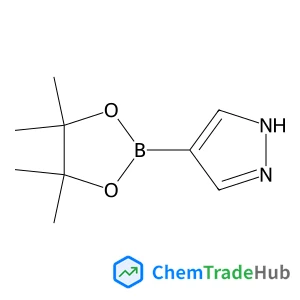
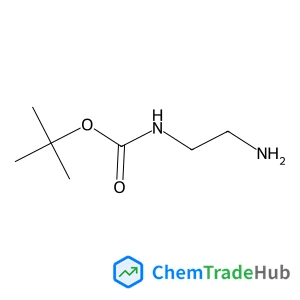
![2-Bromodibenzo[b,d]furan structure](https://cnstatic.chemtradehub.com/structs/86-/86-76-0-1814.webp "2-Bromodibenzo[b,d]furan structure")

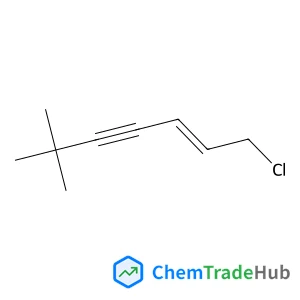
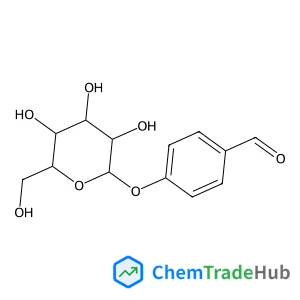
推荐供应商






免责声明
本页面提供的学术期刊信息仅供参考和研究使用。我们与任何期刊出版商均无关联,也不处理投稿事宜。如有投稿相关咨询,请直接联系相关期刊出版商。
如发现页面信息有误,请发送邮件至 support@chemtradehub.com 联系我们。我们将及时核实并处理您的问题。