


Molecular and Biochemical Parasitology
基本信息
期刊简写:
MOL BIOCHEM PARASIT
影响因子:
1.4
ISSN:
0166-6851
研究领域:
MEDICAL
h-index:
103
自引率:
7.1%
年发文量:
35
SCI收录来源:
Science Citation Index Expanded
期刊官网:
https://www.sciencedirect.com/journal/molecular-and-biochemical-parasitology
期刊介绍:
Molecular and Biochemical Parasitology provides a medium for rapid publication of investigations of the molecular biology and biochemistry of parasitic protozoa and helminths and their molecular interactions with their definitive and intermediate hosts and their vectors. The main subject areas covered are: the structure, biosynthesis, degradation, properties and function of parasite biomolecules - DNA, RNA, proteins, lipids, carbohydrates and small molecular-weight substances host-parasite relationships particularly as related to specific parasite molecules and to the response of host cells to infection vector-parasite relationships at the molecular level intermediary metabolism and bioenergetics drug target characterization and the mode of action of antiparasitic drugs analysis of gene function, expression, and of genome structure and stability analysis of variation in parasite populations relevant to genetic exchange, pathogenesis, drug and vaccine target characterization, and drug resistance; please note that genetic variation data must be supported by phenotypic/experimental data showing the effect of the variation, and that papers reporting solely on allele frequencies in specific regions will not be accepted. parasite protein trafficking, organelle biogenesis, and cellular structure especially with reference to the roles of specific molecules molecular and biochemical aspects of membrane structure and function parasite programmed cell death, development, and cell division at the molecular level methods reports - descriptions of novel or newly-optimized methods with broad applicability to molecular and biochemical parasitology Papers will only be accepted for publication if they fall within these areas, if they contain original and complete work of high scientific quality, and if they are well presented. Papers solely confirming the conserved functions of genes previously studied in other organisms will not be considered. We welcome short communications documenting a succinct but clear and important advance. 1. Original research articles should report highly significant innovative results not previously published elsewhere. Original articles are limited to 7,000 words per article (all text excluding tables and figure legends). 2. Short Communications need not be formally structured as full papers but should describe significant new findings and observations. The manuscript should ideally contain no more than 4Figures/Tables and 3000 words. The abstract should be limited to 200 words. 3. Methods Reports should contain descriptions of novel or newly-optimised methods with broad applicability to molecular parasitologists. The manuscript should ideally contain no more than 4 Figures/Tables and 3000 words. Results and Discussion are usually combined. The abstract should be limited to 200 words. Methods Reports must include a detailed step-by-step protocol and/or analysis code in the supplementary material. 4. Review articles should cover subjects falling within the scope of the journal which are of active current interest. They may be submitted or invited by the Editors. Review articles should include insightful recommendations for future directions needed for achieving public health impacts. Review articles are limited to 15,000 words per article (all text excluding tables and figure legends). If you have a suggestion for a Review article topic please email Special Content Editor, Geoff Gobert: G.Gobert@qub.ac.uk 5. Perspective articles should include scientifically backed points of view regarding currently relevant, controversial or future-oriented topics pertinent to the scope of MBP. Note that only outlining recent advances in a given field is not acceptable for a Perspective article. Besides stimulating scientific discussion or future research, perspective articles should provide a novel conceptual framework for an old or timely issue. The authors should outline which research directions should be prioritized and highlight specific points explaining why they should be prioritized in future research. Perspective articles are limited to 6,000 words per article (all text excluding tables and figure legends). 6. Letters to the Editor offering comment or useful critique on material published in the journal are welcome. Letters on "hot topics" are also welcome. Note that Letters to the Editors will also be externally reviewed but the decision to publish submitted letters rests with the Editors in Chief. A goal is to publish constructive letters that will permit an exchange of views which will be of benefit to both the journal and its readers. Letters to the Editor are limited to 2,000 words per article (all text excluding tables and figure legends). Most downloaded papers Benefits to authors We also provide many author benefits, such as free PDFs, a liberal copyright policy, special discounts on Elsevier publications and much more. Please click here for more information on our author services . Please see our Guide for Authors for information on article submission. If you require any further information or help, please visit our Support Center
CiteScore
CiteScore
2.9
SJR
0.422
SNIP
0.51
| 学科 | 排名 | 百分位 |
|---|---|---|
Immunology and MicrobiologyParasitology |
44 / 79 | 44% |
期刊统计
Monthly
期/年
Time to first decision: 26days
Review time: 96days
Submission to acceptance: 118days
Acceptance to publication: 3days
审稿周期
$3260
论文处理费
投稿信息
投稿网址:
https://www.editorialmanager.com/MOLBIO期刊推荐
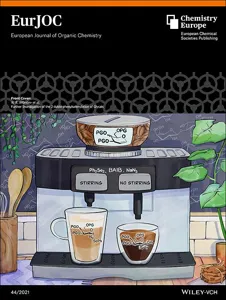
European Journal of Organic Chemistry
Journal of Medical Biochemistry
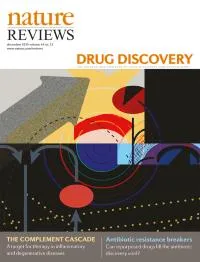
Nature Reviews Drug Discovery
Angewandte Chemie International Edition
Mini-Reviews in Medicinal Chemistry

Physical Chemistry Chemical Physics
Molecules
CrystEngComm
Environmental Toxicology and Pharmacology
Journal of Enzyme inhibition and Medicinal Chemistry
相关文献
South Africa Department of Agriculture and Forestry. Insecticides as locust poisons
Other
DOI: 10.1039/AN942670165B
Commonwealth of Massachusetts. Annual Report for 1940. Dept. of Public Health, Division of Food and Drugs
Other
DOI: 10.1039/AN942670297B
Federated Malay States. Annual Report of the Institute of Medical Research for the year 1938
Other
DOI: 10.1039/AN940650459B
您可能还喜欢
化合物问答
4-[4-三氟甲基苯基]恶唑(CAS号:1126636-40-5)通常如何合成?
4-[4-三氟甲基苯基]恶唑通常通过将4-三氟甲基苯酚与异硫氰酸苯酯在有机溶剂中进行酯化反应合成。该反应可在无水条件下,使用适当的催化剂,如四丁基氢氧化铵,以提...
1126636-40-54-(4-(Trifluoromethy...
59729-32-71-[3-(Dimethylamino)...
化合物问答
RockPhos Pd G3(CAS号:2009020-38-4)通常如何合成?
RockPhos Pd G3 通常通过钯催化偶联反应合成,使用配体 (2'-Amino-2-biphenylyl)(methanesulfonato-kappa...
2009020-38-4(2'-Amino-2-biphenyl...
化合物问答
1-哌啶甲酰胺(CAS号:2158-03-4)的市场或研究趋势如何?
1-哌啶甲酰胺作为有机合成中的重要中间体,其市场需求主要受医药、农药、染料等行业推动。近年来,随着新药开发和绿色化学的发展,该化合物的研究趋势集中在开发更高效、...
2158-03-41-Piperidinecarboxam...
化合物问答
2-(二苯基膦基)乙胺(CAS号:4848-43-5)适用哪些法规指南?
2-(二苯基膦基)乙胺适用于多种法规指南,包括但不限于《全球化学品统一分类和标签制度》(GHS),欧盟《化学品注册、评估、授权和限制》法规(REACH),以及美...
4848-43-52-(Diphenylphosphino...
化合物问答
如何储存间苯二甲酸二烯丙酯(CAS号:1087-21-4)?
间苯二甲酸二烯丙酯应储存在阴凉、干燥、通风良好的地方,远离火源和热源。储存容器应密封,避免光照和高温。储存温度应控制在25℃以下,相对湿度应低于80%。避免与其...
1087-21-4Diallyl isophthalate
化合物问答
什么是间甲苯异硫代异氰酸酯(CAS号:621-30-7)?
间甲苯异硫代异氰酸酯是一种有机化合物,分子式为C7H7NO2S,具有刺激性气味。它是一种重要的有机合成中间体,在合成其他化合物时广泛应用。
621-30-71-Isothiocyanato-3-m...
化合物问答
在合成中是否有N-Boc-D-苯丙氨醇(CAS号:106454-69-7)的替代品?
在合成中,可以考虑使用N-Cbz-D-苯丙氨醇或N-Fmoc-D-苯丙氨醇作为替代品。这些化合物同样具有保护氨基的功能,且在合成过程中表现出良好的反应性能。
106454-69-72-Methyl-2-propanyl ...
化合物问答
3-羟甲基-2-氧异丙基吡啶(CAS号:954240-50-7)的主要用途是什么?
3-羟甲基-2-氧异丙基吡啶主要用于有机合成领域,可以作为合成其他药物、农药或精细化学品的中间体。此外,它还可能在实验室研究中作为特定反应的前体或溶剂。
954240-50-7(2-Isopropoxy-3-pyri...
化合物问答
6-氨基-9-甲基嘌呤(CAS号:700-00-5)应用于哪些行业?
6-氨基-9-甲基嘌呤目前主要应用于医药行业,作为某些药物的中间体。此外,它还可能用于聚合物、传感器和半导体的某些领域,作为功能性单体或掺杂剂。
700-00-59-Methyl-9H-purin-6-...
推荐化合物
![[2',6'-bis(propan-2-yloxy)-[1,1'-biphenyl]-3-yl]dicyclohexylphosphane structure](https://cnstatic.chemtradehub.com/structs/787/787618-22-8-dda2.webp "[2',6'-bis(propan-2-yloxy)-[1,1'-biphenyl]-3-yl]dicyclohexylphosphane structure")
[2',6'-bis(propan-2-yloxy)-[1,1'-biphenyl]-3-yl]dicyclohexylphosphane
CAS号:
787618-22-8
分子式:
C30H43O2P
推荐供应商






免责声明
本页面提供的学术期刊信息仅供参考和研究使用。我们与任何期刊出版商均无关联,也不处理投稿事宜。如有投稿相关咨询,请直接联系相关期刊出版商。
如发现页面信息有误,请发送邮件至 support@chemtradehub.com 联系我们。我们将及时核实并处理您的问题。