



Progress in Solid State Chemistry
基本信息
期刊简写:
PROG SOLID STATE CH
影响因子:
9.1
ISSN:
0079-6786
研究领域:
CHEMICAL
h-index:
44
自引率:
4.4%
年发文量:
16
SCI收录来源:
Science Citation Index Expanded
期刊官网:
https://www.sciencedirect.com/journal/progress-in-solid-state-chemistry
期刊介绍:
Progress in Solid State Chemistry presents a chemical view of the solid state by providing up-to-date critical reviews written by acknowledged authorities in the field. It also publishes surveys of research progress and specialized articles devoted to summarizing particular recent developments. The aim is to address the need brought about by the literature on the chemistry of the solid state being widely dispersed, making it difficult to obtain a broad and unified assessment of the present state of knowledge. Special emphasis is given to relating physical properties and structural chemistry. Whereas structural chemistry at one time was concerned mostly with perfect solids, most activity focused upon understanding of solid properties focuses on imperfections. Entities such as vacancies, dislocations, and positive holes, which have no independent existence outside the solid itself, are of prime importance in modern solid state chemistry. The reviews published in Progress in Solid State Chemistry emphasize critical evaluation of the field, along with indications of current problems and future directions. Papers are not intended to be bibliographic in nature but rather to inform a broad range of readers in an inherently multidisciplinary field by providing expert treatises oriented both towards specialists in different areas of the solid state and towards nonspecialists. The authorship is international, and the subject matter will be of interest to chemists, materials scientists, physicists, metallurgists, crystallographers, ceramists, and engineers interested in the solid state. Benefits to authors We also provide many author benefits, such as free PDFs, a liberal copyright policy, special discounts on Elsevier publications and much more. Please click here for more information on our author services. Please see our Guide for Authors for information on article submission. If you require any further information or help, please visit our Support Center
CiteScore
CiteScore
14.1
SJR
1.32
SNIP
1.623
| 学科 | 排名 | 百分位 |
|---|---|---|
Physics and AstronomyCondensed Matter Physics |
19 / 434 | 95% |
期刊统计
Quarterly
期/年
Acceptance to publication: 3days
审稿周期
论文处理费
投稿信息
投稿网址:
https://www.editorialmanager.com/jpssc/default2.aspx收录体裁:
papers
相关文献
Government of India. Biochemical Standardisation Laboratory: Triennial Report, 1940
Other
DOI: 10.1039/AN942670165A
Proceedings of the Society of Public Analysts and other Analytical Chemists
Other
DOI: 10.1039/AN938630775A
South Africa. Annual Report of the Divison of Chemical Services, 1939
Other
DOI: 10.1039/AN940650229A
您可能还喜欢
化合物问答
4-[4-三氟甲基苯基]恶唑(CAS号:1126636-40-5)通常如何合成?
4-[4-三氟甲基苯基]恶唑通常通过将4-三氟甲基苯酚与异硫氰酸苯酯在有机溶剂中进行酯化反应合成。该反应可在无水条件下,使用适当的催化剂,如四丁基氢氧化铵,以提...
1126636-40-54-(4-(Trifluoromethy...
59729-32-71-[3-(Dimethylamino)...
化合物问答
RockPhos Pd G3(CAS号:2009020-38-4)通常如何合成?
RockPhos Pd G3 通常通过钯催化偶联反应合成,使用配体 (2'-Amino-2-biphenylyl)(methanesulfonato-kappa...
2009020-38-4(2'-Amino-2-biphenyl...
化合物问答
1-哌啶甲酰胺(CAS号:2158-03-4)的市场或研究趋势如何?
1-哌啶甲酰胺作为有机合成中的重要中间体,其市场需求主要受医药、农药、染料等行业推动。近年来,随着新药开发和绿色化学的发展,该化合物的研究趋势集中在开发更高效、...
2158-03-41-Piperidinecarboxam...
化合物问答
2-(二苯基膦基)乙胺(CAS号:4848-43-5)适用哪些法规指南?
2-(二苯基膦基)乙胺适用于多种法规指南,包括但不限于《全球化学品统一分类和标签制度》(GHS),欧盟《化学品注册、评估、授权和限制》法规(REACH),以及美...
4848-43-52-(Diphenylphosphino...
化合物问答
如何储存间苯二甲酸二烯丙酯(CAS号:1087-21-4)?
间苯二甲酸二烯丙酯应储存在阴凉、干燥、通风良好的地方,远离火源和热源。储存容器应密封,避免光照和高温。储存温度应控制在25℃以下,相对湿度应低于80%。避免与其...
1087-21-4Diallyl isophthalate
化合物问答
什么是间甲苯异硫代异氰酸酯(CAS号:621-30-7)?
间甲苯异硫代异氰酸酯是一种有机化合物,分子式为C7H7NO2S,具有刺激性气味。它是一种重要的有机合成中间体,在合成其他化合物时广泛应用。
621-30-71-Isothiocyanato-3-m...
化合物问答
在合成中是否有N-Boc-D-苯丙氨醇(CAS号:106454-69-7)的替代品?
在合成中,可以考虑使用N-Cbz-D-苯丙氨醇或N-Fmoc-D-苯丙氨醇作为替代品。这些化合物同样具有保护氨基的功能,且在合成过程中表现出良好的反应性能。
106454-69-72-Methyl-2-propanyl ...
化合物问答
3-羟甲基-2-氧异丙基吡啶(CAS号:954240-50-7)的主要用途是什么?
3-羟甲基-2-氧异丙基吡啶主要用于有机合成领域,可以作为合成其他药物、农药或精细化学品的中间体。此外,它还可能在实验室研究中作为特定反应的前体或溶剂。
954240-50-7(2-Isopropoxy-3-pyri...
化合物问答
6-氨基-9-甲基嘌呤(CAS号:700-00-5)应用于哪些行业?
6-氨基-9-甲基嘌呤目前主要应用于医药行业,作为某些药物的中间体。此外,它还可能用于聚合物、传感器和半导体的某些领域,作为功能性单体或掺杂剂。
700-00-59-Methyl-9H-purin-6-...
推荐化合物
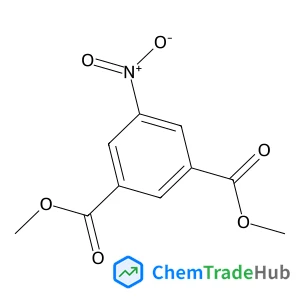
![Bis[(1,2,3,4,5-eta)-1-(diphenylphosphino)cyclopentadienyl]iron structure](https://cnstatic.chemtradehub.com/structs/121/12150-46-8-ecd2.webp "Bis[(1,2,3,4,5-eta)-1-(diphenylphosphino)cyclopentadienyl]iron structure")
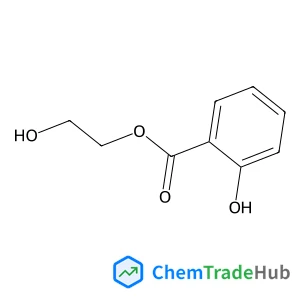
![1-(Hexopyranosyloxy)-4a,5-dihydroxy-7-methyl-1,4a,5,6,7,7a-hexahydrocyclopenta[c]pyran-7-yl 3-phenylacrylate structure](https://cnstatic.chemtradehub.com/structs/192/19210-12-9-ecae.webp "1-(Hexopyranosyloxy)-4a,5-dihydroxy-7-methyl-1,4a,5,6,7,7a-hexahydrocyclopenta[c]pyran-7-yl 3-phenylacrylate structure")
推荐供应商


免责声明
本页面提供的学术期刊信息仅供参考和研究使用。我们与任何期刊出版商均无关联,也不处理投稿事宜。如有投稿相关咨询,请直接联系相关期刊出版商。
如发现页面信息有误,请发送邮件至 support@chemtradehub.com 联系我们。我们将及时核实并处理您的问题。