






Statistics in Biopharmaceutical Research
基本信息
期刊简写:
STAT BIOPHARM RES
影响因子:
1.5
ISSN:
1946-6315
研究领域:
MEDICAL
h-index:
11
自引率:
26.7%
年发文量:
53
SCI收录来源:
Science Citation Index Expanded
期刊官网:
https://www.tandfonline.com/loi/usbr20
期刊介绍:
Statistics in Biopharmaceutical Research ( SBR), publishes articles that focus on the needs of researchers and applied statisticians in biopharmaceutical industries; academic biostatisticians from schools of medicine, veterinary medicine, public health, and pharmacy; statisticians and quantitative analysts working in regulatory agencies (e.g., U.S. Food and Drug Administration and its counterpart in other countries); statisticians with an interest in adopting methodology presented in this journal to their own fields; and nonstatisticians with an interest in applying statistical methods to biopharmaceutical problems. Statistics in Biopharmaceutical Research accepts papers that discuss appropriate statistical methodology and information regarding the use of statistics in all phases of research, development, and practice in the pharmaceutical, biopharmaceutical, device, and diagnostics industries. Articles should focus on the development of novel statistical methods, novel applications of current methods, or the innovative application of statistical principles that can be used by statistical practitioners in these disciplines. Areas of application may include statistical methods for drug discovery, including papers that address issues of multiplicity, sequential trials, adaptive designs, etc.; preclinical and clinical studies; genomics and proteomics; bioassay; biomarkers and surrogate markers; models and analyses of drug history, including pharmacoeconomics, product life cycle, detection of adverse events in clinical studies, and postmarketing risk assessment; regulatory guidelines, including issues of standardization of terminology (e.g., CDISC), tolerance and specification limits related to pharmaceutical practice, and novel methods of drug approval; and detection of adverse events in clinical and toxicological studies. Tutorial articles also are welcome. Articles should include demonstrable evidence of the usefulness of this methodology (presumably by means of an application). The Editorial Board of SBR intends to ensure that the journal continually provides important, useful, and timely information. To accomplish this, the board strives to attract outstanding articles by seeing that each submission receives a careful, thorough, and prompt review. ASA Statement on Justice, Equity, Diversity, and Inclusion (JEDI) The leadership of the American Statistical Association commits to strengthening our professional community by making it more just, equitable, diverse, and inclusive. We affirm that our mission, Promote the Practice and Profession of Statistics, can be realized only by fully embracing justice, equity, diversity, and inclusivity in all of our operations. Individuals embody many traits, so the leadership will work with the members of ASA to create and sustain responsive, flourishing, and safe environments that support individual needs, stimulate intellectual growth, and promote professional advancement for all. We commit to these objectives: Learn from our members and others how to identify and overcome systemic racism and hindering biases of any kind Critically reappraise and improve the effectiveness of our JEDI efforts Identify and develop resources for individuals and organizations in our professional community to enable growth and appreciation for cultural humility Share openly our diversity and inclusion efforts and the solutions we have implemented
CiteScore
CiteScore
3.9
SJR
0.978
SNIP
0.915
| 学科 | 排名 | 百分位 |
|---|---|---|
MathematicsStatistics and Probability |
49 / 278 | 82% |
期刊统计
Quarterly
期/年
52 days avg. from submission to first decision
94 days avg. from submission to first post-review decision
49 days avg. from acceptance to online publication
审稿周期
论文处理费
投稿信息
投稿网址:
https://mc.manuscriptcentral.com/amstat相关文献
Absolute helicity induction in three-dimensional homochiral frameworks
Jian Zhang, Xianhui Bu
2008-11-13
Communication
DOI: 10.1039/B816742G
New 6-oxa-2-silabicyclo[2.2.0]hexanes by photochemical conversion of acyl(allyl)(dimethyl)silanes
Catherine Hammaecher, Charles Portella
2008-09-30
Communication
DOI: 10.1039/B812550C
A palladium-mediated cascade cyclisation approach to the CDE cores of rubriflordilactone A and lancifodilactone G‡
Marie-Caroline A. Cordonnier, S. B. Jennifer Kan
2008-10-02
Communication
DOI: 10.1039/B814360A
Facile synthesis of carbon nanotube/natural bentonite composites as a stable catalyst for styrene synthesis
Jian Zhang, Jan Mizera, Frank Girgsdies, Ning Wang, Sharifah Bee Abd Hamid, Robert Schlögl, Dang Sheng Su
2008-11-11
Communication
DOI: 10.1039/B815335C
Amplified fluorescence determination of microRNAs in homogeneous solution with cationic conjugated polymers
Zhengping Li, Yongqiang Cheng
2008-11-13
Communication
DOI: 10.1039/B816614E
Engineered carbohydrate-binding module (CBM) protein-suspended single-walled carbon nanotubes in water
Qi Xu, Qing Song, Xin Ai, Timothy J. McDonald, Hai Long, Shi-You Ding, Michael E. Himmel, Garry Rumbles
2008-11-21
Communication
DOI: 10.1039/B815597F
One single catalyst, Pd(OAc)2, for two sequential very different steps: allylic alcohol oxidation–Heck reaction. Access to functionalised α,β-unsaturated ketones
Frédéric Batt, Christel Gozzi, Fabienne Fache
2008-09-30
Communication
DOI: 10.1039/B810538C
Lengthening alkyl spacers to increase SBA-15-anchored Rh–P complex activities in 1-octene hydroformylation
Wei Zhou, Dehua He
2008-10-01
Communication
DOI: 10.1039/B812910J
Enzyme-mediated sol–gel processing of alkoxysilanes
Mark Frampton, Ateeya Vawda, Jackie Fletcher, Paul M. Zelisko
2008-09-23
Communication
DOI: 10.1039/B812389F
您可能还喜欢
化合物问答
4-[4-三氟甲基苯基]恶唑(CAS号:1126636-40-5)通常如何合成?
4-[4-三氟甲基苯基]恶唑通常通过将4-三氟甲基苯酚与异硫氰酸苯酯在有机溶剂中进行酯化反应合成。该反应可在无水条件下,使用适当的催化剂,如四丁基氢氧化铵,以提...
1126636-40-54-(4-(Trifluoromethy...
59729-32-71-[3-(Dimethylamino)...
化合物问答
RockPhos Pd G3(CAS号:2009020-38-4)通常如何合成?
RockPhos Pd G3 通常通过钯催化偶联反应合成,使用配体 (2'-Amino-2-biphenylyl)(methanesulfonato-kappa...
2009020-38-4(2'-Amino-2-biphenyl...
化合物问答
1-哌啶甲酰胺(CAS号:2158-03-4)的市场或研究趋势如何?
1-哌啶甲酰胺作为有机合成中的重要中间体,其市场需求主要受医药、农药、染料等行业推动。近年来,随着新药开发和绿色化学的发展,该化合物的研究趋势集中在开发更高效、...
2158-03-41-Piperidinecarboxam...
化合物问答
2-(二苯基膦基)乙胺(CAS号:4848-43-5)适用哪些法规指南?
2-(二苯基膦基)乙胺适用于多种法规指南,包括但不限于《全球化学品统一分类和标签制度》(GHS),欧盟《化学品注册、评估、授权和限制》法规(REACH),以及美...
4848-43-52-(Diphenylphosphino...
化合物问答
如何储存间苯二甲酸二烯丙酯(CAS号:1087-21-4)?
间苯二甲酸二烯丙酯应储存在阴凉、干燥、通风良好的地方,远离火源和热源。储存容器应密封,避免光照和高温。储存温度应控制在25℃以下,相对湿度应低于80%。避免与其...
1087-21-4Diallyl isophthalate
化合物问答
什么是间甲苯异硫代异氰酸酯(CAS号:621-30-7)?
间甲苯异硫代异氰酸酯是一种有机化合物,分子式为C7H7NO2S,具有刺激性气味。它是一种重要的有机合成中间体,在合成其他化合物时广泛应用。
621-30-71-Isothiocyanato-3-m...
化合物问答
在合成中是否有N-Boc-D-苯丙氨醇(CAS号:106454-69-7)的替代品?
在合成中,可以考虑使用N-Cbz-D-苯丙氨醇或N-Fmoc-D-苯丙氨醇作为替代品。这些化合物同样具有保护氨基的功能,且在合成过程中表现出良好的反应性能。
106454-69-72-Methyl-2-propanyl ...
化合物问答
3-羟甲基-2-氧异丙基吡啶(CAS号:954240-50-7)的主要用途是什么?
3-羟甲基-2-氧异丙基吡啶主要用于有机合成领域,可以作为合成其他药物、农药或精细化学品的中间体。此外,它还可能在实验室研究中作为特定反应的前体或溶剂。
954240-50-7(2-Isopropoxy-3-pyri...
化合物问答
6-氨基-9-甲基嘌呤(CAS号:700-00-5)应用于哪些行业?
6-氨基-9-甲基嘌呤目前主要应用于医药行业,作为某些药物的中间体。此外,它还可能用于聚合物、传感器和半导体的某些领域,作为功能性单体或掺杂剂。
700-00-59-Methyl-9H-purin-6-...
推荐化合物
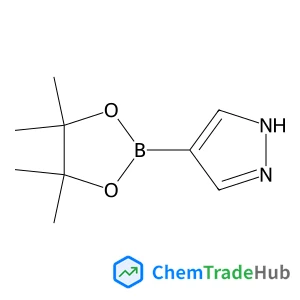
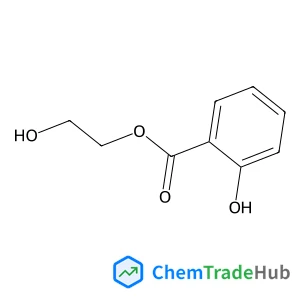
推荐供应商





免责声明
本页面提供的学术期刊信息仅供参考和研究使用。我们与任何期刊出版商均无关联,也不处理投稿事宜。如有投稿相关咨询,请直接联系相关期刊出版商。
如发现页面信息有误,请发送邮件至 support@chemtradehub.com 联系我们。我们将及时核实并处理您的问题。