





Charge carrier transport in poly(p-phenylenevinylene) light-emitting devices
文献信息
发布日期
DOI
10.1039/A808614A
影响因子
3.676
作者
查看原文
摘要
The role of doping and trap states for charge carrier transport in light-emitting devices based on unsubstituted poly(p-phenylenevinylene) (PPV) was investigated and charge carrier mobilities were determined by different techniques. Using temperature dependent impedance spectroscopy and thermally stimulated currents, the energetic depth and density of states created by doping of PPV during device fabrication on different substrate materials were determined. It was found that the conversion of PPV on indium–tin oxide (ITO) substrates creates shallow traps with a depth of about 0.1–0.2 eV, which are responsible for the p-type doping of PPV and govern the room temperature device characteristics. The total density of ionized acceptors at room temperature is of the order of 1016–1017 cm-3. The temperature dependent behaviour of electrical transport quantities such as conductivity and mobility is dominated by deeper states with energies in the range 0.6–1 eV. Their density can be varied by applying a vacuum to the devices. The charge carrier mobility in PPV was determined by the time-of-flight (TOF) method on devices with the configuration ITO/PPV/Al, which is typically used in light-emitting diodes. Hole mobilities in the region of 10-5 cm2 V-1 s-1 at room temperature for an electric field of about 105 V cm-1 were obtained. Field and temperature dependent TOF measurements yielded an exponential increase in the mobility with increase in the applied field and thermally activated behaviour with activation energies between 0.4 and 0.7 eV on different samples. The values of the mobility at room temperature are consistent with space-charge limited currents, but considerably larger than the values from transient electroluminescence measurements. This indicates that the transit times obtained by the latter method are dominated by the much lower electron mobility rather than by the hole mobility. Assuming luminescence quenching within a distance of 20 nm of the Al contact, an electron mobility of about 10-8 cm2 V-1 s-1 can be estimated at room temperature and fields in the region of 105 V cm-1.
相关文献
Improving BiVO4 photoanodes for solar water splitting through surface passivation
Yongqi Liang, Johannes Messinger
2014-05-01
Paper
DOI: 10.1039/C4CP00674G
Coupled-cluster calculations of the lowest 0–0 bands of the electronic excitation spectrum of naphthalene
Heike Fliegl, Dage Sundholm
2013-12-18
Paper
DOI: 10.1039/C3CP54421D
An acetate bound cobalt oxide catalyst for water oxidation: role of monovalent anions and cations in lowering overpotential
Subal Dey, Biswajit Mondal, Abhishek Dey
2014-04-11
Paper
DOI: 10.1039/C4CP01205D
Artificial photosynthesis – functional devices for light driven water splitting with photoactive anodes based on molecular catalysts
Yan Gao, Linlin Zhang, Xin Ding
2014-03-07
Paper
DOI: 10.1039/C3CP55204G
Iron near absorption edge X-ray spectroscopy at aqueous-membrane interfaces
Wenjie Wang, Ivan Kuzmenko, David Vaknin
2014-05-23
Paper
DOI: 10.1039/C4CP00657G
Theoretical study of thermoelectric properties of few-layer MoS2 and WSe2
Wen Huang, Chee Kwan Gan, Gengchiau Liang
2014-04-14
Paper
DOI: 10.1039/C4CP00487F
Collecting meaningful early-time kinetic data in homogeneous catalytic water oxidation with a sacrificial oxidant
James W. Vickers, Jordan M. Sumliner, Hongjin Lv, Mike Morris, Yurii V. Geletii, Craig L. Hill
2014-03-07
Paper
DOI: 10.1039/C3CP55406F
Computational investigation of structural and electronic properties of aqueous interfaces of GaN, ZnO, and a GaN/ZnO alloy
Neerav Kharche, Mark S. Hybertsen, James T. Muckerman
2014-03-24
Paper
DOI: 10.1039/C4CP00486H
The protective effect of the mesoporous host on the photo oxidation of fluorescent guests: a UV-Vis spectroscopy study
Annalisa Massa, Elena Ugazio
2014-04-29
Paper
DOI: 10.1039/C4CP01143K
The free energy of nanopores in tense membranes
Andrea Grafmüller, Volker Knecht
2014-04-15
Paper
DOI: 10.1039/C3CP54685C
您可能还喜欢
化合物问答
如何储存8-溴-4-羟基-6-(三氟甲氧基)喹啉-3-羧酸乙酯(CAS号:1072944-81-0)?
8-溴-4-羟基-6-(三氟甲氧基)喹啉-3-羧酸乙酯应储存在阴凉、干燥的地方,避免光照和高温。建议使用密封容器进行储存,以防止水分和空气的影响。
1072944-81-0Ethyl 8-bromo-4-hydr...
化合物问答
2,2-二(2-呋喃基)丙烷(CAS号:17920-88-6)的市场或研究趋势如何?
2,2-二(2-呋喃基)丙烷的研究趋势主要集中在新型材料的开发和应用,如高分子材料、有机光电材料等。市场趋势方面,随着环保要求的提高和新材料的应用,该化合物的需...
17920-88-62,2'-(2,2-Propanediy...
化合物问答
如何处理含有螺[呋喃并[3,4-b]吡啶-5(7H),4'-哌啶]-7-酮盐酸盐(CAS号:475152-31-9)的废料?
对于含有螺[呋喃并[3,4-b]吡啶-5(7H),4'-哌啶]-7-酮盐酸盐的废料,应首先进行分类和分离,以减少危险物质的数量。随后,可以考虑通过化学氧化、生物...
475152-31-97H-Spiro[furo[3,4-b]...
化合物问答
Cinnamyl 3-aminobut-2-enoate(CAS号:113898-97-8)安全吗?
Cinnamyl 3-氨基丁-2-烯酸在接触皮肤和眼睛时可能会引起刺激。应避免吸入其粉尘和烟雾。操作时应穿戴适当的个人防护装备,如手套、护目镜和实验室外套。
113898-97-8Cinnamyl 3-aminobut-...
化合物问答
反式-2-十二碳烯二酸(CAS号:6402-36-4)的市场或研究趋势如何?
反式-2-十二碳烯二酸在医药、材料科学等领域有一定的应用,但其市场相对较小。近年来,由于环保意识的提升,对环境友好型化学品的需求增加,研究倾向于开发更绿色的合成...
6402-36-4Traumatic Acid
化合物问答
什么是(9ci)-1H-苯并咪唑-5-乙酸(CAS号:473895-86-2)?
(9ci)-1H-苯并咪唑-5-乙酸是一种含氮杂环化合物,其化学结构为1H-苯并咪唑-5-乙酸。该化合物具有特定的分子式C8H7NO2,属于有机酸类化合物。
473895-86-21H-Benzimidazol-5-yl...
化合物问答
酞菁蓝(CAS号:147-14-8)的主要用途是什么?
酞菁蓝主要用作颜料和染料,广泛应用于塑料、油墨、涂料、纺织品及橡胶工业中。它也用于光敏材料,如太阳能电池和光刻胶。在医疗领域,酞菁蓝因其光敏特性被用于某些光动力...
147-14-8Copper(2+) phthalocy...
化合物问答
5-甲基-1,2,3,4-四氢异喹啉(CAS号:123593-99-7)安全吗?
5-甲基-1,2,3,4-四氢异喹啉在使用和储存时需要谨慎处理。它具有一定的毒性,应避免吸入其蒸气或直接接触皮肤和眼睛。操作此化合物时,建议佩戴防护眼镜、实验服...
123593-99-75-Methyl-1,2,3,4-tet...
化合物问答
如何处理含有3',4',5'-三甲氧基苯乙酮(CAS号:1136-86-3)的废料?
含有3',4',5'-三甲氧基苯乙酮的废液应首先确保其是否为危险废物,根据当地法规确定处理方法。通常,这类有机废液可以采用中和反应降低其pH值,然后通过蒸馏或萃...
1136-86-31-(3,4,5-Trimethoxyp...
化合物问答
如何储存KI-7(CAS号:1489263-00-4)?
KI-7应储存在通风良好的干燥环境中,避免光照和高温。建议使用密封容器储存,并保持在阴凉处。储存温度应控制在室温范围内,一般建议不超过25°C。避免与氧化剂接触...
1489263-00-42-(1-Benzyl-1H-indol...
来源期刊
Physical Chemistry Chemical Physics

CiteScore:
5.5
自引率:
10.3%
年发文量:
3036
Physical Chemistry Chemical Physics (PCCP) is an international journal co-owned by 19 physical chemistry and physics societies from around the world. This journal publishes original, cutting-edge research in physical chemistry, chemical physics and biophysical chemistry. To be suitable for publication in PCCP, articles must include significant innovation and/or insight into physical chemistry; this is the most important criterion that reviewers and Editors will judge against when evaluating submissions. The journal has a broad scope and welcomes contributions spanning experiment, theory, computation and data science. Topical coverage includes spectroscopy, dynamics, kinetics, statistical mechanics, thermodynamics, electrochemistry, catalysis, surface science, quantum mechanics, quantum computing and machine learning. Interdisciplinary research areas such as polymers and soft matter, materials, nanoscience, energy, surfaces/interfaces, and biophysical chemistry are welcomed if they demonstrate significant innovation and/or insight into physical chemistry. Joined experimental/theoretical studies are particularly appreciated when complementary and based on up-to-date approaches.
推荐化合物
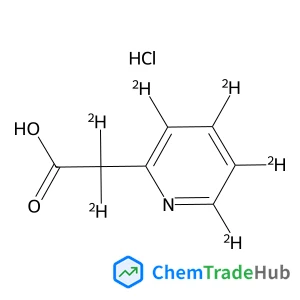
2,2-dideuterio-2-(3,4,5,6-tetradeuterio-2-pyridyl)acetic acid;hydrochloride
CAS号:
1329799-67-8
分子式:
C7H2ClD6NO2
![(2E)-3-(3-Chlorophenyl)-N-{2-[4-(methylsulfonyl)-1-piperazinyl]-2-oxoethyl}acrylamide structure](https://cnstatic.chemtradehub.com/structs/250/2505001-54-5-c1e9.webp "(2E)-3-(3-Chlorophenyl)-N-{2-[4-(methylsulfonyl)-1-piperazinyl]-2-oxoethyl}acrylamide structure")
推荐供应商





免责声明
本页面提供的学术期刊信息仅供参考和研究使用。我们与任何期刊出版商均无关联,也不处理投稿事宜。如有投稿相关咨询,请直接联系相关期刊出版商。
如发现页面信息有误,请发送邮件至 support@chemtradehub.com 联系我们。我们将及时核实并处理您的问题。