


Gibbs solution of the van der Waals–Maxwell problem and universality of the liquid–gas coexistence curve
文献信息
发布日期
2002-02-18
DOI
10.1039/B107989C
影响因子
3.676
作者
Vitaly B. Rogankov, Leonid Z. Boshkov
查看原文
摘要
The conventional statements of the scaling theory are: (i) the real fluids belong to the lattice gas universality class; (ii) the coexistence curves of real fluids, as well as of the van der Waals (vdW) model do not possess any apparent symmetry and therefore corrections to the asymptotic power laws and asymmetry must be taken into account in the extended critical region. We demonstrate that scaling and classical basic models, applied to the extended critical region have a common line of symmetry—the continuation of the critical isochore ρc by the line of the rectilinear diameter ρc = (ρl + ρg)/2 if a new parameter for the distance from the critical point is used instead of temperature. This is the reduced difference of molar entropies: x = (sg − sl)/2R which can be obtained from the measurable latent heat rs(T)–data along the coexistence curve. The parametric solution of the van der Waals–Maxwell problem proposed by Gibbs in terms of an unspecified parameter demonstrates similar symmetry if the parameter is identified as x. Nearly ideal linearity between the reduced densities ρl/ρc, ρg/ρc, (ρl − ρg)/ρc and parameter x has been found for a set of well-studied fluids: Ar, C2H4, CO2, H2O. The symmetry of the vdW-model differs from that of real fluids by the value of critical slopes for ρl,g(x)-functions expressed in terms of dimensionless variables. The slope is close to ±1/2 for real fluids, ±2/3 for the vdW-model, and ±∞ for the lattice gas model. We conclude that the symmetry in real fluids is much more similar to the vdW-model than to the lattice gas model. Therefore, to achieve an adequate description of real fluids in the extended critical region (ρ = ρc ± 0,3ρc, x ≤ 0,5), a combination of background (vdW-like) and scaling terms should be taken into account up to the critical point. With the introduction of constant rescaling factor for each above-named fluid a novel coexistence curve model can be obtained providing a high level of prediction accuracy on the basis of the parametric solution of the vdW–Maxwell problem.
期刊推荐
Russian Journal of General Chemistry
Chemistry Education Research and Practice
Crystallography Reports
Chemical Communications
Journal of Peptide Science
Russian Journal of Organic Chemistry
Russian Journal of Coordination Chemistry
Organic Process Research & Development
Current Opinion in Solid State & Materials Science
Russian Journal of Applied Chemistry
相关文献
Milk exosomes anchored with hydrophilic and zwitterionic motifs enhance mucus permeability for applications in oral gene delivery
Chenzhen Zhang, Hengli Zhang, Héctor A. Millán Cotto, Timothy L. Boyer, Matthew R. Warren, Chia-Ming Wang, Joshua Luchan, Pradeep K. Dhal, Rebecca L. Carrier, Ambika G. Bajpayee
2023-11-23
Paper
DOI: 10.1039/D3BM01089A
Size-dependent therapeutic efficiency of 223Ra-labeled calcium carbonate carriers for internal radionuclide therapy of breast cancer
Arina S. Ivkina, Mikhail V. Zyuzin, Sergei A. Shipilovskikh
2023-11-23
Paper
DOI: 10.1039/D3BM01651J
Membraneless, self-powered immunosensing of a cardiac biomarker by exploiting a PEC platform based on CaBi2Ta2O9 combined with bismuth oxyiodides
Greicy Kelly Cerqueira Caldas, Guilherme de Abreu Souza, Alan Silva de Menezes, Silma Regina Ferreira Pereira, Rita de Cássia Silva Luz, Flavio Santos Damos
2023-11-02
Paper
DOI: 10.1039/D3AY01309J
Development and application of a universal extraction-free reagent based on an algal glycolipid
Minli Qiu, Jun Cheng, Huajun Zhou, Feihu Che, Yan Hu, Yinghui He, Yuzhu Dai, Yingjie Zhang
2023-11-03
Paper
DOI: 10.1039/D3AY01246H
An active transport dual adaptive nanocarrier designed to overcome the corneal microenvironment for neovascularization therapy
Yingying Li, Shan Gao, Yu Zhang, Zhijing He, Jianbo Ji, Xiaoye Yang, Lei Ye, Lixia Zhao
2023-11-10
Paper
DOI: 10.1039/D3BM01349A
PVA-based bulk microneedles capable of high insulin loading and pH-triggered degradation for multi-responsive and sustained hypoglycemic therapy
Yuhong Ma, Wei Wang, Mujiao He, Yunzhu Liu, Caihua Li, Yinan Zhong, Quanmin Bu, Dechun Huang, Hongliang Qian, Wei Chen
2023-12-01
Paper
DOI: 10.1039/D3BM01760E
Construction of a cleavable linker chemistry-based HBEXO-Chip to isolate circulating exosomes for breast cancer diagnosis
Shanshan Zhou, Zongxin Li, Yan Li, Xiaoyao Wang, Kun Deng
2023-12-06
Paper
DOI: 10.1039/D3AY01938A
Differences in the internal energies of ions in electrospray ionization mass spectrometers equipped with capillary–skimmer and capillary–RF lens interfaces
Daiki Asakawa, Ryoma Yamamoto, Nobuyasu Hanari, Kazumi Saikusa
2023-10-03
Paper
DOI: 10.1039/D3AY01450A
An adaptive extended Gaussian peak derivative reweighted penalised least squares method for baseline correction
Xiaoshan Li, Xiaojun Tang, Bin Wang, Youshui Lu, Houqing Chen
2023-10-19
Paper
DOI: 10.1039/D3AY01389H
Delivery of gefitinib loaded nanoparticles for effectively inhibiting prostate cancer progression
Tong Tong, Qiang Jia
2023-12-19
Paper
DOI: 10.1039/D3BM01735D
您可能还喜欢
化合物问答
2-氨基-2-(5-甲基噻吩-2-基)乙酸(CAS号:89776-66-9)应用于哪些行业?
2-氨基-2-(5-甲基噻吩-2-基)乙酸主要应用于医药、聚合物、传感器和半导体等行业。在医药领域,它作为中间体用于合成各种药物。在聚合物行业,它可以用作稳定剂...
89776-66-9Amino(5-methyl-2-thi...
化合物问答
什么是N-(叔丁氧羰基)-3-碘吲唑(CAS号:290368-00-2)?
N-(叔丁氧羰基)-3-碘吲唑是一种化学化合物,其英文名称为2-Methyl-2-propanyl 3-iodo-1H-indazole-1-carboxyla...
290368-00-22-Methyl-2-propanyl ...
化合物问答
N-芴甲氧羰基-D-谷氨酸(CAS号:104091-09-0)的市场或研究趋势如何?
该化合物作为重要的保护基,广泛应用于生物有机化学合成中,尤其在肽类、蛋白质和寡核苷酸的研究领域。随着合成生物学和药物开发的进展,该化合物的需求持续增长。未来的研...
104091-09-0N-[(9H-Fluoren-9-ylm...
化合物问答
2-乙氧基-1-萘酰氯(CAS号:55150-29-3)的市场或研究趋势如何?
2-乙氧基-1-萘酰氯在研究领域中主要用于合成研究和有机化学反应,随着有机合成技术的发展,其市场应用和研究兴趣可能会有所增长。尤其是在新型药物合成和新材料开发领...
55150-29-32-Ethoxy-1-naphthoyl...
化合物问答
1-甲氧基菜豆素(CAS号:65428-13-9)的主要用途是什么?
1-甲氧基菜豆素主要应用于有机合成、药物化学领域,作为合成其他有机化合物的中间体或前体。此外,由于其特殊的化学性质,也可能用于某些特定的化学研究和实验中。
65428-13-9(6aR,11aR)-1-Methoxy...
化合物问答
small>-2-氨基丁酸(CAS号:106873-99-8)的主要用途是什么?
small>-2-氨基丁酸主要应用于有机合成和化学研究中,作为中间体或试剂使用。此外,它还可能用于某些药物合成过程中。
106873-99-82-Formamidobutanoic ...
化合物问答
什么是5-氨基-2-氯-n-(2-呋喃甲基)苯甲酰胺(CAS号:926216-59-3)?
5-氨基-2-氯-n-(2-呋喃甲基)苯甲酰胺是一种有机化合物,其分子式为C11H9ClN3O。它具有一定的生物活性,在合成化学和药物化学中有一定的应用价值。
926216-59-35-Amino-2-chloro-N-(...
化合物问答
4-(3-溴苯甲酰基)-哌嗪-1-羧酸叔丁酯(CAS号:890153-34-1)适用哪些法规指南?
该化合物根据其化学性质和用途,可能需要符合GHS(全球化学品统一分类和标签制度)的分类标准,包括急性毒性、皮肤腐蚀/刺激、严重眼损伤/眼刺激等类别。此外,根据其...
890153-34-12-Methyl-2-propanyl ...
化合物问答
如何储存(9ci)-2,4-二甲基-1H-吡咯-3-甲腈(CAS号:26187-28-0)?
应将(9ci)-2,4-二甲基-1H-吡咯-3-甲腈存放在阴凉、干燥的地方,避免阳光直射。储存容器应密封良好,防止挥发和污染。建议温度保持在20-25℃之间,湿...
26187-28-02,4-Dimethyl-1H-pyrr...
化合物问答
巨大戟醇-5,20-缩丙酮-3-当归酸酯(CAS号:87980-68-5)通常如何合成?
该化合物通常通过合成当归酸酯的方法制备,具体步骤为将当归酸酯与巨大戟醇-5,20-缩丙酮进行缩合反应,反应条件为温和的酸性环境,通常使用三氟乙酸作为催化剂。该合...
87980-68-5(4S,5S,6R,18R)-5-Hyd...
来源期刊
Physical Chemistry Chemical Physics

CiteScore:
5.5
自引率:
10.3%
年发文量:
3036
Physical Chemistry Chemical Physics (PCCP) is an international journal co-owned by 19 physical chemistry and physics societies from around the world. This journal publishes original, cutting-edge research in physical chemistry, chemical physics and biophysical chemistry. To be suitable for publication in PCCP, articles must include significant innovation and/or insight into physical chemistry; this is the most important criterion that reviewers and Editors will judge against when evaluating submissions. The journal has a broad scope and welcomes contributions spanning experiment, theory, computation and data science. Topical coverage includes spectroscopy, dynamics, kinetics, statistical mechanics, thermodynamics, electrochemistry, catalysis, surface science, quantum mechanics, quantum computing and machine learning. Interdisciplinary research areas such as polymers and soft matter, materials, nanoscience, energy, surfaces/interfaces, and biophysical chemistry are welcomed if they demonstrate significant innovation and/or insight into physical chemistry. Joined experimental/theoretical studies are particularly appreciated when complementary and based on up-to-date approaches.
推荐化合物
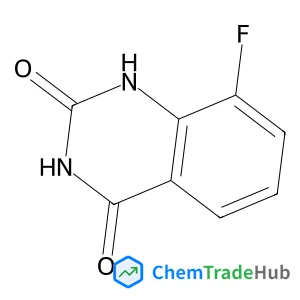
![(3R)-4-(4-Chlorophenyl)-3-({[(2-methyl-2-propanyl)oxy]carbonyl}amino)butanoic acid structure](https://cnstatic.chemtradehub.com/structs/218/218608-96-9-f871.webp "(3R)-4-(4-Chlorophenyl)-3-({[(2-methyl-2-propanyl)oxy]carbonyl}amino)butanoic acid structure")
推荐供应商




免责声明
本页面提供的学术期刊信息仅供参考和研究使用。我们与任何期刊出版商均无关联,也不处理投稿事宜。如有投稿相关咨询,请直接联系相关期刊出版商。
如发现页面信息有误,请发送邮件至 support@chemtradehub.com 联系我们。我们将及时核实并处理您的问题。