






Enhanced selectivity in the conversion of methanol to 2,2,3-trimethylbutane (triptane) over zinc iodide by added phosphorous or hypophosphorous acid
文献信息
发布日期
2007-06-20
DOI
10.1039/B705470J
影响因子
6.222
作者
John E. Bercaw, Robert H. Grubbs, Nilay Hazari, Jay A. Labinger, Xingwei Li
查看原文
摘要
The yield of triptane from the reaction of methanol with zinc iodide is dramatically increased by addition of phosphorous or hypophosphorous acid, via transfer of hydride from a P–H bond to carbocationic intermediates.
相关文献
Electrochemical quantification of iodide ions in synthetic urine using silver nanoparticles: a proof-of-concept
Her Shuang Toh, Kristina Tschulik, Christopher Batchelor-McAuley, Richard G. Compton
2014-06-12
Paper
DOI: 10.1039/C4AN00741G
Infrared spectral histopathology for cancer diagnosis: a novel approach for automated pattern recognition of colon adenocarcinoma
2014-06-12
Paper
DOI: 10.1039/C3AN01022H
Hyperspectral reflected light microscopy of plasmonic Au/Ag alloy nanoparticles incubated as multiplex chromatic biomarkers with cancer cells
Sergiy Patskovsky, Eric Bergeron, David Rioux, Mikaël Simard, Michel Meunier
2014-07-29
Paper
DOI: 10.1039/C4AN01063A
A novel aptasensor based on MUC-1 conjugated CNSs for ultrasensitive detection of tumor cells
Hongmei Cao, Daixin Ye, Qianqian Zhao, Juan Luo, Song Zhang, Jilie Kong
2014-07-08
Paper
DOI: 10.1039/C4AN00844H
Karhunen–Loève treatment to remove noise and facilitate data analysis in sensing, spectroscopy and other applications
P. J. Snyder, B. H. Davison
2014-09-09
Paper
DOI: 10.1039/C4AN01300J
Colorimetric and fluorescent determination of sulfide and sulfite with kinetic discrimination
Xiaoliang Pei, Haiyu Tian, Weibing Zhang, Albert M. Brouwer, Junhong Qian
2014-07-31
Paper
DOI: 10.1039/C4AN01086H
Identification of the sulfoxide functionality in protonated analytes via ion/molecule reactions in linear quadrupole ion trap mass spectrometry
Huaming Sheng, Peggy E. Williams, Weijuan Tang, Minli Zhang, Hilkka I. Kenttämaa
2014-06-05
Paper
DOI: 10.1039/C4AN00677A
Food safety control of zeranol through voltammetric immunosensing on Au–Pt bimetallic nanoparticle surfaces
Matías Regiart, Sirley V. Pereira, Viviana G. Spotorno, Franco A. Bertolino, Julio Raba
2014-06-27
Paper
DOI: 10.1039/C4AN00686K
An efficient technique for the reduction of wavelength noise in resonance-based integrated photonic sensors
Farshid Ghasemi, Maysamreza Chamanzar, Ali A. Eftekhar, Ali Adibi
2014-09-01
Paper
DOI: 10.1039/C4AN01292E
您可能还喜欢
化合物问答
什么是5-Fluoro-4-iodo-2-methylaniline(CAS号:307306-08-7)?
5-氟-4-碘-2-甲氨基苯属于芳香族化合物,其分子式为C8H7FN2I。该化合物具有一定的反应活性,在有机合成和药物化学领域有一定的应用。
307306-08-75-Fluoro-4-iodo-2-me...
化合物问答
4-氟-3-硝基三氟甲苯(CAS号:367-86-2)通常如何合成?
4-氟-3-硝基三氟甲苯通常通过将三氟甲基苯在酸性条件下催化氧化为三氟甲基硝基苯,然后进行氟化反应得到目标化合物。该过程需要使用催化剂,如三氟乙酸,反应产率较高...
367-86-21-Fluoro-2-nitro-4-(...
化合物问答
6-氯-9-(2,3,5-三苯甲酰氧基-2-C-甲基-beta-D-呋喃核糖基)-9H-嘌呤(CAS号:205171-05-7)的物理化学性质是什么?
该化合物为白色至类白色晶体,分子量约为1046.95。它在水中几乎不溶,在有机溶剂如乙腈和甲醇中具有一定的溶解性。该化合物具有良好的化学稳定性和生物活性。
205171-05-76-Chloro-9-(2-C-meth...
化合物问答
如何储存6-氟喹啉-4-羧酸(CAS号:220844-73-5)?
6-氟喹啉-4-羧酸应储存在阴凉、干燥、通风良好的地方,避免阳光直射。储存在密闭容器中,避免与空气中的水分接触。储存温度应控制在室温以下,避免高温。
220844-73-56-Fluoroquinoline-4-...
化合物问答
(2S,2'S,3S,3'S)-3,3'-di-tert-butyl-4,4'-bis(2,6-dimethoxyphenyl)-2,2',3,3'-tetrahydro-2,2'-bibenzo[d][1,3]oxaphosphole(CAS号:1435940-21-8)通常如何合成?
该化合物通常通过芳香族化合物的亲核取代反应合成,首先将2,6-二甲氧基苯基引入到双环结构中,然后通过特定条件下的还原或氧化反应引入二叔丁基。反应过程中使用了钯作...
1435940-21-8(2S,2'S,3S,3'S)-4,4'...
化合物问答
如何储存KY02111(CAS号:1118807-13-8)?
KY02111应储存于阴凉、干燥、通风良好的地方,避免阳光直射和高温环境。应使用合适的密闭容器储存,并确保容器密封良好,防止水分和潮气进入。在储存期间,应注意检...
1118807-13-8N-(6-chlorobenzo[d]t...
化合物问答
如何储存4-(4-氯苯氧基)丁酸乙酯(CAS号:59227-79-1)?
4-(4-氯苯氧基)丁酸乙酯应储存在阴凉、干燥、通风良好的地方,远离火源和热源。避免阳光直射,防止容器破裂导致泄漏。储存时应保持容器密封,避免与空气中的水蒸气接...
59227-79-1Ethyl 4-(4-chlorophe...
化合物问答
4-庚基苯乙酮(CAS号:37593-03-6)安全吗?
4-庚基苯乙酮相对安全,但在使用和储存时仍需注意。应避免吸入其蒸气,避免皮肤接触,使用时需佩戴防护眼镜和手套。储存时应远离火源和热源,保持容器密封,放置于阴凉、...
37593-03-61-(4-Heptylphenyl)et...
化合物问答
什么是乙基2-氨基-4-(3-溴苯基)噻吩-3-羧酸乙酯(CAS号:438218-48-5)?
乙基2-氨基-4-(3-溴苯基)噻吩-3-羧酸乙酯是一种有机化合物,分子式为C16H12BrN2O2S。它是一种含有噻吩环、氨基、溴苯基和羧酸酯结构的化合物。这...
438218-48-5ethyl 2-amino-4-(3-b...
化合物问答
什么是(9ci)-2-氨基-6-甲基-苯甲酰胺(CAS号:1885-31-0)?
(9ci)-2-氨基-6-甲基-苯甲酰胺是一种化学化合物,其英文名称为2-Amino-6-methylbenzamide,CAS号为1885-31-0。该化合物...
1885-31-02-Amino-6-methylbenz...
来源期刊
Chemical Communications

CiteScore:
8.6
自引率:
4.7%
年发文量:
2458
ChemComm publishes urgent research which is of outstanding significance and interest to experts in the field, while also appealing to the journal’s broad chemistry readership. Our communication format is ideally suited to short, urgent studies that are of such importance that they require accelerated publication. Our scope covers all topics in chemistry, and research at the interface of chemistry and other disciplines (such as materials science, nanoscience, physics, engineering and biology) where there is a significant novelty in the chemistry aspects. Major topic areas covered include: Analytical Chemistry Catalysis Chemical Biology and medicinal chemistry Computational Chemistry and Machine Learning Energy and sustainable chemistry Environmental Chemistry Green Chemistry Inorganic Chemistry Materials Chemistry Nanoscience Organic Chemistry Physical Chemistry Polymer Chemistry Supramolecular Chemistry
推荐化合物
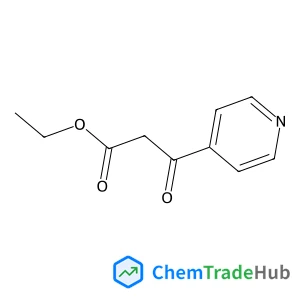
![2,2'-{2,2-Propanediylbis[(2,6-dibromo-4,1-phenylene)oxy]}diethanol structure](https://cnstatic.chemtradehub.com/structs/416/4162-45-2-b3d6.webp "2,2'-{2,2-Propanediylbis[(2,6-dibromo-4,1-phenylene)oxy]}diethanol structure")
推荐供应商



免责声明
本页面提供的学术期刊信息仅供参考和研究使用。我们与任何期刊出版商均无关联,也不处理投稿事宜。如有投稿相关咨询,请直接联系相关期刊出版商。
如发现页面信息有误,请发送邮件至 support@chemtradehub.com 联系我们。我们将及时核实并处理您的问题。