


![(1S)-1,5-Anhydro-2-O-alpha-L-arabinopyranosyl-1-[5-hydroxy-7-({6-O-[3-(4-hydroxy-3-methoxyphenyl)propanoyl]-beta-D-glucopyranosyl}oxy)-2-(4-hydroxyphenyl)-4-oxo-4H-chromen-6-yl]-D-glucitol structure](https://cnstatic.chemtradehub.com/structs/225/2252345-81-4-bcff.webp "(1S)-1,5-Anhydro-2-O-alpha-L-arabinopyranosyl-1-[5-hydroxy-7-({6-O-[3-(4-hydroxy-3-methoxyphenyl)propanoyl]-beta-D-glucopyranosyl}oxy)-2-(4-hydroxyphenyl)-4-oxo-4H-chromen-6-yl]-D-glucitol structure")
Bio-inspired approaches to sensing for defence and security applications‡
文献信息
发布日期
2008-02-29
DOI
10.1039/B717935A
影响因子
4.616
作者
Peter D. E. Biggins, Anne Kusterbeck, John A. Hiltz
查看原文
摘要
Interdisciplinary research in biotechnology and related scientific areas has increased tremendously over the past decade. This rapid pace, in conjunction with advances in microfabricated systems, computer hardware, bioengineering and the availability of low-powered miniature components, has now made it feasible to design bio-inspired materials, sensors and systems with tremendous potential for defence and security applications. To realize the full potential of biotechnology and bio-inspiration, there is a need to define specific requirements to meet the challenges of the changing world and its threats. One approach to assisting the defence and security communities in defining their requirements is through the use of a conceptual model. The distributed or intelligent autonomous sensing (DIAS) system is one such model. The DIAS model is not necessarily aimed at a single component, for instance a sensor, but can include a system, or even a system of systems in the same way that a single organism, a multi-cellular organism or group of organisms is configured. This paper provides an overview of the challenges to and opportunities for bio-inspired sensors and systems together with examples of how they are being implemented. Examples focus on both learning new things from biological organisms that have application to the defence and security forces and adapting known discoveries in biology and biochemistry for practical use by these communities.
期刊推荐
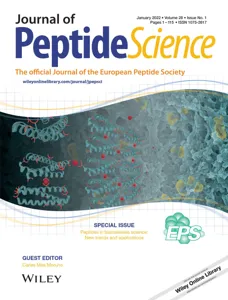
Journal of Peptide Science

New Journal of Chemistry

Acta Materialia
Russian Journal of Bioorganic Chemistry
Russian Journal of Coordination Chemistry
Journal of Saudi Chemical Society
Current Opinion in Colloid & Interface Science

Chemical Communications
Russian Journal of Organic Chemistry
Crystallography Reports
相关文献
Slow-to-fast transition of hydrogen bond dynamics in acetamide hydration shell formation
Francesco D'Amico, Gaia Camisasca, Filippo Bencivenga, Alessandro Gessini, Emiliano Principi, Riccardo Cucini, Claudio Masciovecchio
2015-03-23
Paper
DOI: 10.1039/C5CP00486A
Ion density deviations in semipermeable ionic microcapsules
Qiyun Tang, Alan R. Denton
2015-03-25
Paper
DOI: 10.1039/C5CP00974J
Adsorption of polyelectrolytes to like-charged substrates induced by multivalent counterions as exemplified by poly(styrene sulfonate) and silica
Plinio Maroni, Michal Borkovec
2015-03-23
Communication
DOI: 10.1039/C5CP00910C
Organic nanoparticles of malachite green with enhanced far-red emission: size-dependence of particle rigidity
Tomohito Funada, Takuya Hirose, Naoto Tamai, Hiroshi Yao
2015-03-23
Paper
DOI: 10.1039/C5CP00031A
Electromers of the benzene dimer radical cation
Anna Błoch-Mechkour, Thomas Bally
2015-03-25
Paper
DOI: 10.1039/C4CP05784H
Spin caloritronics of blue phosphorene nanoribbons
Y. S. Liu, X. Zhang, X. F. Yang, X. K. Hong, J. F. Feng, M. S. Si, X. F. Wang
2015-03-13
Paper
DOI: 10.1039/C5CP00391A
Synthesis, characterization and theoretical studies of nonlinear optical crystal Sr2B5O9(OH)·H2O
Fangfang Zhang, Jing Qun, Shilie Pan, Zhihua Yang, Dianzeng Jia
2015-03-16
Paper
DOI: 10.1039/C5CP00864F
Widely available active sites on Ni2P for electrochemical hydrogen evolution – insights from first principles calculations
Lucas-Alexandre Stern, Ligang Feng, Jan Rossmeisl, Xile Hu
2015-03-27
Paper
DOI: 10.1039/C5CP01065A
Phase transitions in free water nanoparticles. Theoretical modeling of [H2O]48 and [H2O]118
Aleš Vítek, René Kalus
2015-03-06
Paper
DOI: 10.1039/C4CP04909H
您可能还喜欢
化合物问答
什么是3-表南美楝属二醇(CAS号:19942-04-2)?
3-表南美楝属二醇是一种具有特定立体化学结构的化合物,其分子式为C31H52O2,属于甾醇类化合物。它具有光学活性,是一种复杂的有机分子,主要存在于一些植物中。
19942-04-2(3S,5R,8R,9R,10R,13R...
化合物问答
3-羧基-5-碘苯甲酸甲酯(CAS号:50765-22-5)应用于哪些行业?
3-羧基-5-碘苯甲酸甲酯主要应用于医药行业,作为合成某些药物中间体的重要原料。此外,它还可能用于聚合物的改性、传感器的制备以及半导体材料的制备等领域。
50765-22-5Methyl 3-hydroxy-5-i...
化合物问答
什么是3-Bromoindolin-2-one(CAS号:22942-87-6)?
3-Bromoindolin-2-one是一种含有溴代基团的吲哚酮衍生物,分子式为C9H7BrNO。它是一种无色固体,具有一定的挥发性,熔点为158-159°C...
22942-87-63-Bromoindolin-2-one
化合物问答
如何处理含有L-Lysyl-L-phenylalanyl-L-isoleucylglycyl-L-leucyl-L-methioninamide(CAS号:2990-43-4)的废料?
对于含有该化合物的废液,应先进行中和处理,然后根据其毒性和活性选择合适的处置方法。可以考虑焚烧处理或由专业的化学品废物处理公司进行无害化处理。处理过程中需注意环...
2990-43-4L-Lysyl-L-phenylalan...
化合物问答
ANGIOTENSIN 1/2 + A (2 - 8)(CAS号:51833-76-2)的物理化学性质是什么?
ANGIOTENSIN 1/2 + A (2 - 8)是一种蛋白质类化合物,具有典型的蛋白质性质。它的分子量约为5900 Da。该化合物在水中具有一定的溶解性,...
51833-76-2ANGIOTENSIN 1/2 + A ...
化合物问答
如何储存2-甲基硫代嘧啶-5-硼酸频那酯(CAS号:940284-18-4)?
应将该化合物存放在阴凉干燥、通风良好的地方,避免阳光直射。建议将化合物密封保存在避光的、干燥的容器中,远离火源和高温环境。
940284-18-42-(Methylthio)-5-(4,...
化合物问答
什么是苏丹红IV氘代物 标准品(CAS号:1014689-18-9)?
苏丹红IV氘代物 标准品是一种含有氘代标记的苏丹红IV化合物,是一种用于化合物分析、结构确证以及代谢研究的标准物质。
1014689-18-91-[(E)-{2-Methyl-4-[...
化合物问答
(+)-2-Amino-6-propionamido-d3-tetrahydrobenzothiazole(CAS号:1217680-69-7)适用哪些法规指南?
该化合物需要遵循《全球化学品统一分类和标签制度》(GHS)中的分类和标签要求,具体分类需依据其毒性和物理化学性质。此外,还需要符合《欧盟化学品注册、评估、授权和...
1217680-69-7(+)-2-Amino-6-propio...
化合物问答
如何储存2-氨基-2-(2-吡啶)乙酸乙酯(CAS号:55243-15-7)?
2-氨基-2-(2-吡啶)乙酸乙酯应储存于阴凉、干燥、通风良好的环境中,避免高温和光照。应使用密封容器储存,并远离易燃物、氧化剂和其他危险化学品。
55243-15-7Ethyl 2-amino-2-(pyr...
化合物问答
3-羟基-4-甲氧基吡啶-2-羧酸(CAS号:210300-09-7)的主要用途是什么?
3-羟基-4-甲氧基吡啶-2-羧酸主要用于合成其他有机化合物,如药物合成、农药合成和染料合成等。此外,它还可用作中间体和试剂,在化学研究领域也有一定的应用。
210300-09-73-Hydroxy-4-methoxy-...
来源期刊
Analyst

CiteScore:
7.8
自引率:
5.6%
年发文量:
653
Analyst publishes analytical and bioanalytical research that reports premier fundamental discoveries and inventions, and the applications of those discoveries, unconfined by traditional discipline barriers.
推荐化合物

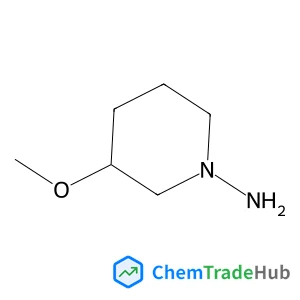
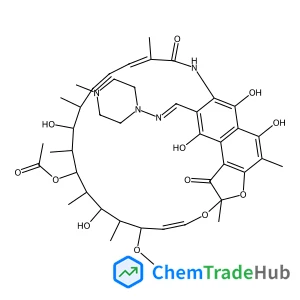
![Ethyl ({[(2-methyl-2-propanyl)oxy]carbonyl}amino)(2-pyridinyl)acetate structure](https://cnstatic.chemtradehub.com/structs/313/313490-90-3-dd15.webp "Ethyl ({[(2-methyl-2-propanyl)oxy]carbonyl}amino)(2-pyridinyl)acetate structure")
Ethyl ({[(2-methyl-2-propanyl)oxy]carbonyl}amino)(2-pyridinyl)acetate
CAS号:
313490-90-3
分子式:
C14H20N2O4
推荐供应商




免责声明
本页面提供的学术期刊信息仅供参考和研究使用。我们与任何期刊出版商均无关联,也不处理投稿事宜。如有投稿相关咨询,请直接联系相关期刊出版商。
如发现页面信息有误,请发送邮件至 support@chemtradehub.com 联系我们。我们将及时核实并处理您的问题。