


![(1R)-N-((1R)-1-Phenylethyl)-1-[4-(tert-butyldimethylsilyloxymethyl)cyclohexyl]ethan-1-amine structure](https://cnstatic.chemtradehub.com/structs/672/672314-45-3-47ef.webp "(1R)-N-((1R)-1-Phenylethyl)-1-[4-(tert-butyldimethylsilyloxymethyl)cyclohexyl]ethan-1-amine structure")
Surface confinement and its effects on the luminescence quenching of a ruthenium-containing metallopolymer
文献信息
发布日期
2008-03-04
DOI
10.1039/B718505G
影响因子
4.616
作者
Lynn Dennany, Tia E. Keyes, Robert J. Forster
查看原文
摘要
Luminescence quenching of the metallopolymers [Ru(bpy)2(PVP)10]2+ and [Ru(bpy)2(PVP)10Os(bpy)2]4+, both in solution and as thin films, is reported, where bpy is 2,2′-bipyridyl and PVP is poly(4-vinylpyridine). When the metallopolymer is dissolved in ethanol, quenching of the ruthenium excited state, Ru2+*, within [Ru(bpy)2(PVP)10]2+ by [Os(bpy)3]2+ proceeds by a dynamic quenching mechanism and the rate constant is (1.1 ± 0.1) × 1011 M−1 s−1. This quenching rate is nearly two orders of magnitude larger than that found for quenching of monomeric [Ru(bpy)3]2+ under the same conditions. This observation is interpreted in terms of an energy transfer quenching mechanism in which the high local concentration of ruthenium luminophores leads to a single [Os(bpy)3]2+ centre quenching the emission of several ruthenium luminophores. Amplifications of this kind will lead to the development of more sensitive sensors based on emission quenching. Quenching by both [Os(bpy)3]2+ and molecular oxygen is significantly reduced within a thin film of the metallopolymer. Significantly, in both optically driven emission and electrogenerated chemiluminescence, emission is observed from bothruthenium and osmium centres within [Ru(bpy)2(PVP)10Os(bpy)2]4+ films, i.e. the ruthenium emission is not quenched by the coordinated[Os(bpy)2]2+ units. This observation opens up new possibilities in multi-analyte sensing since each luminophore can be used to detect separate analytes, e.g.guanine and oxoguanine.
期刊推荐
Drug Discovery Today

Russian Journal of Applied Chemistry

Current Opinion in Colloid & Interface Science

Chemistry Education Research and Practice

Organic Process Research & Development

Nature Medicine

Journal of Peptide Science

Russian Journal of Coordination Chemistry
Crystallography Reports

Russian Journal of Organic Chemistry
相关文献
Tuning the electronic and magnetic properties of graphene-like AlN nanosheets by surface functionalization and thickness
W. X. Zhang, T. Li, S. B. Gong, C. He, L. Duan
2015-03-23
Paper
DOI: 10.1039/C5CP00123D
Elucidating the conformational energetics of glucose and cellobiose in ionic liquids
Vivek S. Bharadwaj, Timothy C. Schutt, Timothy C. Ashurst, C. Mark Maupin
2015-03-17
Paper
DOI: 10.1039/C5CP00118H
Parallel mechanisms of polypyrrole self-discharge in aqueous media
H. Olsson, Z. Qiu, M. Strømme, M. Sjödin
2015-03-25
Paper
DOI: 10.1039/C4CP05355A
Adsorption of polyelectrolytes to like-charged substrates induced by multivalent counterions as exemplified by poly(styrene sulfonate) and silica
Plinio Maroni, Michal Borkovec
2015-03-23
Communication
DOI: 10.1039/C5CP00910C
The study of the electronic structure of some N-heterocyclic carbenes (NHCs) by variable energy photoelectron spectroscopy
Branka Kovač, Ivan Ljubić, Antti Kivimäki, Marcello Coreno, Igor Novak
2015-03-16
Paper
DOI: 10.1039/C5CP00482A
Widely available active sites on Ni2P for electrochemical hydrogen evolution – insights from first principles calculations
Lucas-Alexandre Stern, Ligang Feng, Jan Rossmeisl, Xile Hu
2015-03-27
Paper
DOI: 10.1039/C5CP01065A
Fragmentation mechanisms of cytosine, adenine and guanine ionized bases
Leila Sadr-Arani, Pierre Mignon, Henry Chermette, Hassan Abdoul-Carime, Bernadette Farizon, Michel Farizon
2015-03-31
Paper
DOI: 10.1039/C5CP00104H
Towards a comprehensive insight into efficient hydrogen production by self-assembled Ru(bpy)32+–polymer–Pt artificial photosystems
Huan Lin, Dan Liu, Jinlin Long, Zizhong Zhang, Huaqiang Zhuang, Yi Zheng, Xuxu Wang
2015-03-13
Paper
DOI: 10.1039/C5CP00720H
Electron capture dissociation and drift tube ion mobility-mass spectrometry coupled with site directed mutations provide insights into the conformational diversity of a metamorphic protein
Sophie R. Harvey, Massimiliano Porrini, Robert C. Tyler, Cait E. MacPhee, Brian F. Volkman, Perdita E. Barran
2015-03-12
Paper
DOI: 10.1039/C4CP05136J
您可能还喜欢
化合物问答
什么是3-表南美楝属二醇(CAS号:19942-04-2)?
3-表南美楝属二醇是一种具有特定立体化学结构的化合物,其分子式为C31H52O2,属于甾醇类化合物。它具有光学活性,是一种复杂的有机分子,主要存在于一些植物中。
19942-04-2(3S,5R,8R,9R,10R,13R...
化合物问答
3-羧基-5-碘苯甲酸甲酯(CAS号:50765-22-5)应用于哪些行业?
3-羧基-5-碘苯甲酸甲酯主要应用于医药行业,作为合成某些药物中间体的重要原料。此外,它还可能用于聚合物的改性、传感器的制备以及半导体材料的制备等领域。
50765-22-5Methyl 3-hydroxy-5-i...
化合物问答
什么是3-Bromoindolin-2-one(CAS号:22942-87-6)?
3-Bromoindolin-2-one是一种含有溴代基团的吲哚酮衍生物,分子式为C9H7BrNO。它是一种无色固体,具有一定的挥发性,熔点为158-159°C...
22942-87-63-Bromoindolin-2-one
化合物问答
如何处理含有L-Lysyl-L-phenylalanyl-L-isoleucylglycyl-L-leucyl-L-methioninamide(CAS号:2990-43-4)的废料?
对于含有该化合物的废液,应先进行中和处理,然后根据其毒性和活性选择合适的处置方法。可以考虑焚烧处理或由专业的化学品废物处理公司进行无害化处理。处理过程中需注意环...
2990-43-4L-Lysyl-L-phenylalan...
化合物问答
ANGIOTENSIN 1/2 + A (2 - 8)(CAS号:51833-76-2)的物理化学性质是什么?
ANGIOTENSIN 1/2 + A (2 - 8)是一种蛋白质类化合物,具有典型的蛋白质性质。它的分子量约为5900 Da。该化合物在水中具有一定的溶解性,...
51833-76-2ANGIOTENSIN 1/2 + A ...
化合物问答
如何储存2-甲基硫代嘧啶-5-硼酸频那酯(CAS号:940284-18-4)?
应将该化合物存放在阴凉干燥、通风良好的地方,避免阳光直射。建议将化合物密封保存在避光的、干燥的容器中,远离火源和高温环境。
940284-18-42-(Methylthio)-5-(4,...
化合物问答
什么是苏丹红IV氘代物 标准品(CAS号:1014689-18-9)?
苏丹红IV氘代物 标准品是一种含有氘代标记的苏丹红IV化合物,是一种用于化合物分析、结构确证以及代谢研究的标准物质。
1014689-18-91-[(E)-{2-Methyl-4-[...
化合物问答
(+)-2-Amino-6-propionamido-d3-tetrahydrobenzothiazole(CAS号:1217680-69-7)适用哪些法规指南?
该化合物需要遵循《全球化学品统一分类和标签制度》(GHS)中的分类和标签要求,具体分类需依据其毒性和物理化学性质。此外,还需要符合《欧盟化学品注册、评估、授权和...
1217680-69-7(+)-2-Amino-6-propio...
化合物问答
如何储存2-氨基-2-(2-吡啶)乙酸乙酯(CAS号:55243-15-7)?
2-氨基-2-(2-吡啶)乙酸乙酯应储存于阴凉、干燥、通风良好的环境中,避免高温和光照。应使用密封容器储存,并远离易燃物、氧化剂和其他危险化学品。
55243-15-7Ethyl 2-amino-2-(pyr...
化合物问答
3-羟基-4-甲氧基吡啶-2-羧酸(CAS号:210300-09-7)的主要用途是什么?
3-羟基-4-甲氧基吡啶-2-羧酸主要用于合成其他有机化合物,如药物合成、农药合成和染料合成等。此外,它还可用作中间体和试剂,在化学研究领域也有一定的应用。
210300-09-73-Hydroxy-4-methoxy-...
来源期刊
Analyst

CiteScore:
7.8
自引率:
5.6%
年发文量:
653
Analyst publishes analytical and bioanalytical research that reports premier fundamental discoveries and inventions, and the applications of those discoveries, unconfined by traditional discipline barriers.
推荐化合物
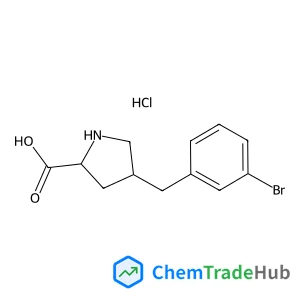
(2S,4R)-4-(3-Bromobenzyl)pyrrolidine-2-carboxylic acid hydrochloride
CAS号:
1049734-10-2
分子式:
C12H15BrClNO2
![(3S,4aS,8aS)-2-[(2R,3S)-3-Amino-2-hydroxy-4-phenylbutyl]-N-(2-methyl-2-propanyl)decahydro-3-isoquinolinecarboxamide structure](https://cnstatic.chemtradehub.com/structs/136/136522-17-3-4d77.webp "(3S,4aS,8aS)-2-[(2R,3S)-3-Amino-2-hydroxy-4-phenylbutyl]-N-(2-methyl-2-propanyl)decahydro-3-isoquinolinecarboxamide structure")
推荐供应商



免责声明
本页面提供的学术期刊信息仅供参考和研究使用。我们与任何期刊出版商均无关联,也不处理投稿事宜。如有投稿相关咨询,请直接联系相关期刊出版商。
如发现页面信息有误,请发送邮件至 support@chemtradehub.com 联系我们。我们将及时核实并处理您的问题。