


![3,7-Di(1,1':3',1''-terphenyl-5'-yl)-10,11,12,13-tetrahydrodiindeno[7,1-de:1',7'-fg][1,3,2]dioxaphosphocin-5-ol 5-oxide structure](https://cnstatic.chemtradehub.com/structs/135/1352810-38-8-3f10.webp "3,7-Di(1,1':3',1''-terphenyl-5'-yl)-10,11,12,13-tetrahydrodiindeno[7,1-de:1',7'-fg][1,3,2]dioxaphosphocin-5-ol 5-oxide structure")
Hybridization kinetics of double-stranded DNA probes for rapid molecular analysis
文献信息
发布日期
2009-05-22
DOI
10.1039/B906077D
影响因子
4.616
作者
Vinay Gidwani, Reza Riahi, Donna D. Zhang
查看原文
摘要
This study reports the hybridization kinetics of double-stranded DNA probes for rapid molecular analysis. Molecular binding schemes based on double-stranded DNA probes have been developed for quantitative detection of various biomolecules, such as nucleic acids and DNA binding proteins recently. The thermodynamic competition between the target and the competitor in binding to the probe provides a highly specific mechanism for molecular detection. The kinetics of the double-stranded DNA probe, on the other hand, represent another key aspect toward its general applicability for a wide set of biomedical applications. Herein we report a systematic investigation of the kinetics of double-stranded DNA probes. The signal-to-background ratio and assay time of the double-stranded DNA probes are optimized at a high ionic strength (over 100 mM NaCl). Both the donor probe and the quencher probe sequences are shown to be important in the hybridization kinetics. A long sticky end of the probe is able to dramatically accelerate the kinetics of the assay. To provide a quantitative description of the kinetics, a two-stage binding model is developed to describe the major features of the kinetics of the assay. The sensitivity of the kinetic model and the dominant affinity constants are studied. The study provides a general guideline for the design of the probes for reducing the total assay time. With an appropriate design of the probes, the assay can be finished within minutes at room temperature.
期刊推荐

New Journal of Chemistry
Russian Journal of Applied Chemistry

Chemistry Education Research and Practice
Drug Discovery Today
Organic Process Research & Development
Russian Journal of Coordination Chemistry

Journal of Peptide Science
Saudi Pharmaceutical Journal
Journal of Saudi Chemical Society

Acta Materialia
相关文献
Dissociation of CO2 on rhodium nanoclusters (Rh13) in various structures supported on unzipped graphene oxide – a DFT study
Chun-Chih Chang, Jia-Jen Ho
2015-03-24
Paper
DOI: 10.1039/C5CP01121C
Getting order in mesostructured thin films, from pore organization to crystalline walls, the case of 3-glycidoxypropyltrimethoxysilane
Davide Carboni, Alessandra Pinna, Heinz Amenitsch, Maria F. Casula, Danilo Loche, Luca Malfatti, Plinio Innocenzi
2015-03-12
Paper
DOI: 10.1039/C5CP00433K
Electronic structures and current conductivities of B, C, N and F defects in amorphous titanium dioxide
Hieu H. Pham, Lin-Wang Wang
2015-03-16
Paper
DOI: 10.1039/C5CP00890E
Enhanced electrochemical performance and thermal stability of LiNi0.5Mn1.5O4 using an electrolyte with sulfolane
Qian Zhang, Jia-Jia Chen, Xue-Yin Wang, Cheng Yang, Ming-Sen Zheng, Quan-Feng Dong
2015-03-25
Communication
DOI: 10.1039/C5CP00799B
Interactions of CO2 with various functional molecules
Han Myoung Lee, Il Seung Youn, Muhammad Saleh, Jung Woo Lee, Kwang S. Kim
2015-03-20
Paper
DOI: 10.1039/C5CP00673B
Rydberg and valence state excitation dynamics: a velocity map imaging study involving the E–V state interaction in HBr
Dimitris Zaouris, Andreas Kartakoullis, Pavle Glodic, Peter C. Samartzis, Helgi Rafn Hróðmarsson, Ágúst Kvaran
2015-03-16
Paper
DOI: 10.1039/C5CP00748H
Electrochemistry at highly oriented pyrolytic graphite (HOPG): lower limit for the kinetics of outer-sphere redox processes and general implications for electron transfer models
Guohui Zhang, Anatolii S. Cuharuc, Aleix G. Güell, Patrick R. Unwin
2015-03-31
Paper
DOI: 10.1039/C5CP00383K
Nitric oxide activation by caa3 oxidoreductase from Thermus thermophilus
Takehiro Ohta, Tewfik Soulimane, Teizo Kitagawa, Constantinos Varotsis
2015-03-23
Paper
DOI: 10.1039/C5CP01013F
Parallel mechanisms of polypyrrole self-discharge in aqueous media
H. Olsson, Z. Qiu, M. Strømme, M. Sjödin
2015-03-25
Paper
DOI: 10.1039/C4CP05355A
On the role of gold nanoparticles in the selective photooxidation of 2-propanol over Au/TiO2
Alexander Lüken, Martin Muhler, Jennifer Strunk
2015-03-13
Paper
DOI: 10.1039/C4CP05423G
您可能还喜欢
化合物问答
什么是3-表南美楝属二醇(CAS号:19942-04-2)?
3-表南美楝属二醇是一种具有特定立体化学结构的化合物,其分子式为C31H52O2,属于甾醇类化合物。它具有光学活性,是一种复杂的有机分子,主要存在于一些植物中。
19942-04-2(3S,5R,8R,9R,10R,13R...
化合物问答
3-羧基-5-碘苯甲酸甲酯(CAS号:50765-22-5)应用于哪些行业?
3-羧基-5-碘苯甲酸甲酯主要应用于医药行业,作为合成某些药物中间体的重要原料。此外,它还可能用于聚合物的改性、传感器的制备以及半导体材料的制备等领域。
50765-22-5Methyl 3-hydroxy-5-i...
化合物问答
什么是3-Bromoindolin-2-one(CAS号:22942-87-6)?
3-Bromoindolin-2-one是一种含有溴代基团的吲哚酮衍生物,分子式为C9H7BrNO。它是一种无色固体,具有一定的挥发性,熔点为158-159°C...
22942-87-63-Bromoindolin-2-one
化合物问答
如何处理含有L-Lysyl-L-phenylalanyl-L-isoleucylglycyl-L-leucyl-L-methioninamide(CAS号:2990-43-4)的废料?
对于含有该化合物的废液,应先进行中和处理,然后根据其毒性和活性选择合适的处置方法。可以考虑焚烧处理或由专业的化学品废物处理公司进行无害化处理。处理过程中需注意环...
2990-43-4L-Lysyl-L-phenylalan...
化合物问答
ANGIOTENSIN 1/2 + A (2 - 8)(CAS号:51833-76-2)的物理化学性质是什么?
ANGIOTENSIN 1/2 + A (2 - 8)是一种蛋白质类化合物,具有典型的蛋白质性质。它的分子量约为5900 Da。该化合物在水中具有一定的溶解性,...
51833-76-2ANGIOTENSIN 1/2 + A ...
化合物问答
如何储存2-甲基硫代嘧啶-5-硼酸频那酯(CAS号:940284-18-4)?
应将该化合物存放在阴凉干燥、通风良好的地方,避免阳光直射。建议将化合物密封保存在避光的、干燥的容器中,远离火源和高温环境。
940284-18-42-(Methylthio)-5-(4,...
化合物问答
什么是苏丹红IV氘代物 标准品(CAS号:1014689-18-9)?
苏丹红IV氘代物 标准品是一种含有氘代标记的苏丹红IV化合物,是一种用于化合物分析、结构确证以及代谢研究的标准物质。
1014689-18-91-[(E)-{2-Methyl-4-[...
化合物问答
(+)-2-Amino-6-propionamido-d3-tetrahydrobenzothiazole(CAS号:1217680-69-7)适用哪些法规指南?
该化合物需要遵循《全球化学品统一分类和标签制度》(GHS)中的分类和标签要求,具体分类需依据其毒性和物理化学性质。此外,还需要符合《欧盟化学品注册、评估、授权和...
1217680-69-7(+)-2-Amino-6-propio...
化合物问答
如何储存2-氨基-2-(2-吡啶)乙酸乙酯(CAS号:55243-15-7)?
2-氨基-2-(2-吡啶)乙酸乙酯应储存于阴凉、干燥、通风良好的环境中,避免高温和光照。应使用密封容器储存,并远离易燃物、氧化剂和其他危险化学品。
55243-15-7Ethyl 2-amino-2-(pyr...
化合物问答
3-羟基-4-甲氧基吡啶-2-羧酸(CAS号:210300-09-7)的主要用途是什么?
3-羟基-4-甲氧基吡啶-2-羧酸主要用于合成其他有机化合物,如药物合成、农药合成和染料合成等。此外,它还可用作中间体和试剂,在化学研究领域也有一定的应用。
210300-09-73-Hydroxy-4-methoxy-...
来源期刊
Analyst

CiteScore:
7.8
自引率:
5.6%
年发文量:
653
Analyst publishes analytical and bioanalytical research that reports premier fundamental discoveries and inventions, and the applications of those discoveries, unconfined by traditional discipline barriers.
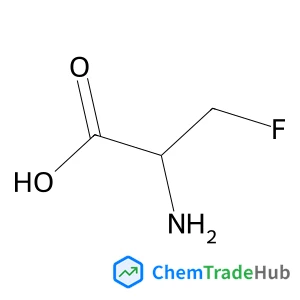
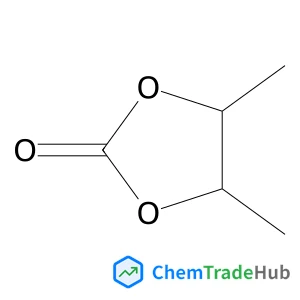
推荐化合物

推荐供应商





免责声明
本页面提供的学术期刊信息仅供参考和研究使用。我们与任何期刊出版商均无关联,也不处理投稿事宜。如有投稿相关咨询,请直接联系相关期刊出版商。
如发现页面信息有误,请发送邮件至 support@chemtradehub.com 联系我们。我们将及时核实并处理您的问题。