







Paracyclophanes as model compounds for strongly interacting π-systems. Part 1. Pseudo-ortho-dihydroxy[2.2]paracyclophane
文献信息
发布日期
2010-06-29
DOI
10.1039/B925634B
影响因子
3.676
作者
Conrad Kaiser
查看原文
摘要
In this work we describe a study of the ground and first excited state structures and energetics of a dihydroxy-derivative of [2.2]paracyclophane (PC), the pseudo-ortho-dihydroxy[2.2]paracyclophane (o-DHPC), also termed 4,12-dihydroxy[2.2]paracyclophane. In order to understand the electronic interactions between the two π-systems, the molecule is investigated by REMPI spectroscopy in a free jet and by quantum chemical calculations. REMPI-spectra of the cluster with one water molecule were also obtained and aid in the interpretation. The origin of the S1 ← S0 transition lies at 31 483 cm−1 (3.903 eV) for o-DHPC and 31 263 cm−1 (3.876 eV) for the o-DHPC·H2O cluster. An adiabatic excitation energy of 3.87 eV was computed for the S1 ← S0 transition in o-DHPC. The SCS-CC2 calculations deviate by less than 0.1 eV for the adiabatic excitation energies of PC, o-DHPC and the related aromatic molecules benzene and phenol. Considerable activity in a breathing vibration of 190 cm−1 is found in the S1 state of o-DHPC and o-DHPC·H2O, in agreement with the computed SCS-CC2 value of 185 cm−1. Further vibrations appear at +11 cm−1 and +54 cm−1 in o-DHPC. The computations and the available experimental data of the parent PC show that both PC and o-DHPC are rather flexible with respect to motions of the benzene moieties. While PC has a double minimum potential energy with respect to the torsional motion, a single-minimum structure is found for the ground state of o-DHPC. The geometry change upon excitation is less pronounced in o-DHPC as compared to PC. Two of the three possible rotational conformers of the OH groups were found to have similar energies, but spectral hole burning shows that the spectra are dominated by a single rotamer.
相关文献
A new tetrameric CuII cluster with square topology exhibiting ferro- and antiferromagnetic magnetic pathways : which is which?
Mau Sinha Ray, Ashutosh Ghosh, Ansuman Das, Michael G. B. Drew, Jordi Ribas-Ariño, Juan Novoa, Joan Ribas
2004-04-05
Communication
DOI: 10.1039/B401061B
Highly enantioselective dynamic kinetic resolution and desymmetrization processes by cyclocondensation of chiral aminoalcohols with racemic or prochiral δ-oxoacid derivatives
Mercedes Amat, Oriol Bassas, Miquel A. Pericàs, Mireia Pastó, Joan Bosch
2005-01-20
Communication
DOI: 10.1039/B413937B
Two mixed-valence copper(i,ii) imidazolate coordination polymers: metal-valence tuning approach for new topological structures
Jie-Peng Zhang, Yan-Yong Lin, Xiao-Lan Yu, Xiao-Ming Chen
2004-04-01
Communication
DOI: 10.1039/B401691B
Baylis–Hillman adducts in rhodium-catalyzed 1,4-additions: unusual reactivity
Laure Navarre, Sylvain Darses, Jean-Pierre Genet
2004-04-05
Communication
DOI: 10.1039/B402928C
Ruthenium-catalyzed coupling of aldimines with arylboronates: new synthetic method for aromatic ketones
Young Jun Park, Eun-Ae Jo, Chul-Ho Jun
2005-01-18
Communication
DOI: 10.1039/B415810E
Conformational effects in enzyme catalysis: QM/MM free energy calculation of the ‘NAC’ contribution in chorismate mutase
Kara E. Ranaghan, Adrian J. Mulholland
2004-04-27
Communication
DOI: 10.1039/B402388A
Recyclable Sonogashira coupling reactions in an ionic liquid, effected in the absence of both a copper salt and a phosphine
Soon Bong Park, Howard Alper
2004-05-07
Communication
DOI: 10.1039/B402477J
A polymer support with controllable solubility in mutually immiscible solvents
Luca Minati, Andrea Biffis
2005-01-10
Communication
DOI: 10.1039/B413885F
The influence of the loop sequence in binding studies involving cationic porphyrins and DNA hairpins
Stephanie A. Bejune, David R. McMillin
2004-05-10
Communication
DOI: 10.1039/B402330G
Cationic polyhedral oligomeric silsesquioxane (POSS) units as carriers for drug delivery processes
Catherine McCusker, Joseph B. Carroll, Vincent M. Rotello
2005-01-10
Communication
DOI: 10.1039/B416266H
您可能还喜欢
化合物问答
4-[[6-(3-苯基苯基)-7H-嘌呤-2-基]氨基]苯磺酰胺(CAS号:2079895-42-2)适用哪些法规指南?
该化合物需遵循REACH法规以确保其安全使用和管理。同时,根据其潜在的生物降解性和毒性,也需要符合GHS分类中的相应要求。此外,若用于医药或食品相关领域,则还需...
2079895-42-24-{[6-(3-Biphenylyl)...
化合物问答
反式-度骨化醇(CAS号:74007-20-8)的物理化学性质是什么?
反式-度骨化醇是一种脂溶性维生素D3的衍生物,呈无色或白色结晶性粉末,不溶于水,溶于乙醇、丙酮、氯仿等有机溶剂。其分子式为C28H44O,分子量为404.65。...
74007-20-8trans-Doxercalcifero...
化合物问答
莲花掌苷(CAS号:59282-56-3)的市场或研究趋势如何?
莲花掌苷作为一种天然产物,近年来在抗炎、抗癌等生物活性研究方面显示出一定的潜力,因此市场需求逐渐增长。市场动态方面,随着天然产物开发的深入,预计该化合物的研究会...
59282-56-3Lindleyin
化合物问答
2-溴-6-(吡咯烷-1-基)吡啶-4-硼酸频那醇酯(CAS号:1150271-64-9)应用于哪些行业?
2-溴-6-(吡咯烷-1-基)吡啶-4-硼酸频那醇酯在医药领域有着广泛的应用,它可以用作药物合成中的中间体。此外,它还可以用于有机合成,特别是在构建复杂杂环化合...
1150271-64-92-Bromo-6-(1-pyrroli...
化合物问答
什么是methyl 2-(4-bromophenyl)-3-methylbutanoate(CAS号:1061284-70-5)?
methyl 2-(4-溴苯基)-3-甲基丁酸甲酯是一种化学物质,分子式为C12H13BrO2。它是一种有机化合物,具有一定的挥发性和易燃性。
1061284-70-52-(4-Bromo-phenyl)-3...
化合物问答
CJC1-295(CAS号:863288-34-0)的物理化学性质是什么?
CJC1-295是一种具有复杂肽链结构的化合物,其分子量约为1875 Da。该化合物在水中具有一定的溶解性,但在有机溶剂中的溶解性不佳。它是一种反应活性化合物,...
863288-34-0L-tyrosyl-D-alanyl-L...
化合物问答
三正丁基锍碘(CAS号:18146-62-8)的市场或研究趋势如何?
三正丁基锍碘作为一种重要的有机硫化合物,主要用于有机合成中作为亲电试剂。近年来,由于其在合成中的广泛应用,市场对其需求持续增长。此外,随着绿色化学的发展,对其替...
18146-62-8Tributylsulfonium io...
化合物问答
雌二醇-[13C3]同位素内标(CAS号:1261254-48-1)通常如何合成?
雌二醇-[13C3]同位素内标通常通过在雌二醇分子中引入[13C3]同位素来合成。常见的方法是通过化学标记反应,如与[13C3]标记的甲基溴化物进行亲核取代反应...
1261254-48-117beta-Estradiol-2,3...
化合物问答
N1-(2-吡啶甲基)-N2-(2-甲基-1-萘基)草酰胺(CAS号:2611225-93-3)的物理化学性质是什么?
N1-(2-吡啶甲基)-N2-(2-甲基-1-萘基)草酰胺为固体化合物,具有良好的结晶形态,分子量为340.34 g/mol。该化合物在水中的溶解度较低,但在有...
2611225-93-3N-(2-Methyl-1-naphth...
化合物问答
如何处理含有十五碳烯酸甲酯(顺-10)(C15:1)标准品(CAS号:90176-52-6)的废料?
含有十五碳烯酸甲酯(顺-10)(C15:1)标准品的废料应首先进行适当收集和储存,避免与其他化学品混合。然后,可采用焚烧或交由专业废物处理公司进行处理。处理过程...
90176-52-6(Z)-10-Pentadecenoic...
来源期刊
Physical Chemistry Chemical Physics

CiteScore:
5.5
自引率:
10.3%
年发文量:
3036
Physical Chemistry Chemical Physics (PCCP) is an international journal co-owned by 19 physical chemistry and physics societies from around the world. This journal publishes original, cutting-edge research in physical chemistry, chemical physics and biophysical chemistry. To be suitable for publication in PCCP, articles must include significant innovation and/or insight into physical chemistry; this is the most important criterion that reviewers and Editors will judge against when evaluating submissions. The journal has a broad scope and welcomes contributions spanning experiment, theory, computation and data science. Topical coverage includes spectroscopy, dynamics, kinetics, statistical mechanics, thermodynamics, electrochemistry, catalysis, surface science, quantum mechanics, quantum computing and machine learning. Interdisciplinary research areas such as polymers and soft matter, materials, nanoscience, energy, surfaces/interfaces, and biophysical chemistry are welcomed if they demonstrate significant innovation and/or insight into physical chemistry. Joined experimental/theoretical studies are particularly appreciated when complementary and based on up-to-date approaches.
推荐化合物
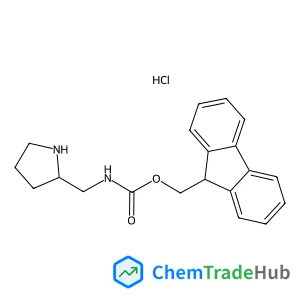
(S)-(9H-Fluoren-9-yl)methyl (pyrrolidin-2-ylmethyl)carbamate hydrochloride
CAS号:
1217813-15-4
分子式:
C20H23ClN2O2
![4-[(2-{2-[2-(2-Aminoethoxy)ethoxy]ethoxy}ethyl)amino]-2-(2,6-dioxo-3-piperidinyl)-1H-isoindole-1,3(2H)-dione structure](https://cnstatic.chemtradehub.com/structs/209/2093416-31-8-3162.webp "4-[(2-{2-[2-(2-Aminoethoxy)ethoxy]ethoxy}ethyl)amino]-2-(2,6-dioxo-3-piperidinyl)-1H-isoindole-1,3(2H)-dione structure")
推荐供应商



免责声明
本页面提供的学术期刊信息仅供参考和研究使用。我们与任何期刊出版商均无关联,也不处理投稿事宜。如有投稿相关咨询,请直接联系相关期刊出版商。
如发现页面信息有误,请发送邮件至 support@chemtradehub.com 联系我们。我们将及时核实并处理您的问题。