






Theoretical study of the adsorption of C1–C4 primary alcohols in H-ZSM-5
文献信息
发布日期
2010-07-07
DOI
10.1039/C000503G
影响因子
3.676
作者
Cuong M. Nguyen, Marie-Françoise Reyniers, Guy B. Marin
查看原文
摘要
The adsorption of C1–C4 primary alcohols at the Al12–O24(H)–Si12 intersection site in H-ZSM-5 is investigated using periodic density functional theory (DFT) calculations and adding a damped interatomic potential to the DFT results to account for dispersive van der Waals interactions (DFT-D). A good agreement between predicted and experimentally available adsorption enthalpies for C1–C3 alcohols is obtained. The effect of the H-ZSM-5 framework is sampled for adsorption of the C1–C4 alcohols in the straight and the zigzag channel. A variety of possible geometries, including hydrogen-bonded (physisorbed) and protonated (chemisorbed) complexes, are located as stable minima indicating that the potential energy surface connecting them is broad and very shallow. Experimental infrared (IR) spectra of the C1–C4 alcohols are interpreted based on harmonic frequency calculations for the most stable physisorbed and chemisorbed complexes. The stability of the adsorbed alcohols is governed by an interplay between their intrinsic basicity, van der Waals dispersive interactions and steric constraints exerted by the zeolite framework. In essence, steric constraints destabilize local hydrogen bonding and/or Coulomb alcohol-Brønsted acid site interactions while dispersive van der Waals interactions enhance the stability of physisorbed and chemisorbed complexes. Due to the prevalence of van der Waals interactions over steric constraints, C1–C4 alcohols adsorb preferentially in the more compact zigzag channel than in the straight channel. Both the physisorption and chemisorption energies increase linearly with 13 to 15 kJ mol−1 per carbon atom in the straight and the zigzag channel, respectively.
相关文献
Networked calix[4]arenepolymers with unusual mechanical properties
Joseph N. Grima, Kenneth E. Evans
2005-07-14
Communication
DOI: 10.1039/B505839B
Enclathration of morpholinium cations by Dianin's compound: salt formation by partial host-to-guest proton transfer
Gareth O. Lloyd, Martin W. Bredenkamp, Leonard J. Barbour
2005-07-13
Communication
DOI: 10.1039/B507726E
Directional control of π-stacked building blocks for crystal engineering: the 1,8-naphthalimide synthon
Daniel L. Reger, J. Derek Elgin, Radu F. Semeniuc, Perry J. Pellechia, Mark D. Smith
2005-07-14
Communication
DOI: 10.1039/B504998A
Biofunctionalization of fluorescent-magnetic-bifunctional nanospheres and their applications
Guo-Ping Wang, Er-Qun Song, Hai-Yan Xie, Zhi-Ling Zhang, Zhi-Quan Tian, Chao Zuo, Dai-Wen Pang, Dao-Cheng Wu, Yun-Bo Shi
2005-08-08
Communication
DOI: 10.1039/B508075D
Enantiomerically pure P-chiral phosphinoselenoic chlorides: inversion of configuration at the P-chirogenic center in the synthesis and reaction of these substances
Tsutomu Kimura, Toshiaki Murai
2005-07-13
Communication
DOI: 10.1039/B507755A
The elusive phosphorescence of pyrromethene–BF2 dyes revealed in new multicomponent species containing Ru(ii)–terpyridine subunits
Maurilio Galletta, Sebastiano Campagna, Manuel Quesada, Gilles Ulrich, Raymond Ziessel
2005-07-26
Communication
DOI: 10.1039/B507196H
(Z)-Selective cross-dimerization of arylacetylenes with silylacetylenes catalyzed by vinylideneruthenium complexes
Hiroyuki Katayama, Hiroshi Yari, Masaki Tanaka, Fumiyuki Ozawa
2005-07-28
Communication
DOI: 10.1039/B504436G
Simple and quick chemical aminoacylation of tRNA in cationic micellar solution under ultrasonic agitation
Naoto Hashimoto, Keiko Ninomiya, Takamasa Endo, Masahiko Sisido
2005-08-09
Communication
DOI: 10.1039/B508194G
Photostability of a highly luminescent europium β-diketonate complex in imidazolium ionic liquids
Peter Nockemann, Eva Beurer, Kris Driesen, Rik Van Deun, Kristof Van Hecke, Luc Van Meervelt, Koen Binnemans
2005-08-03
Communication
DOI: 10.1039/B506915G
2-Phenallyl as a versatile protecting group for the asymmetric one-pot three-component synthesis of propargylamines
Nina Gommermann, Paul Knochel
2005-07-26
Communication
DOI: 10.1039/B507810E
您可能还喜欢
化合物问答
4-[[6-(3-苯基苯基)-7H-嘌呤-2-基]氨基]苯磺酰胺(CAS号:2079895-42-2)适用哪些法规指南?
该化合物需遵循REACH法规以确保其安全使用和管理。同时,根据其潜在的生物降解性和毒性,也需要符合GHS分类中的相应要求。此外,若用于医药或食品相关领域,则还需...
2079895-42-24-{[6-(3-Biphenylyl)...
化合物问答
反式-度骨化醇(CAS号:74007-20-8)的物理化学性质是什么?
反式-度骨化醇是一种脂溶性维生素D3的衍生物,呈无色或白色结晶性粉末,不溶于水,溶于乙醇、丙酮、氯仿等有机溶剂。其分子式为C28H44O,分子量为404.65。...
74007-20-8trans-Doxercalcifero...
化合物问答
莲花掌苷(CAS号:59282-56-3)的市场或研究趋势如何?
莲花掌苷作为一种天然产物,近年来在抗炎、抗癌等生物活性研究方面显示出一定的潜力,因此市场需求逐渐增长。市场动态方面,随着天然产物开发的深入,预计该化合物的研究会...
59282-56-3Lindleyin
化合物问答
2-溴-6-(吡咯烷-1-基)吡啶-4-硼酸频那醇酯(CAS号:1150271-64-9)应用于哪些行业?
2-溴-6-(吡咯烷-1-基)吡啶-4-硼酸频那醇酯在医药领域有着广泛的应用,它可以用作药物合成中的中间体。此外,它还可以用于有机合成,特别是在构建复杂杂环化合...
1150271-64-92-Bromo-6-(1-pyrroli...
化合物问答
什么是methyl 2-(4-bromophenyl)-3-methylbutanoate(CAS号:1061284-70-5)?
methyl 2-(4-溴苯基)-3-甲基丁酸甲酯是一种化学物质,分子式为C12H13BrO2。它是一种有机化合物,具有一定的挥发性和易燃性。
1061284-70-52-(4-Bromo-phenyl)-3...
化合物问答
CJC1-295(CAS号:863288-34-0)的物理化学性质是什么?
CJC1-295是一种具有复杂肽链结构的化合物,其分子量约为1875 Da。该化合物在水中具有一定的溶解性,但在有机溶剂中的溶解性不佳。它是一种反应活性化合物,...
863288-34-0L-tyrosyl-D-alanyl-L...
化合物问答
三正丁基锍碘(CAS号:18146-62-8)的市场或研究趋势如何?
三正丁基锍碘作为一种重要的有机硫化合物,主要用于有机合成中作为亲电试剂。近年来,由于其在合成中的广泛应用,市场对其需求持续增长。此外,随着绿色化学的发展,对其替...
18146-62-8Tributylsulfonium io...
化合物问答
雌二醇-[13C3]同位素内标(CAS号:1261254-48-1)通常如何合成?
雌二醇-[13C3]同位素内标通常通过在雌二醇分子中引入[13C3]同位素来合成。常见的方法是通过化学标记反应,如与[13C3]标记的甲基溴化物进行亲核取代反应...
1261254-48-117beta-Estradiol-2,3...
化合物问答
N1-(2-吡啶甲基)-N2-(2-甲基-1-萘基)草酰胺(CAS号:2611225-93-3)的物理化学性质是什么?
N1-(2-吡啶甲基)-N2-(2-甲基-1-萘基)草酰胺为固体化合物,具有良好的结晶形态,分子量为340.34 g/mol。该化合物在水中的溶解度较低,但在有...
2611225-93-3N-(2-Methyl-1-naphth...
化合物问答
如何处理含有十五碳烯酸甲酯(顺-10)(C15:1)标准品(CAS号:90176-52-6)的废料?
含有十五碳烯酸甲酯(顺-10)(C15:1)标准品的废料应首先进行适当收集和储存,避免与其他化学品混合。然后,可采用焚烧或交由专业废物处理公司进行处理。处理过程...
90176-52-6(Z)-10-Pentadecenoic...
来源期刊
Physical Chemistry Chemical Physics

CiteScore:
5.5
自引率:
10.3%
年发文量:
3036
Physical Chemistry Chemical Physics (PCCP) is an international journal co-owned by 19 physical chemistry and physics societies from around the world. This journal publishes original, cutting-edge research in physical chemistry, chemical physics and biophysical chemistry. To be suitable for publication in PCCP, articles must include significant innovation and/or insight into physical chemistry; this is the most important criterion that reviewers and Editors will judge against when evaluating submissions. The journal has a broad scope and welcomes contributions spanning experiment, theory, computation and data science. Topical coverage includes spectroscopy, dynamics, kinetics, statistical mechanics, thermodynamics, electrochemistry, catalysis, surface science, quantum mechanics, quantum computing and machine learning. Interdisciplinary research areas such as polymers and soft matter, materials, nanoscience, energy, surfaces/interfaces, and biophysical chemistry are welcomed if they demonstrate significant innovation and/or insight into physical chemistry. Joined experimental/theoretical studies are particularly appreciated when complementary and based on up-to-date approaches.
推荐化合物
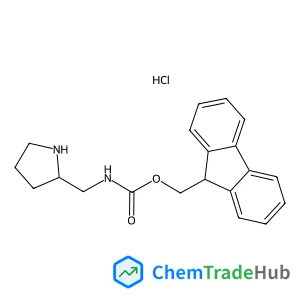
(S)-(9H-Fluoren-9-yl)methyl (pyrrolidin-2-ylmethyl)carbamate hydrochloride
CAS号:
1217813-15-4
分子式:
C20H23ClN2O2

推荐供应商




免责声明
本页面提供的学术期刊信息仅供参考和研究使用。我们与任何期刊出版商均无关联,也不处理投稿事宜。如有投稿相关咨询,请直接联系相关期刊出版商。
如发现页面信息有误,请发送邮件至 support@chemtradehub.com 联系我们。我们将及时核实并处理您的问题。