






High fidelity vinyl terminated polymers by combining RAFT and cobaltcatalytic chain transfer (CCT) polymerization methods
文献信息
发布日期
2010-08-03
DOI
10.1039/C0CC01694B
影响因子
6.222
作者
Alexander H. Soeriyadi, Cyrille Boyer, James Burns, C. Remzi Becer, Michael R. Whittaker, David M. Haddleton, Thomas P. Davis
查看原文
摘要
In this work, we combine reversible addition fragmentation transfer polymerization (RAFT) with cobalt catalytic chain transfer (CCT) to obtain ω-unsaturated polymers with relatively low polydispersity values.
相关文献
Bulk nanostructure of the prototypical ‘good’ and ‘poor’ solvate ionic liquids [Li(G4)][TFSI] and [Li(G4)][NO3]
Thomas Murphy, Sam K. Callear, Nageshwar Yepuri, Karina Shimizu, Masayoshi Watanabe, José N. Canongia Lopes, Tamim Darwish, Gregory G. Warr, Rob Atkin
2016-01-28
Paper
DOI: 10.1039/C6CP00176A
How surface reparation prevents catalytic oxidation of carbon monoxide on atomic gold at defective magnesium oxide surfaces
Kai Töpfer, Jean Christophe Tremblay
2016-06-09
Paper
DOI: 10.1039/C6CP02339H
Ultrafast and slow charge recombination dynamics of diketopyrrolopyrrole–NiO dye sensitized solar cells
Lei Zhang, Ludovic Favereau, Yoann Farré, Edgar Mijangos, Yann Pellegrin, Errol Blart, Fabrice Odobel, Leif Hammarström
2016-06-10
Paper
DOI: 10.1039/C6CP01762B
Structure and bonding in crystalline cesium uranyl tetrachloride under pressure
Pilar Pertierra, Miguel A. Salvadó, F. Izquierdo-Ruiz, J. M. Recio
2016-06-10
Paper
DOI: 10.1039/C6CP03876J
Structural phase transition in perovskite metal–formate frameworks: a Potts-type model with dipolar interactions
Mantas Šimėnas, Sergejus Balčiūnas, Mirosław Maçzka, Jūras Banys, Evaldas E. Tornau
2016-06-13
Paper
DOI: 10.1039/C6CP03414D
Temperature-dependent dynamic correlations in suspensions of magnetic nanoparticles in a broad range of concentrations: a combined experimental and theoretical study
Alexey O. Ivanov, Vladimir S. Zverev, Ekaterina A. Elfimova, Alexander V. Lebedev, Alexander F. Pshenichnikov
2016-06-06
Paper
DOI: 10.1039/C6CP02793H
Mechanical degradation of graphene by epoxidation: insights from first-principles calculations
Liang Han, Jie Lian, Sheng Liu, Zhongfang Chen, Nikhil Koratkar, Suvranu De
2015-06-24
Paper
DOI: 10.1039/C5CP02986D
Crystallographic origin of cycle decay of the high-voltage LiNi0.5Mn1.5O4 spinel lithium-ion battery electrode
Cheng-Zhang Lu, Chia-Erh Liu, Vanessa K. Peterson, Shih-Chieh Liao, Jin-Ming Chen
2016-03-04
Paper
DOI: 10.1039/C6CP00947F
Spectacular enhancement of thermoelectric phenomena in chemically synthesized graphene nanoribbons with substitution atoms
K. Zberecki, R. Swirkowicz, M. Wierzbicki
2016-06-07
Paper
DOI: 10.1039/C6CP02877B
In situ investigation of mesoporous silicon oxidation kinetics using infrared emittance spectroscopy
Benjamin Bardet, Domingos De Sousa Meneses, Thomas Defforge, Jérôme Billoué, Gaël Gautier
2016-06-17
Paper
DOI: 10.1039/C6CP02086K
您可能还喜欢
化合物问答
奥美沙坦酯杂质4(CAS号:95579-71-8)的主要用途是什么?
奥美沙坦酯杂质4在药物工业中并无特定用途,主要作为生产和质量控制中的监控指标,以确保产品质量和符合相关规范。它具有一定的化学活性,因此在生产过程中需要严格控制其...
95579-71-84-Chloro-4-methyl-5-...
化合物问答
如何储存C3bot (154-182)(CAS号:1246280-79-4)?
C3bot (154-182)应储存在干燥、阴凉、通风良好的环境中,避免阳光直射。具体储存条件需要参考其相关安全数据表(SDS)中的储存信息。建议使用密闭容器存...
1246280-79-4C3bot (154-182)
化合物问答
在合成中是否有4-吡唑甲酸乙酯(CAS号:37622-90-5)的替代品?
在合成过程中,可以考虑使用类似结构的化合物作为替代品,例如4-吡唑甲酸甲酯或其他吡唑类化合物。这些替代品在性质上相似,可以用于相似的合成反应中,但需根据具体应用...
37622-90-5Ethyl 1H-pyrazole-4-...
化合物问答
(2-溴乙基)三甲基硅烷(CAS号:18156-67-7)的主要用途是什么?
(2-溴乙基)三甲基硅烷主要用作有机合成中的溴代试剂,特别是在硅化学领域中,用于制备硅烷衍生物和硅基功能材料。它也用于表面改性、催化剂合成、医药中间体合成以及分...
18156-67-7(2-Bromoethyl)(trime...
化合物问答
如何处理含有2-(4-broMophenyl)-1,1,1-trifluoropropan-2-ol(CAS号:122243-28-1)的废料?
含该化合物的废料需按照危险废物管理规定进行分类和处理。首先,应尽量减少废料的产生,通过改进生产工艺实现废物最小化。对于不可避免的废料,建议采用安全的收集方法,避...
122243-28-12-(4-bromophenyl)-1,...
化合物问答
什么是1,1,1-三氟-6-苯基-5-(e)-己烯-2,4-二酮(CAS号:18931-64-1)?
1,1,1-三氟-6-苯基-5-(e)-己烯-2,4-二酮是一种有机化合物,化学式为C14H8F3O2。它是一种具有特定立体结构的芳香族化合物,属于酮类。
18931-64-1(5E)-1,1,1-Trifluoro...
化合物问答
2-(2-甲基哌啶-1-基)-2-氧代-乙酸(CAS号:77654-61-6)的主要用途是什么?
2-(2-甲基哌啶-1-基)-2-氧代-乙酸主要用于药物合成、有机合成及作为化学试剂。它在医药领域有一定的应用,可用于合成某些药物中间体。此外,它还用于实验室研...
77654-61-6(2-Methyl-1-piperidi...
化合物问答
如何储存(R)-1-(3-Chlorophenyl)-2,2,2-trifluoroethanamine(CAS号:1213627-66-7)?
应将(R)-1-(3-氯苯基)-2,2,2-三氟乙胺储存在阴凉、干燥、通风良好的地方,远离火源和热源。应使用密封的容器储存,并避免光照。储存温度应控制在室温范围...
1213627-66-7(1R)-1-(3-Chlorophen...
化合物问答
N-亚硝基-N,N-二壬基胺(CAS号:84424-96-4)的市场或研究趋势如何?
N-亚硝基-N,N-二壬基胺目前主要应用于有机合成和药物化学领域。市场趋势显示,随着有机合成技术的进步,该化合物在新药研发中的应用将更加广泛。新兴研究领域包括其...
84424-96-4N-Nitroso-N-nonyl-1-...
化合物问答
5-Chloro-2-methoxy-3-(2,2,2-trifluoroethoxy)pyridine(CAS号:1280786-68-6)的市场或研究趋势如何?
该化合物在医药、农药等领域有潜在应用价值,但市场需求较小。目前研究趋势主要集中在探索其在特定领域的应用潜力,如作为药物合成中的中间体。随着研究的深入,预计未来市...
1280786-68-65-Chloro-2-methoxy-3...
来源期刊
Chemical Communications

CiteScore:
8.6
自引率:
4.7%
年发文量:
2458
ChemComm publishes urgent research which is of outstanding significance and interest to experts in the field, while also appealing to the journal’s broad chemistry readership. Our communication format is ideally suited to short, urgent studies that are of such importance that they require accelerated publication. Our scope covers all topics in chemistry, and research at the interface of chemistry and other disciplines (such as materials science, nanoscience, physics, engineering and biology) where there is a significant novelty in the chemistry aspects. Major topic areas covered include: Analytical Chemistry Catalysis Chemical Biology and medicinal chemistry Computational Chemistry and Machine Learning Energy and sustainable chemistry Environmental Chemistry Green Chemistry Inorganic Chemistry Materials Chemistry Nanoscience Organic Chemistry Physical Chemistry Polymer Chemistry Supramolecular Chemistry
推荐化合物
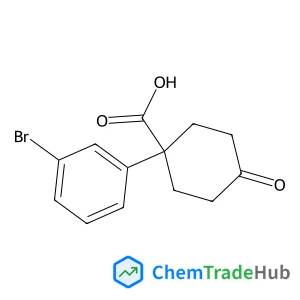
![2-[1-(4-Chlorobenzyl)-1H-indol-3-yl]-2-oxo-N-(6-quinolinyl)acetamide structure](https://cnstatic.chemtradehub.com/structs/501/501921-61-5-756a.webp "2-[1-(4-Chlorobenzyl)-1H-indol-3-yl]-2-oxo-N-(6-quinolinyl)acetamide structure")
2-[1-(4-Chlorobenzyl)-1H-indol-3-yl]-2-oxo-N-(6-quinolinyl)acetamide
CAS号:
501921-61-5
分子式:
C26H18ClN3O2
推荐供应商




免责声明
本页面提供的学术期刊信息仅供参考和研究使用。我们与任何期刊出版商均无关联,也不处理投稿事宜。如有投稿相关咨询,请直接联系相关期刊出版商。
如发现页面信息有误,请发送邮件至 support@chemtradehub.com 联系我们。我们将及时核实并处理您的问题。