












![9H-Fluoren-9-ylmethyl [(2S)-1-hydroxy-3-(1H-indol-3-yl)-2-propanyl]carbamate structure](https://cnstatic.chemtradehub.com/structs/153/153815-60-2-a67d.webp "9H-Fluoren-9-ylmethyl [(2S)-1-hydroxy-3-(1H-indol-3-yl)-2-propanyl]carbamate structure")
Ultra-slow water diffusion in aqueous sucrose glasses
文献信息
发布日期
2011-01-13
DOI
10.1039/C0CP01273D
影响因子
3.676
作者
Vacharaporn Soonsin, Bei P. Luo, Ulrich K. Krieger, Claudia Marcolli, Thomas Peter, Thomas Koop
查看原文
摘要
We present measurements of water uptake and release by single micrometre-sized aqueous sucrose particles. The experiments were performed in an electrodynamic balance where the particles can be stored contact-free in a temperature and humidity controlled chamber for several days. Aqueous sucrose particles react to a change in ambient humidity by absorbing/desorbing water from the gas phase. This water absorption (desorption) results in an increasing (decreasing) droplet size and a decreasing (increasing) solute concentration. Optical techniques were employed to follow minute changes of the droplet's size, with a sensitivity of 0.2 nm, as a result of changes in temperature or humidity. We exposed several particles either to humidity cycles (between ∼2% and 90%) at 291 K or to constant relative humidity and temperature conditions over long periods of time (up to several days) at temperatures ranging from 203 to 291 K. In doing so, a retarded water uptake and release at low relative humidities and/or low temperatures was observed. Under the conditions studied here, the kinetics of this water absorption/desorption process is controlled entirely by liquid-phase diffusion of water molecules. Hence, it is possible to derive the translational diffusion coefficient of water molecules, DH2O, from these data by simulating the growth or shrinkage of a particle with a liquid-phase diffusion model. Values for DH2O-values as low as 10−24 m2 s−1 are determined using data at temperatures down to 203 K deep in the glassy state. From the experiment and modelling we can infer strong concentration gradients within a single particle including a glassy skin in the outer shells of the particle. Such glassy skins practically isolate the liquid core of a particle from the surrounding gas phase, resulting in extremely long equilibration times for such particles, caused by the strongly non-linear relationship between concentration and DH2O. We present a new parameterization of DH2O that facilitates describing the stability of aqueous food and pharmaceutical formulations in the glassy state, the processing of amorphous aerosol particles in spray-drying technology, and the suppression of heterogeneous chemical reactions in glassy atmospheric aerosol particles.
相关文献
On the physicochemical origin of nanoscale friction: the polarizability and electronegativity relationship tailoring nanotribology
Leonardo M. Leidens, Marcelo E. H. Maia da Costa, Neileth S. Figueroa, Rodrigo A. Barbieri, Fernando Alvarez, Alexandre F. Michels
2021-01-02
Paper
DOI: 10.1039/D0CP06436J
A simple strategy to overcome concentration dependence of photoswitching properties in donor–acceptor Stenhouse adducts
Sean W. Connolly, Simon J. Holder, Helena J. Shepherd
2021-01-13
Paper
DOI: 10.1039/D0CP06312F
Predicting second virial coefficients of organic and inorganic compounds using Gaussian process regression
Jesús Pérez-Ríos
2021-01-11
Paper
DOI: 10.1039/D0CP05509C
The hierarchy of ab initio and DFT methods for describing an intramolecular non-covalent Si⋯N contact in the silicon compounds using electron diffraction geometries
Elena F. Belogolova, Sergey A. Shlykov, Alexey V. Eroshin, Evgeniya P. Doronina, Valery F. Sidorkin
2021-01-04
Paper
DOI: 10.1039/D0CP05872F
TD-DFT simulations of K-edge resonant inelastic X-ray scattering within the restricted subspace approximation
Vinícius Vaz da Cruz, Sebastian Eckert
2020-10-19
Paper
DOI: 10.1039/D0CP04726K
Photoelectron spectroscopy and theoretical study of AlnC5−/0 (n = 1–5) clusters: structural evolution, relative stability of star-like clusters, and planar tetracoordinate carbon structures
Peng Wang
2021-01-05
Paper
DOI: 10.1039/D0CP06081J
Insights on the catalytic behaviour of sulfonic acid-functionalized ionic liquids (ILs) in transesterification reactions – voltammetric characterization of sulfonic task-specific ILs with bisulfate anions
María B. Martini, Claudia G. Adam
2021-01-15
Paper
DOI: 10.1039/D0CP05674J
Perspective on multi-scale simulation of thermal transport in solids and interfaces
Ming Hu
2020-11-21
Perspective
DOI: 10.1039/D0CP03372C
Thermal decomposition and isomerization of furfural and 2-pyrone: a theoretical kinetic study
Saddam Al-Hammadi, Gabriel da Silva
2020-12-17
Paper
DOI: 10.1039/D0CP05523A
Single transition metal anchored C9N4 sheets as an efficient catalyst for CO oxidation: a first-principles study
Junchao Huang, Chun Zhou, Zhaoqin Chu, Xu Liu
2020-12-23
Paper
DOI: 10.1039/D0CP05306F
您可能还喜欢
化合物问答
什么是2-Bromo-1-(pyrimidin-2-yl)ethanone hydrobromide(CAS号:1588441-02-4)?
2-Bromo-1-(pyrimidin-2-yl)ethanone hydrobromide是一种有机化合物,分子式为C6H5Br2N2O2。它是一种溴代化合...
1588441-02-42-Bromo-1-(2-pyrimid...
化合物问答
在合成中是否有1-正-丁基-3-甲基咪唑鎓三氟甲烷磺酸盐(CAS号:174899-66-2)的替代品?
在合成中,可以考虑使用1-正-丁基-3-甲基咪唑鎓溴酸盐或1-正-丁基-3-甲基咪唑鎓氯酸盐作为替代品。这些化合物在性能上与1-正-丁基-3-甲基咪唑鎓三氟甲烷...
174899-66-21-Butyl-3-methyl-1H-...
化合物问答
2-methyl-5-thiophen-2-ylfuran-3-carboxylic acid(CAS号:651005-90-2)的市场或研究趋势如何?
目前,2-methyl-5-thiophen-2-ylfuran-3-carboxylic acid的研究主要集中在药物化学和新型材料领域。随着生物医药和有机合...
651005-90-22-Methyl-5-(thien-2-...
化合物问答
格列吡嗪杂质H(CAS号:13554-93-3)的主要用途是什么?
格列吡嗪杂质H主要作为药物中间体或副产物存在,并无特定的工业应用。在药物生产中,它可能需要被处理掉以保证最终药物的质量。
13554-93-3Ethyl (2-(4-((cycloh...
化合物问答
如何储存(9ci)-4-甲氧基-1H-苯并咪唑-2-乙腈(CAS号:317817-41-7)?
(9ci)-4-甲氧基-1H-苯并咪唑-2-乙腈应储存在阴凉、干燥、通风良好的地方,避免阳光直射。使用密封的玻璃或塑料容器储存,并确保容器的密封性良好,以防止挥...
317817-41-7(4-Methoxy-1H-benzim...
化合物问答
4,5,9,10-四氢苯芘(CAS号:781-17-9)应用于哪些行业?
4,5,9,10-四氢苯芘在医药行业用于作为某些药物的中间体,在聚合物行业用作添加剂提升材料的热稳定性,在传感器领域作为传感器的敏感材料,在半导体行业中用作掺杂...
781-17-94,5,9,10-Tetrahydrop...
化合物问答
处理叶酸-D4(CAS号:171777-72-3)时应注意哪些实验室安全事项?
处理叶酸-D4时应佩戴个人防护装备(PPE),如手套和实验服。操作应在通风橱内进行,以避免吸入蒸汽或粉尘。如果不慎泄露,应立即用大量清水冲洗,并通知安全人员。参...
171777-72-3Folic Acid-d4
化合物问答
如何处理含有6-溴-2-(三氟乙酰基)-1,2,3,4-四氢异喹啉(CAS号:252331-63-8)的废料?
含有该化合物的废料应收集到专用的容器中,并进行密封以防止挥发和泄漏。在处理前,需进行危险性评估,以确定是否需要进行化学处理。最终处置需遵循当地的危险废物管理规定...
252331-63-81-(6-bromo-3,4-dihyd...
化合物问答
4,5-二氟-2-甲氧基苯甲醛(CAS号:145742-34-3)的主要用途是什么?
4,5-二氟-2-甲氧基苯甲醛主要用作有机合成中的中间体,特别是在制药和农药领域。它可以作为合成其他有机化合物的原料。
145742-34-34,5-difluoro-2-metho...
化合物问答
5-溴-6-三氟甲基吲哚(CAS号:1198475-24-9)安全吗?
5-溴-6-三氟甲基吲哚作为一种化学试剂,具有一定的毒性,需要在通风橱中操作,并采取适当的安全措施以避免吸入、皮肤接触和眼睛刺激。应避免与皮肤和眼睛直接接触,并...
1198475-24-95-bromo-6-(trifluoro...
来源期刊
Physical Chemistry Chemical Physics

CiteScore:
5.5
自引率:
10.3%
年发文量:
3036
Physical Chemistry Chemical Physics (PCCP) is an international journal co-owned by 19 physical chemistry and physics societies from around the world. This journal publishes original, cutting-edge research in physical chemistry, chemical physics and biophysical chemistry. To be suitable for publication in PCCP, articles must include significant innovation and/or insight into physical chemistry; this is the most important criterion that reviewers and Editors will judge against when evaluating submissions. The journal has a broad scope and welcomes contributions spanning experiment, theory, computation and data science. Topical coverage includes spectroscopy, dynamics, kinetics, statistical mechanics, thermodynamics, electrochemistry, catalysis, surface science, quantum mechanics, quantum computing and machine learning. Interdisciplinary research areas such as polymers and soft matter, materials, nanoscience, energy, surfaces/interfaces, and biophysical chemistry are welcomed if they demonstrate significant innovation and/or insight into physical chemistry. Joined experimental/theoretical studies are particularly appreciated when complementary and based on up-to-date approaches.
推荐化合物
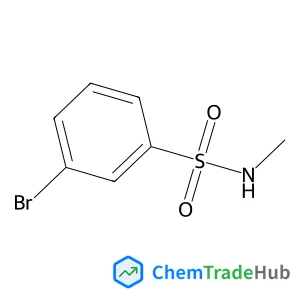
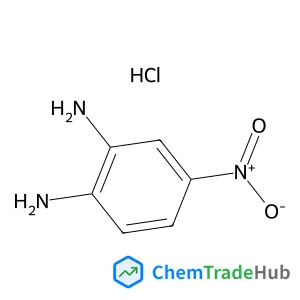
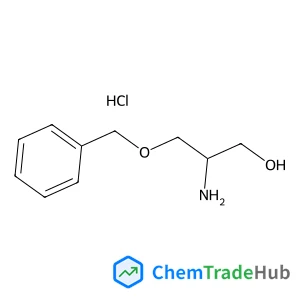
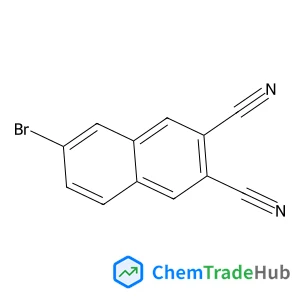
推荐供应商



免责声明
本页面提供的学术期刊信息仅供参考和研究使用。我们与任何期刊出版商均无关联,也不处理投稿事宜。如有投稿相关咨询,请直接联系相关期刊出版商。
如发现页面信息有误,请发送邮件至 support@chemtradehub.com 联系我们。我们将及时核实并处理您的问题。