





![(1R,6R)-6-({[(2-Methyl-2-propanyl)oxy]carbonyl}amino)-3-cyclohexene-1-carboxylic acid structure](https://cnstatic.chemtradehub.com/structs/865/865689-24-3-5fef.webp "(1R,6R)-6-({[(2-Methyl-2-propanyl)oxy]carbonyl}amino)-3-cyclohexene-1-carboxylic acid structure")
Photodissociation of pyrrole–ammonia clusters by velocity map imaging: mechanism for the H-atom transfer reaction
文献信息
发布日期
2010-11-12
DOI
10.1039/C0CP01442G
影响因子
3.676
作者
G. A. Amaral, A. N. Oldani, J. D. Rodríguez, M. G. González, G. A. Pino, L. Bañares
查看原文
摘要
The photodissociation dynamics of pyrrole–ammonia clusters (PyH·(NH3)n, n = 2–6) has been studied using a combination of velocity map imaging and non-resonant detection of the NH4(NH3)n−1 products. The excited state hydrogen-atom transfer mechanism (ESHT) is evidenced through delayed ionization and presents a threshold around 236.6 nm, in agreement with previous reports. A high resolution determination of the kinetic energy distributions (KEDs) of the products reveals slow (∼0.15 eV) and structured distributions for all the ammonia cluster masses studied. The low values of the measured kinetic energy rule out the existence of a long-lived intermediate state, as it has been proposed previously. Instead, a direct N–H bond rupture, in the fashion of the photodissociation of bare pyrrole, is proposed. This assumption is supported by a careful analysis of the structure of the measured KEDs in terms of a discrete vibrational activity of the pyrrolyl co-fragment.
相关文献
Enantioselective conjugate addition to nitroolefins catalysed by helical peptides with a single remote stereogenic centre
Iñigo J. Vitórica-Yrezábal, Simon J. Webb
2023-11-20
Paper
DOI: 10.1039/D3OB01594G
Synthesis of disulfide-rich C-terminal Cys-containing peptide acids through a photocleavable side-chain anchoring strategy
Jie Luo, Yuan Gao, Rui Zhao, Jing Shi, Yi-Ming Li
2023-10-20
Paper
DOI: 10.1039/D3OB01597A
Diethylzinc-promoted carboxylation of aryl/alkenyl boronic acids with CO2
Tingyu Tang, Shibiao Tang, Bin Li
2023-10-19
Paper
DOI: 10.1039/D3OB01552A
One-step synthesis of Ling's tetrol and its conversion into A,D-di-allo-α-cyclodextrin derivatives
Waldemar Frederik Zorck, Martin Jæger Pedersen, Mikael Bols
2023-10-23
Paper
DOI: 10.1039/D3OB01576A
The linkage-type and the exchange molecule affect the protein-labeling efficiency of iminoboronate probes
Antonie J. van der Zouwen, Aike Jeucken, Elske van der Pol, Gerben Boerema, Dirk J. Slotboom, Martin D. Witte
2023-11-07
Paper
DOI: 10.1039/D3OB01269G
[2.2]Paracyclophane-based coumarins: effective organo-photocatalysts for light-induced desulfonylation processes‡
Jules Brom, Antoine Maruani, Serge Turcaud, Sonia Lajnef, Laurent Micouin, Erica Benedetti
2023-11-23
Communication
DOI: 10.1039/D3OB01711G
A molecular chemodosimeter to probe “closed shell” ions in kidney cells
Amine Assel, Meagan M. Stanley, Besma Boulila, Peter J. Cragg, Iyanuoluwani Owolabie, Meredith Hetrick, Alex Flynt, Karl J. Wallace, Hichem Ben Jannet
2023-11-13
Paper
DOI: 10.1039/D3OB01408H
Ph3P/ICH2CH2I-promoted reductive deoxygenation of alcohols
Xu Yao, Qu-Tong Zheng, Ji-Chang Xiao
2023-11-02
Communication
DOI: 10.1039/D3OB01698F
Synthesis of arene-functionalized fused heterocyclic scaffolds via a regioselective cascade 1,4-conjugate addition/5-exo-dig annulation strategy
Xinwei He, Demao Wang, Yanan Liu, Mengdi Wu, Yangzilin Kong, Qiang Tang, Yiping Wang, Chenli Fan, Yongjia Shang
2023-11-14
Paper
DOI: 10.1039/D3OB01572F
Visible-light-driven enantioselective intermolecular [2 + 2] photocyclization utilizing bathochromic excitation mediated by a chiral phosphoric acid
Tatsuhiro Uchikura, Kazuki Takahashi, Tatsushi Oishi, Takahiko Akiyama
2023-11-10
Communication
DOI: 10.1039/D3OB01425H
您可能还喜欢
化合物问答
N-2,2-丙烯基-2-丙烯酰胺(CAS号:2555-13-7)通常如何合成?
N-2,2-丙烯基-2-丙烯酰胺通常通过丙烯酰胺与丙烯基卤化物的缩合反应合成。该反应通常在温和的条件下进行,使用适量的碱如吡啶作为催化剂。反应的选择性良好,产率...
2555-13-7N-Allylacrylamide
化合物问答
什么是1,2-二碘四氟代乙烷(CAS号:354-65-4)?
1,2-二碘四氟代乙烷是一种有机化合物,化学式为C2F4I2,CAS号为354-65-4。它是一种无色透明液体,具有特殊的化学性质和物理性质,包括高沸点、低挥发...
354-65-41,1,2,2-Tetrafluoro-...
化合物问答
3-溴-1H-吡咯[3,2-c]吡啶-4-碳腈(CAS号:1000341-71-8)适用哪些法规指南?
根据GHS(全球化学品统一分类和标签制度),3-溴-1H-吡咯[3,2-c]吡啶-4-碳腈被归类为第2类易燃液体。在欧盟,该化合物需要符合REACH法规的要求,...
1000341-71-83-Bromo-1H-pyrrolo[3...
化合物问答
1-氯甲基萘磺酸(CAS号:87491-79-0)安全吗?
1-氯甲基萘磺酸在使用时需要谨慎,因为它具有一定的刺激性和腐蚀性。操作时应佩戴适当的防护装备,如防化服、手套、护目镜等,避免直接接触皮肤和吸入其蒸汽。
87491-79-01-((Chloromethyl)sul...
化合物问答
二氯(二环戊二烯)铂(CAS号:12083-92-0)的主要用途是什么?
该化合物主要用于催化剂领域,特别是在有机合成中的催化氧化反应以及作为某些药物合成的中间体。此外,它还被研究用于纳米材料的制备。
12083-92-0(1S,7R)-Tricyclo[5.2...
化合物问答
3-溴-7-氯噻吩并[3,2-b]吡啶-6-甲腈(CAS号:798574-82-0)安全吗?
3-溴-7-氯噻吩并[3,2-b]吡啶-6-甲腈在处理时需要谨慎,因其含有溴和氯等强卤素,可能具有一定的刺激性和腐蚀性。使用时应佩戴适当的个人防护装备,避免皮肤...
798574-82-03-Bromo-7-chlorothie...
化合物问答
(R)-1-((R)-2-(2’-二环己基膦苯基)三戊铁基]乙基(双-3,5-三氟甲基苯基)膦(CAS号:494227-32-6)的主要用途是什么?
该化合物主要用于有机合成领域,特别是作为催化剂或配体,在有机合成反应中发挥重要作用。此外,它还可能应用于催化加氢反应、偶联反应等。
494227-32-6Walphos SL-W008-1
化合物问答
3-[6-(Diphenylphosphoryl)-2-naphthyl]-1,10-phenanthroline(CAS号:1480371-38-7)安全吗?
3-[6-(Diphenylphosphoryl)-2-naphthyl]-1,10-phenanthroline在正常使用条件下相对安全,但在操作时应穿戴适当...
1480371-38-73-[6-(Diphenylphosph...
化合物问答
在合成中是否有ETHYL 2-(4-(4,4,5,5-TETRAMETHYL-1,3,2-DIOXABOROLAN-2-YL)CYCLOHEX-3-ENYL)ACETATE(CAS号:1166829-70-4)的替代品?
可以考虑使用类似结构的化合物作为替代品,如2-(4-环戊基环己烯基)乙酸酯,这种化合物在结构上相似,可能在某些合成路径中作为替代品。
1166829-70-4Ethyl [4-(4,4,5,5-te...
化合物问答
如何处理含有3-(3-氨基丙基)丙酮缩甘油(CAS号:131606-42-3)的废料?
处理含有3-(3-氨基丙基)丙酮缩甘油的废料时,首先应确保遵守当地的环保法规。对于危险废物,应进行分类收集,然后送至专业的废物处理设施进行焚烧或安全填埋。在处理...
131606-42-33-[(2,2-Dimethyl-1,3...
来源期刊
Physical Chemistry Chemical Physics

CiteScore:
5.5
自引率:
10.3%
年发文量:
3036
Physical Chemistry Chemical Physics (PCCP) is an international journal co-owned by 19 physical chemistry and physics societies from around the world. This journal publishes original, cutting-edge research in physical chemistry, chemical physics and biophysical chemistry. To be suitable for publication in PCCP, articles must include significant innovation and/or insight into physical chemistry; this is the most important criterion that reviewers and Editors will judge against when evaluating submissions. The journal has a broad scope and welcomes contributions spanning experiment, theory, computation and data science. Topical coverage includes spectroscopy, dynamics, kinetics, statistical mechanics, thermodynamics, electrochemistry, catalysis, surface science, quantum mechanics, quantum computing and machine learning. Interdisciplinary research areas such as polymers and soft matter, materials, nanoscience, energy, surfaces/interfaces, and biophysical chemistry are welcomed if they demonstrate significant innovation and/or insight into physical chemistry. Joined experimental/theoretical studies are particularly appreciated when complementary and based on up-to-date approaches.
推荐化合物
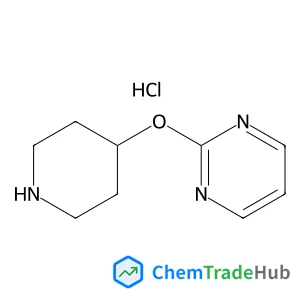
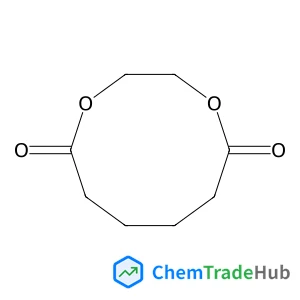
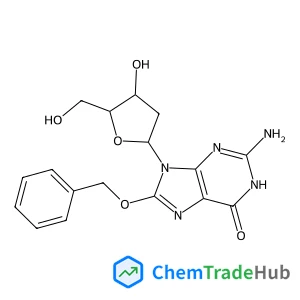
推荐供应商





免责声明
本页面提供的学术期刊信息仅供参考和研究使用。我们与任何期刊出版商均无关联,也不处理投稿事宜。如有投稿相关咨询,请直接联系相关期刊出版商。
如发现页面信息有误,请发送邮件至 support@chemtradehub.com 联系我们。我们将及时核实并处理您的问题。