






Polymeric nanomaterials from combined click chemistry and controlled radical polymerization
文献信息
发布日期
2010-09-20
DOI
10.1039/C0PY00174K
影响因子
5.582
作者
Rong Fu, Guo-Dong Fu
查看原文
摘要
This review highlights recent research on the preparation of functional polymeric nanomaterials (nanoparticles, microcapsules, nanofibers, carbon nanotubes) by combined ‘click chemistry’ and controlled radical polymerization (CRP) techniques. In particular, it focuses primarily on combined atom transfer radical polymerization (ATRP), reversible addition-fragmentation transfer polymerization (RAFT), nitroxide-mediated polymerization (NMP), copper(I)-catalyzed azide-alkyne cycloaddition (CuAAC) and thiol-ene chemistry. These versatile techniques of polymer synthesis allow the preparation of functional polymeric nanomaterials with well-defined nanostructures and desired functionalities.
相关文献
Deep core photoionization of iodine in CH3I and CF3I molecules: how deep down does the chemical shift reach?
Nacer Boudjemia, Kari Jänkälä, Kenji Tamasaku, Marko Huttula, Masaki Oura
2019-02-11
Paper
DOI: 10.1039/C8CP07307D
Design and characterization of novel polymorphs of single-layered tin-sulfide for direction-dependent thermoelectric applications using first-principles approaches
Bakhtiar Ul Haq, S. AlFaify, A. Laref
2019-01-28
Paper
DOI: 10.1039/C8CP07645F
A computational study on the electrified Pt(111) surface by the cluster model
2019-02-28
Paper
DOI: 10.1039/C8CP07241H
Infrared spectroscopic characterization of phosphate binding at the goethite–water interface
Stella Gypser, Peter Leinweber, Dirk Freese
2019-01-24
Paper
DOI: 10.1039/C8CP07168C
The energy level of the Fe2+/3+-transition in BaTiO3 and SrTiO3 single crystals
Issei Suzuki, Leonard Gura, Andreas Klein
2019-02-26
Paper
DOI: 10.1039/C8CP07872F
Structural and bonding properties of Cu3O3− and Cu3O4− clusters: anion photoelectron spectroscopy and density functional calculations
Xi-Ling Xu, Bin Yang, Zhi-You Wei, Guo-Jin Cao, Hong-Guang Xu
2018-07-23
Paper
DOI: 10.1039/C8CP03302A
Fabrication and simulation of V-shaped Ag nanorods as high-performance SERS substrates
Jianghao Li, Yihang Fan, Xiaotian Xue, Lingwei Ma, Sumeng Zou, Zhu Fei, Zheng Xie
2018-09-21
Paper
DOI: 10.1039/C8CP05533E
Temperature-dependent crystalline structure and phase transition of poly(butylene adipate) end-functionalized by multiple hydrogen-bonding groups
Jianna Bao, Huabo Fan, Xiaojia Xue, Qing Xie, Pengju Pan
2018-09-19
Paper
DOI: 10.1039/C8CP05066J
The role of solvation models on the computed absorption and emission spectra: the case of fireflies oxyluciferin
Cristina García-Iriepa, Madjid Zemmouche, Isabelle Navizet
2019-02-04
Paper
DOI: 10.1039/C8CP07352J
Coarse-grained molecular dynamics simulation of the interface behaviour and self-assembly of CTAB cationic surfactants
Sílvia Illa-Tuset, David C. Malaspina, Jordi Faraudo
2018-09-25
Paper
DOI: 10.1039/C8CP04505D
您可能还喜欢
化合物问答
(3-氨苯基)环丙基甲酮(CAS号:162174-75-6)的主要用途是什么?
(3-氨苯基)环丙基甲酮主要用于合成化学中间体,特别是在药物化学领域作为原料。它还可以用于有机合成反应中,作为催化剂或反应物。
162174-75-6(3-Aminophenyl)(cycl...
化合物问答
如何储存亚胺菌(CAS号:136470-79-6)?
亚胺菌应储存在干燥、阴凉处,避免直接暴露于光线下。建议使用密封容器储存,防止吸潮和污染。具体的储存条件应参考产品的安全数据表(MSDS)或药品说明书。
136470-79-6Abacavir EP Impurity...
化合物问答
2-氯-2,2-二氟乙酰胺(CAS号:354-28-9)应用于哪些行业?
2-氯-2,2-二氟乙酰胺在医药、聚合物、传感器、半导体等领域有广泛应用。在医药领域,它作为中间体用于合成其他药物;在聚合物领域,用作聚合引发剂或稳定剂;在传感...
354-28-92-Chloro-2,2-difluor...
化合物问答
处理4-甲基-3-硝基-1,1-联苯(CAS号:53812-68-3)时应注意哪些实验室安全事项?
在处理4-甲基-3-硝基-1,1-联苯时,应佩戴手套、护目镜和实验室外套等个人防护装备(PPE),确保在通风橱中操作以减少吸入风险。若发生泄露,应立即使用沙子或...
53812-68-34'-Methyl-3-nitro-1,...
化合物问答
(2S)-羟基(苯基)乙酸 (2R)-N-苄基-1-(4-甲氧基苯基)丙-2-胺盐(CAS号:188690-84-8)应用于哪些行业?
该化合物广泛应用于医药、聚合物和半导体行业。在医药领域,它是某些药物中间体的重要组成部分;在聚合物领域,可用作增塑剂;在半导体行业,可用于制造光刻胶。
188690-84-8Benzeneacetic acid, ...
化合物问答
在合成中是否有芬苯哒唑砜-D3标准品(CAS号:1228182-49-7)的替代品?
芬苯哒唑砜-D3标准品的替代品可能包括类似的苯并咪唑类化合物,如芬苯哒唑本身或其非同位素标记版本。这些替代品在结构上与芬苯哒唑砜-D3相似,但在具体应用中需进行...
1228182-49-7(~2~H_3_)Methyl [5-(...
化合物问答
2-氟-4-硝基苯乙酸(CAS号:315228-19-4)通常如何合成?
2-氟-4-硝基苯乙酸可以通过一系列化学反应合成,通常是从4-氟苯胺开始,首先进行硝化反应生成4-氟-2-硝基苯胺,然后进行乙酰化反应得到目标产物。具体的合成步...
315228-19-42-(2-fluoro-4-nitrop...
化合物问答
2-氟-4-甲氧基苯乙酸(CAS号:883531-28-0)通常如何合成?
2-氟-4-甲氧基苯乙酸通常通过将4-甲氧基苯乙酸与氟化试剂(如氟化氰)反应来合成。反应通常在无水条件下进行,使用催化剂如六氟磷酸锂或四氟硼酸锂以提高选择性和产...
883531-28-02-Fluoro-4-methoxyph...
化合物问答
什么是4SC 202;4SC202(CAS号:1186222-89-8)?
4SC 202;4SC202是一种化学化合物,其化学名称为(2E)-N-(2-氨基苯基)-3-(1-{[4-(1-甲基-1H-吡唑-4-基)苯基]磺酰基}-1H...
1186222-89-8(2E)-N-(2-Aminopheny...
132980-99-53,5-Difluorobenzamid...
来源期刊
Polymer Chemistry

CiteScore:
8.6
自引率:
7.3%
年发文量:
457
Polymer Chemistry welcomes submissions in all areas of polymer science that have a strong focus on macromolecular chemistry. Manuscripts may cover a broad range of fields, yet no direct application focus is required.
推荐化合物
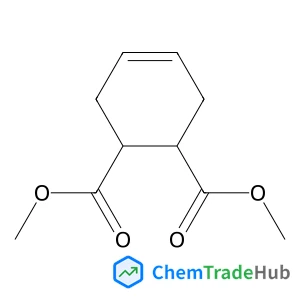
![2-[({[(2-Methyl-2-propanyl)oxy]carbonyl}amino)methyl]isonicotinic acid structure](https://cnstatic.chemtradehub.com/structs/473/473924-63-9-973b.webp "2-[({[(2-Methyl-2-propanyl)oxy]carbonyl}amino)methyl]isonicotinic acid structure")
2-[({[(2-Methyl-2-propanyl)oxy]carbonyl}amino)methyl]isonicotinic acid
CAS号:
473924-63-9
分子式:
C12H16N2O4
推荐供应商



免责声明
本页面提供的学术期刊信息仅供参考和研究使用。我们与任何期刊出版商均无关联,也不处理投稿事宜。如有投稿相关咨询,请直接联系相关期刊出版商。
如发现页面信息有误,请发送邮件至 support@chemtradehub.com 联系我们。我们将及时核实并处理您的问题。