











Thermo-responsive cellulose-based architectures: tailoring LCST using poly(ethylene glycol) methacrylates‡
文献信息
发布日期
2011-02-16
DOI
10.1039/C0PY00417K
影响因子
5.582
作者
Christian Porsch, Susanne Hansson, Niklas Nordgren, Eva Malmström
查看原文
摘要
There is a growing interest in designing advanced macromolecular architectures applicable for instance in drug delivery systems. Employing cellulose in these systems is particularly favorable due to attractive properties such as biocompatibility and low price. Additionally, thermo-responsive polymers of poly(ethylene glycol) methacrylates are promising in this field owing to their biocompatibility and non-toxicity. In the present study, amphiphilic thermo-responsive homo- and copolymers of oligo(ethylene glycol) methyl ether methacrylate (OEGMA300) and di(ethylene glycol) methyl ether methacrylate (DEGMA) were synthesized via ARGET ATRP. Both linear copolymers of DEGMA/OEGMA300 as well as comb architectures with copolymers of DEGMA/OEGMA300 grafted from hydroxypropyl cellulose were produced. The lower critical solution temperature of the linear copolymers was readily tailored by altering the monomer feed ratio. The grafting of the thermo-responsive polymers from hydroxypropyl cellulose resulted in a consistent decrease of the lower critical solution temperature compared to the linear analogues; however, interestingly the ability to tune the transition temperature remained. Moreover, the amphiphilic comb architectures formed polymeric micelles with low critical micelle concentrations. Consequently, these advanced architectures combine the favorable properties of hydroxypropyl cellulose with the interesting thermo-responsive and stealth properties of poly(ethylene glycol) methacrylates, and may, therefore, find potential applications in biomedicine.
期刊推荐
相关文献
Evidence of the O–Pd–O and Pd–O4 structure units as oxide seeds and their origin on Pd(211): revealing the mechanism of surface oxide formation
Xiran Cheng, Ziyun Wang, Yu Mao, P. Hu
2019-02-19
Paper
DOI: 10.1039/C8CP06224B
Using nanotubes to study the phonon spectrum of two-dimensional materials
Jesús Carrete, Vu Ngoc Tuoc, Georg K. H. Madsen
2019-02-06
Paper
DOI: 10.1039/C9CP00052F
The energy level of the Fe2+/3+-transition in BaTiO3 and SrTiO3 single crystals
Issei Suzuki, Leonard Gura, Andreas Klein
2019-02-26
Paper
DOI: 10.1039/C8CP07872F
A detailed insight into the catalytic reduction of NO operated by Cr–Cu nanostructures embedded in a CeO2 surface
Mauro Boero, Kazuki Tamai
2018-08-08
Paper
DOI: 10.1039/C8CP04314K
A honeycomb-like monolayer of HfO2 and the calculation of static dielectric constant eliminating the effect of vacuum spacing
Junhui Weng, Shang-Peng Gao
2018-09-17
Paper
DOI: 10.1039/C8CP04743J
Fluctuation correlations as major determinants of structure- and dynamics-driven allosteric effects
Miao Yu, Yixin Chen, Zi-Le Wang
2019-02-09
Paper
DOI: 10.1039/C8CP07859A
Rotational (de)-excitation of linear C3O by collision with He
Fehmi Khadri, Kamel Hammami
2019-01-29
Paper
DOI: 10.1039/C8CP07409G
Electron localization in niobium doped CaMnO3 due to the energy difference of electronic states of Mn and Nb
Yi Li, Jian Liu, Ji-Chao Li, Yu-Fei Chen, Xin-Miao Zhang, Xue-Jin Wang, Fu-Ning Wang, Wen-Bin Su, Lan-Ling Zhao, Chun-Lei Wang
2018-07-23
Paper
DOI: 10.1039/C8CP02783H
Unveiling the multifunctional roles of hitherto known capping ligand oleic acid as blue emitter and sensitizer in tuning the emission colour to white in red-emitting phosphors
S. Sekar, J. George Muller
2018-07-05
Paper
DOI: 10.1039/C8CP02954G
Spectroscopic characterisation of centropolyindanes
Stewart F. Parker, Lisha Zhong, Marco Harig, Dietmar Kuck
2019-02-04
Paper
DOI: 10.1039/C8CP07311B
您可能还喜欢
化合物问答
(3-氨苯基)环丙基甲酮(CAS号:162174-75-6)的主要用途是什么?
(3-氨苯基)环丙基甲酮主要用于合成化学中间体,特别是在药物化学领域作为原料。它还可以用于有机合成反应中,作为催化剂或反应物。
162174-75-6(3-Aminophenyl)(cycl...
化合物问答
如何储存亚胺菌(CAS号:136470-79-6)?
亚胺菌应储存在干燥、阴凉处,避免直接暴露于光线下。建议使用密封容器储存,防止吸潮和污染。具体的储存条件应参考产品的安全数据表(MSDS)或药品说明书。
136470-79-6Abacavir EP Impurity...
化合物问答
2-氯-2,2-二氟乙酰胺(CAS号:354-28-9)应用于哪些行业?
2-氯-2,2-二氟乙酰胺在医药、聚合物、传感器、半导体等领域有广泛应用。在医药领域,它作为中间体用于合成其他药物;在聚合物领域,用作聚合引发剂或稳定剂;在传感...
354-28-92-Chloro-2,2-difluor...
化合物问答
处理4-甲基-3-硝基-1,1-联苯(CAS号:53812-68-3)时应注意哪些实验室安全事项?
在处理4-甲基-3-硝基-1,1-联苯时,应佩戴手套、护目镜和实验室外套等个人防护装备(PPE),确保在通风橱中操作以减少吸入风险。若发生泄露,应立即使用沙子或...
53812-68-34'-Methyl-3-nitro-1,...
化合物问答
(2S)-羟基(苯基)乙酸 (2R)-N-苄基-1-(4-甲氧基苯基)丙-2-胺盐(CAS号:188690-84-8)应用于哪些行业?
该化合物广泛应用于医药、聚合物和半导体行业。在医药领域,它是某些药物中间体的重要组成部分;在聚合物领域,可用作增塑剂;在半导体行业,可用于制造光刻胶。
188690-84-8Benzeneacetic acid, ...
化合物问答
在合成中是否有芬苯哒唑砜-D3标准品(CAS号:1228182-49-7)的替代品?
芬苯哒唑砜-D3标准品的替代品可能包括类似的苯并咪唑类化合物,如芬苯哒唑本身或其非同位素标记版本。这些替代品在结构上与芬苯哒唑砜-D3相似,但在具体应用中需进行...
1228182-49-7(~2~H_3_)Methyl [5-(...
化合物问答
2-氟-4-硝基苯乙酸(CAS号:315228-19-4)通常如何合成?
2-氟-4-硝基苯乙酸可以通过一系列化学反应合成,通常是从4-氟苯胺开始,首先进行硝化反应生成4-氟-2-硝基苯胺,然后进行乙酰化反应得到目标产物。具体的合成步...
315228-19-42-(2-fluoro-4-nitrop...
化合物问答
2-氟-4-甲氧基苯乙酸(CAS号:883531-28-0)通常如何合成?
2-氟-4-甲氧基苯乙酸通常通过将4-甲氧基苯乙酸与氟化试剂(如氟化氰)反应来合成。反应通常在无水条件下进行,使用催化剂如六氟磷酸锂或四氟硼酸锂以提高选择性和产...
883531-28-02-Fluoro-4-methoxyph...
化合物问答
什么是4SC 202;4SC202(CAS号:1186222-89-8)?
4SC 202;4SC202是一种化学化合物,其化学名称为(2E)-N-(2-氨基苯基)-3-(1-{[4-(1-甲基-1H-吡唑-4-基)苯基]磺酰基}-1H...
1186222-89-8(2E)-N-(2-Aminopheny...
132980-99-53,5-Difluorobenzamid...
来源期刊
Polymer Chemistry

CiteScore:
8.6
自引率:
7.3%
年发文量:
457
Polymer Chemistry welcomes submissions in all areas of polymer science that have a strong focus on macromolecular chemistry. Manuscripts may cover a broad range of fields, yet no direct application focus is required.
推荐化合物

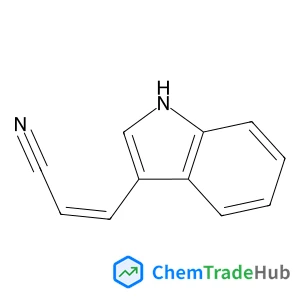
![4-[(2,4-Dihydroxyphenyl)diazenyl]-5-hydroxy-2,7-naphthalenedisulfonic acid structure](https://cnstatic.chemtradehub.com/structs/362/3627-01-8-79ac.webp "4-[(2,4-Dihydroxyphenyl)diazenyl]-5-hydroxy-2,7-naphthalenedisulfonic acid structure")
4-[(2,4-Dihydroxyphenyl)diazenyl]-5-hydroxy-2,7-naphthalenedisulfonic acid
CAS号:
3627-01-8
分子式:
C16H12N2O9S2
![[4-Chloro-3-(diethylcarbamoyl)phenyl]boronic acid structure](https://cnstatic.chemtradehub.com/structs/871/871332-68-2-0e3b.webp "[4-Chloro-3-(diethylcarbamoyl)phenyl]boronic acid structure")
推荐供应商






免责声明
本页面提供的学术期刊信息仅供参考和研究使用。我们与任何期刊出版商均无关联,也不处理投稿事宜。如有投稿相关咨询,请直接联系相关期刊出版商。
如发现页面信息有误,请发送邮件至 support@chemtradehub.com 联系我们。我们将及时核实并处理您的问题。