


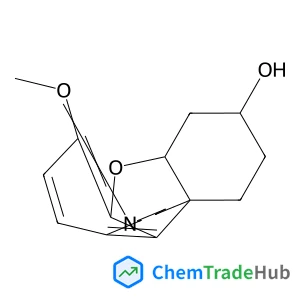
Crossed beam reaction of phenyl and D5-phenyl radicals with propene and deuterated counterparts—competing atomic hydrogen and methyl loss pathways
文献信息
发布日期
2011-11-25
DOI
10.1039/C1CP22758K
影响因子
3.676
作者
R. I. Kaiser, D. S. N. Parker, M. Goswami, F. Zhang, V. V. Kislov, A. M. Mebel, J. Aguilera-Iparraguirre, W. H. Green
查看原文
摘要
We conducted the crossed molecular beams reactions of the phenyl and D5-phenyl radicals with propylene together with its partially deuterated reactants at collision energies of ∼45 kJ mol−1 under single collision conditions. The scattering dynamics were found to be indirect and were mainly dictated by an addition of the phenyl radical to the sterically accessible CH2 unit of the propylene reactant. The resulting doublet radical isomerized to multiple C9H11 intermediates, which were found to be long-lived, decomposing in competing methyl group loss and atomic hydrogen loss pathways with the methyl group loss leading to styrene (C6H5C2H3) and the atomic hydrogen loss forming C9H10 isomers cis/trans1-phenylpropene (CH3CHCHC6H5) and 3-phenylpropene (C6H5CH2C2H3). Fractions of the methylversushydrogen loss channels of 68 ± 16% : 32 ± 10% were derived experimentally, which agrees nicely with RRKM theory. As the collision energy rises to 200 kJmol−1, the contribution of the methyl loss channel decreases sharply to typically 25%; the decreased importance of the methyl group loss channel was also demonstrated in previous crossed beam experiments conducted at elevated collision energies of 130–193 kJ mol−1. The presented work highlights the interesting differences of the branching ratios with rising collision energies in the reaction dynamics of phenyl radicals with unsaturated hydrocarbons related to combustion processes. The facility of forming styrene, a common molecule found in combustion against the elusiveness of forming the cyclic indane molecule demonstrates the need to continue to explore the potential surfaces through the combinative single collision experiment and electronic structure calculations.
期刊推荐

Journal of the Indian Institute of Science

Acta Metallurgica Sinica-English Letters
Main Group Chemistry
Bioorganic & Medicinal Chemistry

Critical Reviews in Solid State and Materials Sciences
Polycyclic Aromatic Compounds

Medicinal Chemistry Research

Herald of the Russian Academy of Sciences
Biocatalysis and Biotransformation

Cellulose
相关文献
A rhodamine-based turn-on nitric oxide sensor in aqueous medium with endogenous cell imaging: an unusual formation of nitrosohydroxylamine
Rabiul Alam, Abu Saleh Musha Islam, Mihir Sasmal, Atul Katarkar, Mahammad Ali
2018-04-30
Paper
DOI: 10.1039/C8OB00822A
Decarbonylative Sonogashira cross-coupling: a fruitful marriage of alkynes with carboxylic acid electrophiles
Michal Szostak
2021-11-19
Highlight
DOI: 10.1039/D1QO01539G
Caged cyclopropenes for controlling bioorthogonal reactivity
Pratik Kumar, Ting Jiang, Sining Li, Omar Zainul, Scott T. Laughlin
2018-05-16
Communication
DOI: 10.1039/C8OB01076E
Synthesis of fused tricyclic systems by thermal Cope rearrangement of furan-substituted vinyl cyclopropanes
Verena Klaus, Stéphane Wittmann, Hans M. Senn, J. Stephen Clark
2018-05-15
Paper
DOI: 10.1039/C8OB00924D
Nickel catalyzed site selective C–H functionalization of α-aryl-thioamides
Debashruti Bandyopadhyay, Annaram Thirupathi, Nagsen Munjaji Dhage, Nirmala Mohanta, S. Peruncheralathan
2018-08-23
Communication
DOI: 10.1039/C8OB01712C
A photoredox/nickel dual-catalytic strategy for benzylic C–H alkoxylation
Min Dong, Yuqi Jia, Wei Zhou, Jinlai Gao, Xiaoqing Lv, Fan Luo, Yongqiang Zhang, Shihui Liu
2021-10-26
Research Article
DOI: 10.1039/D1QO01421H
Gold-catalyzed C5-alkylation of indolines and sequential oxidative aromatization: access to C5-functionalized indoles
Wenzheng Zhang, Guangyang Xu, Lin Qiu, Jiangtao Sun
2018-05-02
Communication
DOI: 10.1039/C8OB00826D
Homolysis/mesolysis of alkoxyamines activated by chemical oxidation and photochemical-triggered radical reactions at room temperature
Gérard Audran, Mitchell T. Blyth, Michelle L. Coote, Georg Gescheidt, Micael Hardy, Jeffrey Havot, Maxence Holzritter, Samuel Jacoutot, Jean-Patrick Joly, Sylvain R. A. Marque, Tataye Moussounda Moussounda Koumba, Dmytro Neshchadin, Enzo Vaiedelich
2021-10-14
Research Article
DOI: 10.1039/D1QO01276B
Promoter free allylation of trichloroacetimidates with allyltributylstannanes under thermal conditions to access the common 1,1′-diarylbutyl pharmacophore
Nivedita S. Mahajani, John D. Chisholm
2018-05-09
Paper
DOI: 10.1039/C8OB00687C
您可能还喜欢
化合物问答
如何处理含有8-氯咪唑并[1,2-A]吡嗪(CAS号:69214-33-1)的废料?
处理含有8-氯咪唑并[1,2-A]吡嗪的废料时,应首先将其收集并进行化学回收或降解。如果无法回收,需采用安全的化学处理方法,如中和、氧化还原或沉淀。处理过程中需...
69214-33-18-chloroimidazo[1,2-...
化合物问答
Calhex 231 hydrochloride(CAS号:2387505-78-2)适用哪些法规指南?
Calhex 231 hydrochloride 需要遵循《全球化学品统一分类和标签制度》(GHS)的分类和标签要求,以及欧盟的《化学品注册、评估、授权和限制条...
2387505-78-24-Chloro-N-[(1S,2S)-...
化合物问答
11-Beta,17-alpha,21-三羟基-5-beta-孕烯-3,20-二酮(CAS号:1482-50-4)的物理化学性质是什么?
11-Beta,17-alpha,21-三羟基-5-beta-孕烯-3,20-二酮是一种无色结晶性粉末,分子量为372.45 g/mol。该化合物在水中的溶解度...
1482-50-45β-Dihydrocortisol
化合物问答
处理5-异丙基-1,3,4-恶二唑-2-羧酸(CAS号:944907-13-5)时应注意哪些实验室安全事项?
处理5-异丙基-1,3,4-恶二唑-2-羧酸时应注意以下安全事项:穿戴适当的个人防护装备,包括实验室外套、手套和护目镜;操作应在通风橱中进行,以减少吸入或接触有...
944907-13-55-Isopropyl-1,3,4-ox...
化合物问答
benzyl 3-bromopropanoate(CAS号:90841-55-7)安全吗?
Benzyl 3-bromopropanoate属于有毒物质,吸入、摄入或皮肤接触均可能对人体造成伤害。操作时应佩戴防护眼镜、口罩和手套,避免吸入蒸汽和直接接触...
90841-55-7Benzyl 3-bromopropan...
化合物问答
什么是(R)-N-苄氧羰基-3,4-二氢-1H-异喹啉羧酸(CAS号:151004-88-5)?
(R)-N-苄氧羰基-3,4-二氢-1H-异喹啉羧酸是一种含有苄氧羰基和异喹啉环结构的化合物,分子式为C17H15NO3。它是一种有机化合物,具有一定的生物活性...
151004-88-5(1R)-2-[(Benzyloxy)c...
化合物问答
在合成中是否有1-苄基吡啶嗡-3-羧酸盐(CAS号:15990-43-9)的替代品?
可以考虑使用1-苄基吡啶-3-羧酸盐作为1-苄基吡啶嗡-3-羧酸盐的替代品。此外,还可以探索其他类似物,如1-苄基吡啶-3-氨基甲酸酯等。具体的替代品选择需根据...
15990-43-91-Benzyl-3-pyridiniu...
化合物问答
(2,6-二甲基吡啶-3-基)甲醇(CAS号:582303-10-4)安全吗?
(2,6-二甲基吡啶-3-基)甲醇在使用时需注意安全,应避免吸入其蒸汽,接触皮肤和眼睛。操作应在通风良好的环境中进行,佩戴适当的个人防护装备。
582303-10-4(2,6-Dimethyl-3-pyri...
化合物问答
5-溴-2-乙烯基吡啶(CAS号:226883-52-9)的物理化学性质是什么?
5-溴-2-乙烯基吡啶是一种有机化合物,外观为白色固体,具有良好的结晶性。分子量约为190.03 g/mol。它的溶解性在水中较差,但在有机溶剂如二氯甲烷、甲醇...
226883-52-95-Bromo-2-vinylpyrid...
化合物问答
2-羟基-3-硝基-5-甲基吡啶(CAS号:7464-14-4)应用于哪些行业?
2-羟基-3-硝基-5-甲基吡啶主要应用于医药、聚合物和半导体行业。在医药领域,它可以用作合成其他药物的中间体。在聚合物领域,它可以作为功能性单体参与聚合反应,...
7464-14-45-Methyl-3-nitro-2(1...
来源期刊
Physical Chemistry Chemical Physics

CiteScore:
5.5
自引率:
10.3%
年发文量:
3036
Physical Chemistry Chemical Physics (PCCP) is an international journal co-owned by 19 physical chemistry and physics societies from around the world. This journal publishes original, cutting-edge research in physical chemistry, chemical physics and biophysical chemistry. To be suitable for publication in PCCP, articles must include significant innovation and/or insight into physical chemistry; this is the most important criterion that reviewers and Editors will judge against when evaluating submissions. The journal has a broad scope and welcomes contributions spanning experiment, theory, computation and data science. Topical coverage includes spectroscopy, dynamics, kinetics, statistical mechanics, thermodynamics, electrochemistry, catalysis, surface science, quantum mechanics, quantum computing and machine learning. Interdisciplinary research areas such as polymers and soft matter, materials, nanoscience, energy, surfaces/interfaces, and biophysical chemistry are welcomed if they demonstrate significant innovation and/or insight into physical chemistry. Joined experimental/theoretical studies are particularly appreciated when complementary and based on up-to-date approaches.
推荐化合物
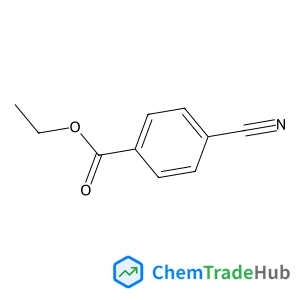
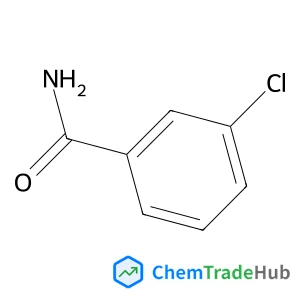
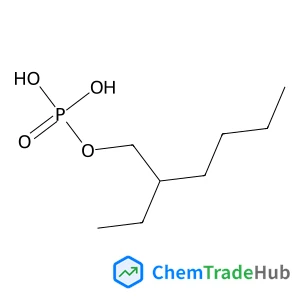
![N,N'-1,2-Ethanediylbis[2-(vinylsulfonyl)acetamide] structure](https://cnstatic.chemtradehub.com/structs/667/66710-66-5-b556.webp "N,N'-1,2-Ethanediylbis[2-(vinylsulfonyl)acetamide] structure")
推荐供应商




免责声明
本页面提供的学术期刊信息仅供参考和研究使用。我们与任何期刊出版商均无关联,也不处理投稿事宜。如有投稿相关咨询,请直接联系相关期刊出版商。
如发现页面信息有误,请发送邮件至 support@chemtradehub.com 联系我们。我们将及时核实并处理您的问题。