






![2-Methylbenzo[h]quinoline structure](https://cnstatic.chemtradehub.com/structs/605/605-88-9-ac43.webp "2-Methylbenzo[h]quinoline structure")
Dynamics of H2 dissociation on the 1/2 ML c(2 × 2)-Ti/Al(100) surface
文献信息
发布日期
2012-01-11
DOI
10.1039/C2CP23693A
影响因子
3.676
作者
Jian-Cheng Chen, Maxi Ramos, Carina Arasa, Mark F. Somers, Alejandra E. Martínez, Cristina Díaz, Geert-Jan Kroes
查看原文
摘要
The dissociation of H2 on Ti-covered Al surfaces is relevant to the rehydrogenation and dehydrogenation of the NaAlH4 hydrogen storage material. The energetically most stable structure for a 1/2 monolayer of Ti deposited on the Al(100) surface has the Ti atoms in the second layer with a c(2 × 2) structure, as has been confirmed by both low-energy electron diffraction and low-energy ion scattering experiments and density functional theory studies. In this work, we investigate the dynamics of H2 dissociation on a slab model of this Ti/Al(100) surface. Two six-dimensional potential energy surfaces (PESs) have been built for this H2 + Ti/Al(100) system, based on the density functional theory PW91 and RPBE exchange–correlation functionals. In the PW91 (RPBE) PES, the lowest H2 dissociation barrier is found to be 0.65 (0.84) eV, with the minimum energy path occurring for H2 dissociating above the bridge to top sites. Using both PESs, H2 dissociation probabilities are calculated using the classical trajectory (CT), the quasi-classical trajectory (QCT), and the time-dependent wave-packet methods. We find that the QCT H2 dissociation probabilities are in good agreement with the quantum dynamics results in the collision energy range studied up to 1.0 eV. We have also performed molecular beam simulations and present predictions for molecular beam experiments. Our molecular beam simulations show that H2 dissociation on the 1/2 ML Ti/Al(100) surface is an activated process, and the reaction probability is found to be 6.9% for the PW91 functional and 1.8% for the RPBE at a nozzle temperature of 1700 K. Finally, we have also calculated H2 dissociation rate constants by applying transition state theory and the QCT method, which could be relevant to modeling Ti-catalyzed rehydrogenation and dehydrogenation of NaAlH4.
相关文献
Layer-separable and gap-tunable topological insulators
Kai-Wei Chang, Wei Ji, Chao-Cheng Kaun
2017-01-09
Paper
DOI: 10.1039/C6CP06932K
A combined UHV-STM-flow cell set-up for electrochemical/electrocatalytic studies of structurally well-defined UHV prepared model electrodes
J. Schnaidt, S. Beckord, A. K. Engstfeld, J. Klein, S. Brimaud, R. J. Behm
2016-09-21
Paper
DOI: 10.1039/C6CP06051J
Silver–gold alloy nanoparticles as tunable substrates for systematic control of ion-desorption efficiency and heat transfer in surface-assisted laser desorption/ionization
Samuel Kin-Man Lai, Yu-Hong Cheng, Ho-Wai Tang, Kwan-Ming Ng
2017-07-12
Paper
DOI: 10.1039/C7CP04033D
Photocleavage of coumarin dimers studied by femtosecond UV transient absorption spectroscopy
Man Jiang, Nicholas Paul, Nikolai Bieniek, Tiago Buckup, Norbert Hampp, Marcus Motzkus
2017-01-18
Paper
DOI: 10.1039/C6CP08076F
Solubility origin at the nanoscale: enthalpic and entropic contributions in polar and nonpolar environments
Eudes Fileti, Vitaly V. Chaban
2017-01-04
Paper
DOI: 10.1039/C6CP07667J
Electrochemical-reaction-induced synaptic plasticity in MoOx-based solid state electrochemical cells
Chuan-Sen Yang, Da-Shan Shang, Yi-Sheng Chai, Li-Qin Yan, Bao-Gen Shen, Young Sun
2016-11-03
Paper
DOI: 10.1039/C6CP06004H
Electronic structure and time-dependent description of rotational predissociation of LiH
P. Jasik, J. E. Sienkiewicz, J. Domsta, N. E. Henriksen
2017-06-06
Paper
DOI: 10.1039/C7CP02097J
Photo-electrochemical properties of quantum rods studied by scanning electrochemical microscopy
Sébastien Lhenry, Benoît Boichard, Yann R. Leroux, Pascale Even-Hernandez, Valérie Marchi, Philippe Hapiot
2017-01-05
Paper
DOI: 10.1039/C6CP07143K
Structural metatransition of energetically tangled crystalline phases
Weitao Zheng, Yanming Ma, Changfeng Chen
2017-01-19
Paper
DOI: 10.1039/C6CP07605J
您可能还喜欢
化合物问答
4-[[6-(3-苯基苯基)-7H-嘌呤-2-基]氨基]苯磺酰胺(CAS号:2079895-42-2)适用哪些法规指南?
该化合物需遵循REACH法规以确保其安全使用和管理。同时,根据其潜在的生物降解性和毒性,也需要符合GHS分类中的相应要求。此外,若用于医药或食品相关领域,则还需...
2079895-42-24-{[6-(3-Biphenylyl)...
化合物问答
反式-度骨化醇(CAS号:74007-20-8)的物理化学性质是什么?
反式-度骨化醇是一种脂溶性维生素D3的衍生物,呈无色或白色结晶性粉末,不溶于水,溶于乙醇、丙酮、氯仿等有机溶剂。其分子式为C28H44O,分子量为404.65。...
74007-20-8trans-Doxercalcifero...
化合物问答
莲花掌苷(CAS号:59282-56-3)的市场或研究趋势如何?
莲花掌苷作为一种天然产物,近年来在抗炎、抗癌等生物活性研究方面显示出一定的潜力,因此市场需求逐渐增长。市场动态方面,随着天然产物开发的深入,预计该化合物的研究会...
59282-56-3Lindleyin
化合物问答
2-溴-6-(吡咯烷-1-基)吡啶-4-硼酸频那醇酯(CAS号:1150271-64-9)应用于哪些行业?
2-溴-6-(吡咯烷-1-基)吡啶-4-硼酸频那醇酯在医药领域有着广泛的应用,它可以用作药物合成中的中间体。此外,它还可以用于有机合成,特别是在构建复杂杂环化合...
1150271-64-92-Bromo-6-(1-pyrroli...
化合物问答
什么是methyl 2-(4-bromophenyl)-3-methylbutanoate(CAS号:1061284-70-5)?
methyl 2-(4-溴苯基)-3-甲基丁酸甲酯是一种化学物质,分子式为C12H13BrO2。它是一种有机化合物,具有一定的挥发性和易燃性。
1061284-70-52-(4-Bromo-phenyl)-3...
化合物问答
CJC1-295(CAS号:863288-34-0)的物理化学性质是什么?
CJC1-295是一种具有复杂肽链结构的化合物,其分子量约为1875 Da。该化合物在水中具有一定的溶解性,但在有机溶剂中的溶解性不佳。它是一种反应活性化合物,...
863288-34-0L-tyrosyl-D-alanyl-L...
化合物问答
三正丁基锍碘(CAS号:18146-62-8)的市场或研究趋势如何?
三正丁基锍碘作为一种重要的有机硫化合物,主要用于有机合成中作为亲电试剂。近年来,由于其在合成中的广泛应用,市场对其需求持续增长。此外,随着绿色化学的发展,对其替...
18146-62-8Tributylsulfonium io...
化合物问答
雌二醇-[13C3]同位素内标(CAS号:1261254-48-1)通常如何合成?
雌二醇-[13C3]同位素内标通常通过在雌二醇分子中引入[13C3]同位素来合成。常见的方法是通过化学标记反应,如与[13C3]标记的甲基溴化物进行亲核取代反应...
1261254-48-117beta-Estradiol-2,3...
化合物问答
N1-(2-吡啶甲基)-N2-(2-甲基-1-萘基)草酰胺(CAS号:2611225-93-3)的物理化学性质是什么?
N1-(2-吡啶甲基)-N2-(2-甲基-1-萘基)草酰胺为固体化合物,具有良好的结晶形态,分子量为340.34 g/mol。该化合物在水中的溶解度较低,但在有...
2611225-93-3N-(2-Methyl-1-naphth...
化合物问答
如何处理含有十五碳烯酸甲酯(顺-10)(C15:1)标准品(CAS号:90176-52-6)的废料?
含有十五碳烯酸甲酯(顺-10)(C15:1)标准品的废料应首先进行适当收集和储存,避免与其他化学品混合。然后,可采用焚烧或交由专业废物处理公司进行处理。处理过程...
90176-52-6(Z)-10-Pentadecenoic...
来源期刊
Physical Chemistry Chemical Physics

CiteScore:
5.5
自引率:
10.3%
年发文量:
3036
Physical Chemistry Chemical Physics (PCCP) is an international journal co-owned by 19 physical chemistry and physics societies from around the world. This journal publishes original, cutting-edge research in physical chemistry, chemical physics and biophysical chemistry. To be suitable for publication in PCCP, articles must include significant innovation and/or insight into physical chemistry; this is the most important criterion that reviewers and Editors will judge against when evaluating submissions. The journal has a broad scope and welcomes contributions spanning experiment, theory, computation and data science. Topical coverage includes spectroscopy, dynamics, kinetics, statistical mechanics, thermodynamics, electrochemistry, catalysis, surface science, quantum mechanics, quantum computing and machine learning. Interdisciplinary research areas such as polymers and soft matter, materials, nanoscience, energy, surfaces/interfaces, and biophysical chemistry are welcomed if they demonstrate significant innovation and/or insight into physical chemistry. Joined experimental/theoretical studies are particularly appreciated when complementary and based on up-to-date approaches.
推荐化合物
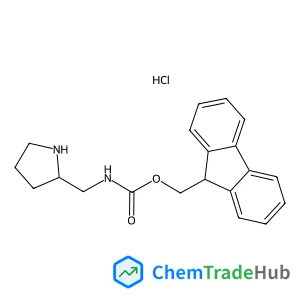
(S)-(9H-Fluoren-9-yl)methyl (pyrrolidin-2-ylmethyl)carbamate hydrochloride
CAS号:
1217813-15-4
分子式:
C20H23ClN2O2
推荐供应商



免责声明
本页面提供的学术期刊信息仅供参考和研究使用。我们与任何期刊出版商均无关联,也不处理投稿事宜。如有投稿相关咨询,请直接联系相关期刊出版商。
如发现页面信息有误,请发送邮件至 support@chemtradehub.com 联系我们。我们将及时核实并处理您的问题。