




Surface characterization of imidazolium-based ionic liquids with cyano-functionalized anions at the gas–liquid interface using sum frequency generation spectroscopy
文献信息
发布日期
2012-03-09
DOI
10.1039/C2CP23920E
影响因子
3.676
作者
Chariz Y. Peñalber, Zlata Grenoble, Steven Baldelli
查看原文
摘要
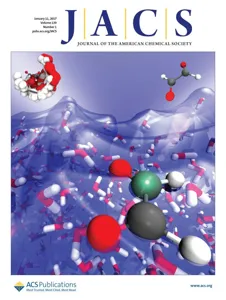
Advancement in the field of ionic liquid technology requires a comprehensive understanding of their surface properties, as a wide range of chemical reactions occur mainly at interfaces. As essential media currently used in several technological applications, their accurate molecular level description at the gas–liquid interface is of utmost importance. Due to the high degree of chemical information provided in the vibrational spectrum, vibrational spectroscopy gives the most detailed model for molecular structure. The inherently surface-sensitive technique, sum frequency generation (SFG) spectroscopy, in combination with bulk-sensitive vibrational spectroscopic techniques such as FTIR and Raman, has been used in this report to characterize the surface of cyano-containing ionic liquids, such as [BMIM][SCN], [BMIM][DCA], [BMIM][TCM] and [EMIM][TCB] at the gas–liquid interface. By structural variation of the anion while keeping the cation constant, emphasis on the molecular arrangement of the anion at the gas–liquid interface is reported, and its subsequent role (if any) in determining the surface molecular orientation of the cation. Vibrational modes seen in the C–H stretching region revealed the presence of the cation at the gas–liquid interface. The cation orientation is independent of the type of cyano-containing anion, however, a similar arrangement at the surface as reported in previous studies was found, with the imidazolium ring lying flat at the surface, and the alkyl chains pointing towards the gas phase. SFG results show that all three anions of varying symmetry, namely, [DCA]− (C2v), [TCM]−(D3h) and [TCB]− (Td) in ionic liquids [BMIM]DCA], [BMIM][TCM] and [EMIM][TCB] are significantly tilted from the surface plane, while the linear [SCN]− in [BMIM][SCN] exhibited poor ordering, as seen in the absence of its C–N stretching mode in the SFG vibrational spectra.
相关文献
Development of thermosensitive copolymers of poly(2-methoxyethyl acrylate-co-poly(ethylene glycol) methyl ether acrylate) and their nanogels synthesized by RAFT dispersion polymerization in water
Guangyao Liu, Qian Qiu, Zesheng An
2011-12-16
Paper
DOI: 10.1039/C2PY00533F
One-step preparation of fluorescent inorganic–organic hybrid material used for explosive sensing
Qi Chen, Ding Zhou, Jie Cao, Yu-Jian He, Bao-Hang Han
2011-02-21
Paper
DOI: 10.1039/C1PY00012H
RAFT polymerization mediated bioconjugation strategies
2011-05-31
Review Article
DOI: 10.1039/C1PY00039J
Self-immolative linkers in polymeric delivery systems
Christopher A. Blencowe, Andrew T. Russell, Francesca Greco, Wayne Hayes, David W. Thornthwaite
2010-11-18
Review Article
DOI: 10.1039/C0PY00324G
Synthesis and self-assembly of amphiphilic semi-brush and dual brush block copolymers in solution and on surfaces‡
Daniel Zehm, André Laschewsky, Michael Gradzielski, Hua Liang, Jürgen P. Rabe, Jean-François Lutz
2010-09-25
Paper
DOI: 10.1039/C0PY00200C
Synthesis, characterization and cellular internalization of poly(2-hydroxyethyl methacrylate) bearing α-d-mannopyranose
Makoto Obata, Mayumi Shimizu, Tomoko Ohta, Aya Matsushige, Kaoru Iwai, Shiho Hirohara, Masao Tanihara
2010-11-26
Paper
DOI: 10.1039/C0PY00326C
Chemical modification of pectin: environmental friendly process for new potential material development
Luca Monfregola, Marilisa Leone, Vittoria Vittoria, Pietro Amodeo, Stefania De Luca
2011-02-14
Communication
DOI: 10.1039/C0PY00341G
Phase separated structures in tethered dPS–PMMA copolymer films revealed using X-ray scattering with a novel contrast enhancement agent
Benjamin M. D. O'Driscoll, Gemma E. Newby, Ian W. Hamley
2010-11-10
Paper
DOI: 10.1039/C0PY00289E
您可能还喜欢
化合物问答
2-(甲基磺酰基)嘧啶-5-胺(CAS号:56621-92-2)适用哪些法规指南?
该化合物适用的法规指南包括GHS(全球化学品统一分类和标签制度)分类为特定目标器官毒性-单次接触类别3;根据欧盟REACH法规,该化合物需要进行注册和评估;在美...
56621-92-22-(Methylsulfonyl)py...
化合物问答
在合成中是否有4-(4-氯苯基)-1H-咪唑(CAS号:35512-29-9)的替代品?
在合成中,可以考虑使用一些类似的化合物作为4-(4-氯苯基)-1H-咪唑的替代品,如4-(4-溴苯基)-1H-咪唑或4-(4-甲氧基苯基)-1H-咪唑。这些化合...
35512-29-94-(4-Chlorophenyl)-1...
化合物问答
什么是N~2~-甲基丙氨酸酰胺(CAS号:32012-16-1)?
N~2~-甲基丙氨酸酰胺是一种有机化合物,其化学名为2-(Methylamino)propanamide。它是一种酰胺类化合物,分子式为C4H10N2O,相对分...
32012-16-12-(Methylamino)propa...
化合物问答
如何处理含有N-苄基-3-氨基氧杂环丁烷草酸盐(CAS号:1956341-96-0)的废料?
处理含有N-苄基-3-氨基氧杂环丁烷草酸盐(CAS号:1956341-96-0)的废料时,应首先确保遵循相关法规要求,如GHS和REACH等。通常,废液应先进行...
1956341-96-0N-Benzyloxetan-3-ami...
化合物问答
4-bromo-2-chloro-6-methylbenzoic acid(CAS号:877149-07-0)的物理化学性质是什么?
4-溴-2-氯-6-甲基苯甲酸是一种固体化合物,具有较高的熔点和较低的沸点。它的分子量为261.03 g/mol。该化合物在水中几乎不溶,在有机溶剂中溶解度适中...
877149-07-04-Bromo-2-chloro-6-m...
化合物问答
2-[(2,5-二氯-4-嘧啶)氨基]-N-甲基苯甲酰胺(CAS号:761440-08-8)通常如何合成?
该化合物通常通过缩合反应合成,典型的方法是将2,5-二氯嘧啶与N-甲基苯甲酰胺在碱性条件下进行偶联反应。常用的碱包括NaH、LDA等强碱。该合成路线具有较高的选...
761440-08-82-[(2,5-dichloropyri...
4752-10-71,4-Dichlorophthalaz...
化合物问答
在合成中是否有3,5-二溴-4-甲基苯胺(CAS号:13194-73-5)的替代品?
3,5-二溴-4-甲基苯胺在某些合成路线中可能没有直接替代品。然而,在某些应用场景下,可以考虑使用其他类似结构的化合物如3,5-二溴-4-硝基苯胺或3,5-二碘...
13194-73-53,5-Dibromo-4-methyl...
化合物问答
2-氯喹啉-4-羧酸甲酯(CAS号:62482-26-2)的主要用途是什么?
2-氯喹啉-4-羧酸甲酯主要用于有机合成和药物合成领域,作为中间体或原料。它在合成某些药物和染料时具有重要作用。此外,该化合物还可能用于某些特定的化学研究中。
62482-26-2Methyl 2-chloro-4-qu...
化合物问答
i>]吡啶(CAS号:474708-88-8)安全吗?
6-溴-8-氯咪唑[1,2-a]吡啶在操作过程中需要谨慎以确保安全。该化合物具有一定的毒性,吸入其蒸气或粉尘可能导致呼吸道刺激。处理时应佩戴适当的防护装备,如手...
474708-88-86-Bromo-8-chloroimid...
来源期刊
Physical Chemistry Chemical Physics

CiteScore:
5.5
自引率:
10.3%
年发文量:
3036
Physical Chemistry Chemical Physics (PCCP) is an international journal co-owned by 19 physical chemistry and physics societies from around the world. This journal publishes original, cutting-edge research in physical chemistry, chemical physics and biophysical chemistry. To be suitable for publication in PCCP, articles must include significant innovation and/or insight into physical chemistry; this is the most important criterion that reviewers and Editors will judge against when evaluating submissions. The journal has a broad scope and welcomes contributions spanning experiment, theory, computation and data science. Topical coverage includes spectroscopy, dynamics, kinetics, statistical mechanics, thermodynamics, electrochemistry, catalysis, surface science, quantum mechanics, quantum computing and machine learning. Interdisciplinary research areas such as polymers and soft matter, materials, nanoscience, energy, surfaces/interfaces, and biophysical chemistry are welcomed if they demonstrate significant innovation and/or insight into physical chemistry. Joined experimental/theoretical studies are particularly appreciated when complementary and based on up-to-date approaches.
推荐化合物

推荐供应商




免责声明
本页面提供的学术期刊信息仅供参考和研究使用。我们与任何期刊出版商均无关联,也不处理投稿事宜。如有投稿相关咨询,请直接联系相关期刊出版商。
如发现页面信息有误,请发送邮件至 support@chemtradehub.com 联系我们。我们将及时核实并处理您的问题。