











![4-[(2,4-Dihydroxyphenyl)diazenyl]-5-hydroxy-2,7-naphthalenedisulfonic acid structure](https://cnstatic.chemtradehub.com/structs/362/3627-01-8-79ac.webp "4-[(2,4-Dihydroxyphenyl)diazenyl]-5-hydroxy-2,7-naphthalenedisulfonic acid structure")
4-[(2,4-Dihydroxyphenyl)diazenyl]-5-hydroxy-2,7-naphthalenedisulfonic acid
CAS号:
3627-01-8
分子式:
C16H12N2O9S2
Patrick Rosa, Laure Vendier, Nicola Casati, Jean-François Létard, Azzedine Bousseksou, Philippe Guionneau, Gábor Molnár
The effect of pressure on the dinuclear spin crossover material [{Fe(bpp)(NCS)2}2(4,4′-bipy)]·2MeOH (where bpp = 2,6-bis(pyrazol-3-yl)pyridine and 4,4′-bipy = 4,4′-bipyridine, 1) has been investigated with single crystal X-ray diffraction and Raman spectroscopy using diamond anvil cell techniques. The very gradual pressure-induced spin crossover occurs between 7 and 25 kbar, and shows no evidence of crystallographic phase transitions. The pressure-induced spin transition leads to a complete LS state which is not thermally accessible. This structural evolution under pressure is in stark contrast to the previously reported thermal spin crossover behaviour, in which a symmetry-breaking, purely structural phase transition results in only partial conversion to the low spin state. This observation is attributed to the symmetry-breaking phase transition becoming unfavourable under pressure.
Wei Zhang, Kazuyoshi Yoshimura, Yan Ouyang, Zong-Hui Jiang, Shi-Ping Yan, Peng Cheng
DOI: 10.1039/B506465A
Judy Cipot, Robert McDonald, Mark Stradiotto
DOI: 10.1039/B510253G
Wenqing Sun, Koon Fung Lam, Ling Wai Wong, King Lun Yeung
DOI: 10.1039/B509323F
Kazuhisa Fujimoto, Yu Muto
DOI: 10.1039/B508189K
Winston Ong, Robin L. McCarley
DOI: 10.1039/B506724C
Marianne Steurer, Karin Tiedl, Yaping Wang, Walter Weissensteiner
DOI: 10.1039/B508761A
André A. Williams, B. Scott Day, Brett L. Kite, Melinda K. McPherson, Carla Slebodnick, John R. Morris, Richard D. Gandour
DOI: 10.1039/B506710C
Philip J. Bailey, Robert A. Coxall, Caroline M. Dick, Sylvie Fabre, Simon Parsons, Lesley J. Yellowlees
DOI: 10.1039/B505697G
Raymond Wai-Yin Sun, Rong Chen, Nancy P.-Y. Chung, Chi-Ming Ho, Chen-Lung Steve Lin, Chi-Ming Che
DOI: 10.1039/B510984A
Wataru Setaka, Natsuki Hamada, Chizuko Kabuto, Mitsuo Kira
DOI: 10.1039/B505109F
(3-氨苯基)环丙基甲酮主要用于合成化学中间体,特别是在药物化学领域作为原料。它还可以用于有机合成反应中,作为催化剂或反应物。
亚胺菌应储存在干燥、阴凉处,避免直接暴露于光线下。建议使用密封容器储存,防止吸潮和污染。具体的储存条件应参考产品的安全数据表(MSDS)或药品说明书。
2-氯-2,2-二氟乙酰胺在医药、聚合物、传感器、半导体等领域有广泛应用。在医药领域,它作为中间体用于合成其他药物;在聚合物领域,用作聚合引发剂或稳定剂;在传感...
在处理4-甲基-3-硝基-1,1-联苯时,应佩戴手套、护目镜和实验室外套等个人防护装备(PPE),确保在通风橱中操作以减少吸入风险。若发生泄露,应立即使用沙子或...
该化合物广泛应用于医药、聚合物和半导体行业。在医药领域,它是某些药物中间体的重要组成部分;在聚合物领域,可用作增塑剂;在半导体行业,可用于制造光刻胶。
芬苯哒唑砜-D3标准品的替代品可能包括类似的苯并咪唑类化合物,如芬苯哒唑本身或其非同位素标记版本。这些替代品在结构上与芬苯哒唑砜-D3相似,但在具体应用中需进行...
2-氟-4-硝基苯乙酸可以通过一系列化学反应合成,通常是从4-氟苯胺开始,首先进行硝化反应生成4-氟-2-硝基苯胺,然后进行乙酰化反应得到目标产物。具体的合成步...
2-氟-4-甲氧基苯乙酸通常通过将4-甲氧基苯乙酸与氟化试剂(如氟化氰)反应来合成。反应通常在无水条件下进行,使用催化剂如六氟磷酸锂或四氟硼酸锂以提高选择性和产...
4SC 202;4SC202是一种化学化合物,其化学名称为(2E)-N-(2-氨基苯基)-3-(1-{[4-(1-甲基-1H-吡唑-4-基)苯基]磺酰基}-1H...

Physical Chemistry Chemical Physics (PCCP) is an international journal co-owned by 19 physical chemistry and physics societies from around the world. This journal publishes original, cutting-edge research in physical chemistry, chemical physics and biophysical chemistry. To be suitable for publication in PCCP, articles must include significant innovation and/or insight into physical chemistry; this is the most important criterion that reviewers and Editors will judge against when evaluating submissions. The journal has a broad scope and welcomes contributions spanning experiment, theory, computation and data science. Topical coverage includes spectroscopy, dynamics, kinetics, statistical mechanics, thermodynamics, electrochemistry, catalysis, surface science, quantum mechanics, quantum computing and machine learning. Interdisciplinary research areas such as polymers and soft matter, materials, nanoscience, energy, surfaces/interfaces, and biophysical chemistry are welcomed if they demonstrate significant innovation and/or insight into physical chemistry. Joined experimental/theoretical studies are particularly appreciated when complementary and based on up-to-date approaches.
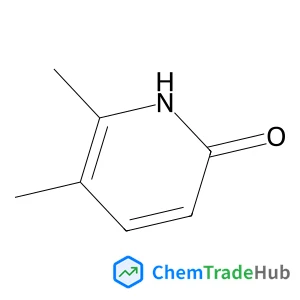
![Benzyl spiro[indole-3,4'-piperidine]-1(2H)-carboxylate hydrochloride (1:1) structure](https://cnstatic.chemtradehub.com/structs/159/159635-46-8-8de0.webp "Benzyl spiro[indole-3,4'-piperidine]-1(2H)-carboxylate hydrochloride (1:1) structure")
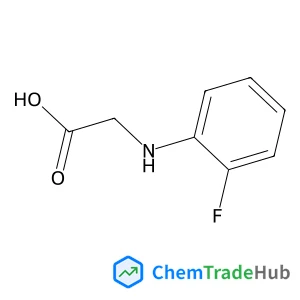
![2-Methyl-2-propanyl [(2S)-1-hydroxy-3-(4-hydroxyphenyl)-2-propanyl]carbamate structure](https://cnstatic.chemtradehub.com/structs/833/83345-46-4-eec2.webp "2-Methyl-2-propanyl [(2S)-1-hydroxy-3-(4-hydroxyphenyl)-2-propanyl]carbamate structure")




