


![(3aR,7R,7aR)-2,2-Diethyl-3a,6,7,7a-tetrahydro-7-[(methylsulfonyl)oxy]-1,3-benzodioxole-5-carboxylic Acid Ethyl Ester structure](https://cnstatic.chemtradehub.com/structs/204/204254-90-0-7172.webp "(3aR,7R,7aR)-2,2-Diethyl-3a,6,7,7a-tetrahydro-7-[(methylsulfonyl)oxy]-1,3-benzodioxole-5-carboxylic Acid Ethyl Ester structure")
High molecular weight acrylonitrile–butadiene architectures via a combination of RAFT polymerization and orthogonal copper mediated azide–alkyne cycloaddition
文献信息
发布日期
2012-02-07
DOI
10.1039/C2PY00547F
影响因子
5.582
作者
Christoph J. Dürr, Sebastian G. J. Emmerling, Paul Lederhose, Andreas Kaiser, Sven Brandau, Michael Klimpel, Christopher Barner-Kowollik
查看原文
摘要
α-Functional nitrile butadiene rubber (NBR) building blocks were employed in the copper mediated 1,3-dipolar Huisgen coupling upon addition of 1,4-bis(azidomethyl)benzene (4). Polymer–polymer coupling afforded linear polymers with molecular weights ranging from 2500 g mol−1 to 97 000 g mol−1 and polydispersities from 1.1 to 1.6. The α-functional NBR building blocks were obtained via the reversible addition–fragmentation chain transfer (RAFT) copolymerization of acrylonitrile (AN) and 1,3-butadiene (BD) at 100 °C, utilizing the high temperature azo initiator 1,1′-azobis(cyclohexane-1-carbonitrile) and chlorobenzene or acetone as solvents. A novel alkyne-functional trithiocarbonate 2 was synthesized in 64% yield via the N,N′-dicyclohexylcarbodiimide mediated coupling of 2-((dodecylsulfanyl)carbono-thioyl)sulfanyl propanoic acid (DoPAT, 1) and propargyl alcohol. 2 was shown to be an efficient controlling agent for the controlled/living radical copolymerization of acrylonitrile and 1,3-butadiene. The use of copper mediated azide–alkyne cycloaddition was extended towards the side-chain modification of acrylonitrile–butadiene rubbers as well as applied in the synthesis of branched and cross-linked NBR structures. For this purpose an acrylonitrile-1,3-butadiene–propargyl methacrylate (PMA) terpolymer of 3900 g mol−1 with a PDI of 1.3 was synthesized by a DoPAT-mediated RAFT polymerization. Herein, monomers were employed in the ratio of 56 : 35 : 9 (BD : AN : PMA). The ability of the terpolymer to undergo side-chain modification was demonstrated upon addition of 1-undecane azide. Cross-links were established via addition of 1,4-bis(azidomethyl)benzene. The current study provides the first successful approach to employ an orthogonal conjugation technique on this technically important class of synthetic rubbers.
期刊推荐

Journal of the Indian Institute of Science
Herald of the Russian Academy of Sciences

NDT & E International
Chinese Journal of Chemistry

Bioorganic & Medicinal Chemistry
Journal of Chemical Sciences
Polycyclic Aromatic Compounds
Topics in Catalysis

Atomization and Sprays
Journal of Asian Natural Products Research
相关文献
Conducting behavior of chalcopyrite-type CuGaS2 crystals under visible light
Jorge L. Cholula-Díaz, José Barzola-Quiquia, Christian Kranert, Tom Michalsky, Pablo Esquinazi, Marius Grundmann, Harald Krautscheid
2014-09-01
Paper
DOI: 10.1039/C4CP03103B
Ultrafast resonance energy transfer in the umbelliferone–alizarin bichromophore
Pierangelo Fabbrizzi, Luisa Lascialfari, Stefano Cicchi, Malgorzata Biczysko, Fabrizio Santoro
2014-01-23
Paper
DOI: 10.1039/C3CP54609H
Boron-nitride nanotube triggered self-assembly of hexagonal boron-nitride nanostructure
2014-07-29
Paper
DOI: 10.1039/C4CP02578D
Dispersion corrected DFT approaches for anharmonic vibrational frequency calculations: nucleobases and their dimers
Teresa Fornaro, Malgorzata Biczysko, Vincenzo Barone
2014-01-28
Paper
DOI: 10.1039/C3CP54724H
Structure, fragmentation patterns, and magnetic properties of small cobalt oxide clusters
R. H. Aguilera-del-Toro, A. Vega, L. C. Balbás
2014-08-28
Paper
DOI: 10.1039/C4CP03370A
Electrical mobilities of multiply charged ionic-liquid nanodrops in air and carbon dioxide over a wide temperature range: influence of ion-induced dipole interactions
Juan Fernández-García, Juan Fernández de la Mora
2014-08-04
Paper
DOI: 10.1039/C4CP02850C
Charge separation energetics at organic heterojunctions: on the role of structural and electrostatic disorder
Gabriele D'Avino, Luca Muccioli, Jérôme Cornil, David Beljonne
2014-07-08
Perspective
DOI: 10.1039/C4CP01872A
A DFT study on the reaction mechanism of dimerization of methyl methacrylate catalyzed by N-heterocyclic carbene
Yunxia Li, Yanyan Zhu, Wenjing Zhang, Donghui Wei, Yingying Ran, Qilin Zhao, Mingsheng Tang
2014-07-31
Paper
DOI: 10.1039/C4CP02186J
Are hot charge transfer states the primary cause of efficient free-charge generation in polymer:fullerene organic photovoltaic devices? A kinetic Monte Carlo study
Matthew L. Jones, Reesha Dyer, Nigel Clarke, Chris Groves
2014-06-19
Paper
DOI: 10.1039/C4CP01626B
您可能还喜欢
化合物问答
4-((4-甲基哌嗪-1-基)甲基)苯硼酸(CAS号:763120-62-3)的市场或研究趋势如何?
随着有机硼化学的发展,该化合物在催化、药物合成、材料科学等领域展现出潜在的应用价值。近年来,其在药物前体合成中的应用越来越受到关注。市场趋势显示,随着科研投入的...
763120-62-3{4-[(4-Methyl-1-pipe...
化合物问答
如何储存2,4,5-三甲基-1-硝基苯(CAS号:610-91-3)?
2,4,5-三甲基-1-硝基苯应储存在阴凉、干燥且通风良好的地方,避免阳光直射。储存在密封的金属容器中,远离火源和热源。储存温度应控制在25°C以下,湿度不宜过...
610-91-31,2,4-Trimethyl-5-ni...
化合物问答
处理2,5-二碘噻吩(CAS号:625-88-7)时应注意哪些实验室安全事项?
在处理2,5-二碘噻吩时,应穿戴适当的个人防护装备(PPE),包括实验室外套、手套和防护眼镜。在通风橱中进行操作以避免吸入蒸气。如果发生泄漏,应立即疏散人员并使...
625-88-72,5-Diiodothiophene
化合物问答
在合成中是否有6-bromo-3-chloro-1H-indole(CAS号:57916-08-2)的替代品?
在合成6-溴-3-氯-1H-吲哚(CAS号:57916-08-2)时,可以考虑使用一些类似的化合物作为替代品,如6-氯-3-氯-1H-吲哚或3-氯-1H-吲哚,...
57916-08-26-bromo-3-chloro-1H-...
化合物问答
在合成中是否有(R)-(-)-1-(1-萘基)乙基异氰酸酯(CAS号:42340-98-7)的替代品?
可以考虑使用类似结构的化合物,如1-[(1R)-1-(2-氨基乙基)萘-1-基]乙基异氰酸酯作为替代品。此外,还可以寻找其他类型的异氰酸酯衍生物,如苯基异氰酸酯...
42340-98-71-[(1R)-1-Isocyanato...
化合物问答
3-氨基苯甲酰苯胺(CAS号:14315-16-3)适用哪些法规指南?
3-氨基苯甲酰苯胺适用于多项法规指南,包括但不限于GHS(全球化学品统一分类和标签制度)分类为皮肤腐蚀/刺激类别2,以及潜在的皮肤过敏性类别1。在欧盟地区,它受...
14315-16-33-Amino-N-phenylbenz...
化合物问答
β-环柠檬醛-D5(CAS号:26309-95-5)通常如何合成?
β-环柠檬醛-D5可通过不对称合成方法获得。常见的合成路线包括以环己酮为原料,经过选择性氧化、还原、保护基引入等步骤,最终得到目标化合物。该合成过程中通常使用多...
26309-95-5[(2,2-Dimethylpropan...
34915-68-9Bunitrolol
化合物问答
如何处理含有BIO-1211(CAS号:187735-94-0)的废料?
对于含有BIO-1211(CAS号:187735-94-0)的废料,首先应进行分类收集,确保符合环保要求。然后,可以考虑通过焚烧或其他专业处理方法进行处置。在处...
187735-94-0BIO-1211
化合物问答
如何处理含有4-氯-2-氟-3-甲基苯酚(CAS号:1351668-24-0)的废料?
含有该化合物的废液应收集至专用容器中,避免与其他化学品混合。可采用焚烧或送交专业废弃物处理公司处理。处理过程中需遵守当地环保法规,确保不产生二次污染。处理前应进...
1351668-24-04-Chloro-2-fluoro-3-...
来源期刊
Polymer Chemistry

CiteScore:
8.6
自引率:
7.3%
年发文量:
457
Polymer Chemistry welcomes submissions in all areas of polymer science that have a strong focus on macromolecular chemistry. Manuscripts may cover a broad range of fields, yet no direct application focus is required.
推荐化合物
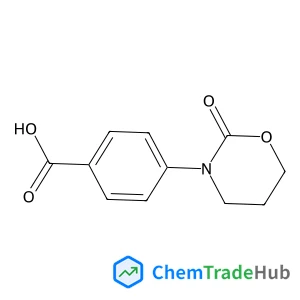
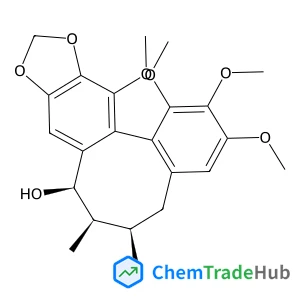
推荐供应商




免责声明
本页面提供的学术期刊信息仅供参考和研究使用。我们与任何期刊出版商均无关联,也不处理投稿事宜。如有投稿相关咨询,请直接联系相关期刊出版商。
如发现页面信息有误,请发送邮件至 support@chemtradehub.com 联系我们。我们将及时核实并处理您的问题。