





![(2S)-2-{[(9H-Fluoren-9-ylmethoxy)carbonyl]amino}-4-(methylselanyl)butanoic acid structure](https://cnstatic.chemtradehub.com/structs/121/1217852-49-7-f252.webp "(2S)-2-{[(9H-Fluoren-9-ylmethoxy)carbonyl]amino}-4-(methylselanyl)butanoic acid structure")
A ‘smart’ approach towards the formation of multifunctional nano-assemblies by simple mixing of block copolymers having a common temperature sensitive segment
文献信息
发布日期
2012-02-15
DOI
10.1039/C2PY00589A
影响因子
5.582
作者
Mitsuhiro Ebara, Naokazu Idota, Ravin Narain
查看原文
摘要
A smart approach has been developed to form nanoassemblies with tunable shell's functions by simply mixing three different block copolymers with a common temperature-responsive segment at 25 °C. The formation of nanoassemblies and their thermodynamic stability are driven by the hydrophobic interaction of the common poly(N-isopropylacrylamide-co-N-(isobutoxymethyl)acrylamide) (P(NIPAAm-co-BMAAm)) segment which has a lower critical solution temperature (LCST) below 25 °C. Three series of copolymers with different polymer structures, acrylamide-type P(NIPAAm-co-N-(hydroxymethyl)acrylamide (HMAAm))-b-P(NIPAAm-co-BMAAm), poly(ethylene oxide) (PEO)-b-P(NIPAAm-co-BMAAm), and methacrylate-type poly(2-lactobionamidoethyl methacrylate) (PLAMA)-b-P(NIPAAm-co-HMAAm)-b-P(NIPAAm-co-BMAAm), were successfully polymerized by reversible addition–fragmentation chain transfer (RAFT) polymerization. Regardless of the block copolymer types the selected block copolymers successfully formed a stable core–shell assembly with the collapsed common segments forming the inner core by simple mixing in aqueous solutions. The size distributions were monodisperse and relatively narrow when all or two of these three block copolymers were mixed, while addition of free-copolymers without the common segment did not affect the assembly formation. The ratio of functional segments into shell could be easily tuned by changing the mixing ratio of three block copolymers. This system is highly expected to find use as smart nano-carriers for encapsulation, targeting, and triggered release of drug under control through a combination of temperature-responsive chains, accessible functionality, and choice of sugar moiety.
相关文献
Nanocomposite latexes containing layered double hydroxides via RAFT-assisted encapsulating emulsion polymerization
Ana Cenacchi Perreira, Samuel Pearson, Franck D'Agosto, Muriel Lansalot, Elodie Bourgeat-Lami
2017-01-05
Paper
DOI: 10.1039/C6PY01742H
Synthesis and properties of pyrrolo[3,4-c]pyrrole-1,3-dione based polymer semiconductors and their performance in organic thin film transistors
Chang Guo, Bin Sun, Yuning Li
2014-05-27
Paper
DOI: 10.1039/C4PY00372A
Control over the assembly and rheology of supramolecular networks via multi-responsive double hydrophilic copolymers
Jérémy Brassinne, Charles-André Fustin, Jean-François Gohy
2017-01-30
Paper
DOI: 10.1039/C6PY02143C
CO2-Responsive graft copolymers: synthesis and characterization
Shaojian Lin, Anindita Das, Patrick Theato
2017-01-03
Paper
DOI: 10.1039/C6PY01996J
Oxygen and carbon dioxide dual gas-responsive homopolymers and diblock copolymers synthesized via RAFT polymerization
Xue Jiang, Guolin Lu, Huang Xiaoyu
2016-12-26
Paper
DOI: 10.1039/C6PY02004F
Heterogeneous organocatalysts composed of microporous polymer networks assembled by Tröger's base formation
Mariolino Carta, Matthew Croad, Keith Bugler, Kadhum J. Msayib, Neil B. McKeown
2014-06-20
Paper
DOI: 10.1039/C4PY00608A
Rational design on D–A conjugated P(BDT–DTBT) polymers for polymer solar cells
Chen Gao, Liwei Wang, Xiaoyu Li
2014-04-22
Review Article
DOI: 10.1039/C4PY00389F
Tumor-targeted aggregation of pH-sensitive nanocarriers for enhanced retention and rapid intracellular drug release
Wei Wu, Qiujing Zhang, Jiantao Wang, Miao Chen, Shuai Li, Zaifu Lin, Jianshu Li
2014-05-30
Paper
DOI: 10.1039/C4PY00575A
Unprecedented cucurbituril-based ternary host–guest supramolecular polymers mediated through included alkyl chains
Nana Sun, Dongdong Qi, Jianzhuang Jiang
2014-05-30
Communication
DOI: 10.1039/C4PY00512K
您可能还喜欢
化合物问答
4,5-二甲基-2-硝基苯甲酸(CAS号:4315-14-4)的市场或研究趋势如何?
4,5-二甲基-2-硝基苯甲酸主要应用于制药、染料和农药等行业。由于其潜在的毒性,其市场趋势可能受到法规限制和环保考量的影响,推动了替代产品的研发。在研究领域,...
4315-14-44,5-Dimethyl-2-nitro...
化合物问答
处理直接黑22(CAS号:6473-13-8)时应注意哪些实验室安全事项?
处理直接黑22时应穿戴适当的个人防护装备(PPE),包括实验服、手套、护目镜和口罩。操作应在通风橱内进行,以避免吸入有害气体。如果发生泄漏,应立即清理,并使用大...
6473-13-82-Naphthalenesulfoni...
化合物问答
处理2,1,3-苯并噻二唑-4-基异氰酸酯(CAS号:342411-14-7)时应注意哪些实验室安全事项?
处理2,1,3-苯并噻二唑-4-基异氰酸酯时应注意以下安全事项:穿戴个人防护装备,如实验室外套、防护眼镜和手套;在通风橱中操作,确保良好的通风;保持实验室环境干...
342411-14-74-Isocyanato-2,1,3-b...
化合物问答
如何处理含有Δ-8,9-脱氢雌酮(CAS号:204077-66-7)的废料?
含有Δ-8,9-脱氢雌酮的废料需要进行适当的处理以确保环境和人体安全。首先,收集废液并存放于密封容器中,避免泄漏。其次,可以考虑将其转化为无害物质或通过专业处理...
204077-66-7Thioquinapiperifil d...
化合物问答
如何储存5-溴戊酸(CAS号:2067-33-6)?
5-溴戊酸应储存在阴凉、干燥、通风良好的环境中,避免阳光直射。建议在室温(约15-25°C)下保存,保持相对湿度低于60%。应使用密封的玻璃或塑料容器,并远离热...
2067-33-65-Bromopentanoic aci...
化合物问答
4-(甲基亚磺酰基)苯胺(CAS号:22865-62-9)应用于哪些行业?
4-(甲基亚磺酰基)苯胺在医药、聚合物和传感器等领域有一定的应用。在医药方面,它可以用作合成药物的中间体;在聚合物领域,可以作为合成特殊性能高分子材料的单体;在...
22865-62-94-Methylsulfinylanil...
化合物问答
什么是1-(2-FLUOROPHENYL)-5-METHYL-1H-PYRAZOLE-4-CARBOHYDRAZIDE(CAS号:618092-58-3)?
1-(2-氟苯基)-5-甲基-1H-吡唑-4-亚甲基肼是一种有机化合物,其分子式为C9H9FN3O。该化合物具有特定的物理化学性质,如熔点、沸点等,但具体值需查...
618092-58-31-(2-Fluorophenyl)-5...
化合物问答
Dauricumine(CAS号:345641-00-1)通常如何合成?
Dauricumine通常通过复杂的合成路线制备,涉及多个步骤,包括环化、氧化、卤化等反应。合成过程中使用了多种催化剂和试剂,例如金属催化剂、氧化剂等。产率通常...
345641-00-1(1R,1'S,5R,6'S,8'S)-...
化合物问答
5-氰基苯酞(CAS号:82104-74-3)安全吗?
5-氰基苯酞在正常使用条件下相对安全,但其具有一定的毒性,需谨慎操作。在实验或工业应用中,应采取适当的防护措施,如佩戴防护手套、护目镜和实验服,确保通风良好。误...
82104-74-31-Oxo-1,3-dihydro-2-...
化合物问答
2-Methyl-1-(phenylsulfonyl)-1H-pyrrolo[2,3-b]pyridin-5-amine(CAS号:1186502-59-9)安全吗?
该化合物在使用时需要谨慎操作。虽然其毒性和健康风险尚未完全明确,但建议在通风良好的环境中操作,并穿戴适当的个人防护装备,如手套和防护眼镜。
1186502-59-92-Methyl-1-(phenylsu...
来源期刊
Polymer Chemistry

CiteScore:
8.6
自引率:
7.3%
年发文量:
457
Polymer Chemistry welcomes submissions in all areas of polymer science that have a strong focus on macromolecular chemistry. Manuscripts may cover a broad range of fields, yet no direct application focus is required.
推荐化合物
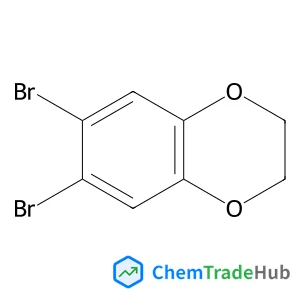
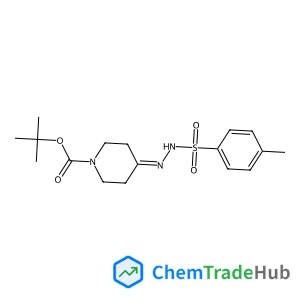
tert-Butyl 4-(2-(p-Tolylsulfonyl)hydrazono)piperidine-1-carboxylate
CAS号:
1046478-89-0
分子式:
C17H25N3O4S
推荐供应商



免责声明
本页面提供的学术期刊信息仅供参考和研究使用。我们与任何期刊出版商均无关联,也不处理投稿事宜。如有投稿相关咨询,请直接联系相关期刊出版商。
如发现页面信息有误,请发送邮件至 support@chemtradehub.com 联系我们。我们将及时核实并处理您的问题。