









![Ethyl 2-[(3-bromo-4-pyridinyl)sulfanyl]-2-methylpropanoate structure](https://cnstatic.chemtradehub.com/structs/135/1352794-86-5-a8aa.webp "Ethyl 2-[(3-bromo-4-pyridinyl)sulfanyl]-2-methylpropanoate structure")
Ladder-type poly(benzopentalene) derivatives with tunable energy levels by “click” reaction
文献信息
发布日期
2012-01-30
DOI
10.1039/C2PY00593J
影响因子
5.582
作者
Dong Wang, Yuzhen Zhao, Hong Gao, Yan Xing, Huai Yang
查看原文
摘要
We have successfully synthesized two types of conjugated polymers, i.e., ladder-type or AB-type poly(benzopentalene) derivative macromoleculars, by Pd-catalyzed self-polycondensation. Incorporating long alkyl chains at the polymer peripheral positions, both polymers have very good solubility and high molecular weight. Thus, the detailed optical and electrochemical properties of the polymers were investigated. At the same time, it was very special that one type of conjugated polymer possessed reactive side groups which can be “clicked” by tetrathiafulvalene (TTF). The energy levels can be obviously changed by the “click” reaction. These results show that ladder-type poly(benzopentalene) derivatives containing reacted side groups are promising candidates for achieving optoelectronic applications.
相关文献
Gd3+ spin labeling for distance measurements by pulse EPR spectroscopy
2013-12-06
Perspective
DOI: 10.1039/C3CP53822B
Complex refractive indices in the near-ultraviolet spectral region of biogenic secondary organic aerosol aged with ammonia
J. M. Flores, G. Adler, H. J. Lee, L. Segev, J. Laskin, A. Laskin, S. A. Nizkorodov, S. S. Brown, Y. Rudich
2014-04-10
Paper
DOI: 10.1039/C4CP01009D
Multi-scale modeling of electronic spectra of three aromatic amino acids: importance of conformational averaging and explicit solute–solvent interactions
Petr Bouř
2014-08-12
Paper
DOI: 10.1039/C4CP02668C
A hybrid bis(amino-styryl) substituted Bodipy dye and its conjugate diacid: synthesis, structure, spectroscopy and quantum chemical calculations
Adela Nano, Pascal Retailleau, Jerry P. Hagon, Anthony Harriman, Raymond Ziessel
2014-03-24
Paper
DOI: 10.1039/C3CP55021D
Defect self-doped TiO2 for visible light activity and direct noble metal anchoring
Zengxia Pei, Luyao Ding, Wenhui Feng, Sunxian Weng, Ping Liu
2014-07-03
Paper
DOI: 10.1039/C4CP02286F
Atomic partitioning of M–H2 bonds in [NiFe] hydrogenase – a test case of concurrent binding
Swaminathan Angeline Vedha, Rajadurai Vijay Solomon, Ponnambalam Venuvanalingam
2014-04-10
Paper
DOI: 10.1039/C4CP00526K
Heterogeneous dynamics of ionic liquids in confined films with varied film thickness
Yong-Lei Wang, Zhong-Yuan Lu
2014-08-14
Paper
DOI: 10.1039/C4CP02843K
Dispersion corrected DFT approaches for anharmonic vibrational frequency calculations: nucleobases and their dimers
Teresa Fornaro, Malgorzata Biczysko, Vincenzo Barone
2014-01-28
Paper
DOI: 10.1039/C3CP54724H
Conducting behavior of chalcopyrite-type CuGaS2 crystals under visible light
Jorge L. Cholula-Díaz, José Barzola-Quiquia, Christian Kranert, Tom Michalsky, Pablo Esquinazi, Marius Grundmann, Harald Krautscheid
2014-09-01
Paper
DOI: 10.1039/C4CP03103B
Directions of chemical change: experimental characterization of the stereodynamics of photodissociation and reactive processes
Dock-Chil Che, Michio Okada, Federico Palazzetti, Vincenzo Aquilanti
2014-04-14
Perspective
DOI: 10.1039/C4CP00464G
您可能还喜欢
化合物问答
4-((4-甲基哌嗪-1-基)甲基)苯硼酸(CAS号:763120-62-3)的市场或研究趋势如何?
随着有机硼化学的发展,该化合物在催化、药物合成、材料科学等领域展现出潜在的应用价值。近年来,其在药物前体合成中的应用越来越受到关注。市场趋势显示,随着科研投入的...
763120-62-3{4-[(4-Methyl-1-pipe...
化合物问答
如何储存2,4,5-三甲基-1-硝基苯(CAS号:610-91-3)?
2,4,5-三甲基-1-硝基苯应储存在阴凉、干燥且通风良好的地方,避免阳光直射。储存在密封的金属容器中,远离火源和热源。储存温度应控制在25°C以下,湿度不宜过...
610-91-31,2,4-Trimethyl-5-ni...
化合物问答
处理2,5-二碘噻吩(CAS号:625-88-7)时应注意哪些实验室安全事项?
在处理2,5-二碘噻吩时,应穿戴适当的个人防护装备(PPE),包括实验室外套、手套和防护眼镜。在通风橱中进行操作以避免吸入蒸气。如果发生泄漏,应立即疏散人员并使...
625-88-72,5-Diiodothiophene
化合物问答
在合成中是否有6-bromo-3-chloro-1H-indole(CAS号:57916-08-2)的替代品?
在合成6-溴-3-氯-1H-吲哚(CAS号:57916-08-2)时,可以考虑使用一些类似的化合物作为替代品,如6-氯-3-氯-1H-吲哚或3-氯-1H-吲哚,...
57916-08-26-bromo-3-chloro-1H-...
化合物问答
在合成中是否有(R)-(-)-1-(1-萘基)乙基异氰酸酯(CAS号:42340-98-7)的替代品?
可以考虑使用类似结构的化合物,如1-[(1R)-1-(2-氨基乙基)萘-1-基]乙基异氰酸酯作为替代品。此外,还可以寻找其他类型的异氰酸酯衍生物,如苯基异氰酸酯...
42340-98-71-[(1R)-1-Isocyanato...
化合物问答
3-氨基苯甲酰苯胺(CAS号:14315-16-3)适用哪些法规指南?
3-氨基苯甲酰苯胺适用于多项法规指南,包括但不限于GHS(全球化学品统一分类和标签制度)分类为皮肤腐蚀/刺激类别2,以及潜在的皮肤过敏性类别1。在欧盟地区,它受...
14315-16-33-Amino-N-phenylbenz...
化合物问答
β-环柠檬醛-D5(CAS号:26309-95-5)通常如何合成?
β-环柠檬醛-D5可通过不对称合成方法获得。常见的合成路线包括以环己酮为原料,经过选择性氧化、还原、保护基引入等步骤,最终得到目标化合物。该合成过程中通常使用多...
26309-95-5[(2,2-Dimethylpropan...
34915-68-9Bunitrolol
化合物问答
如何处理含有BIO-1211(CAS号:187735-94-0)的废料?
对于含有BIO-1211(CAS号:187735-94-0)的废料,首先应进行分类收集,确保符合环保要求。然后,可以考虑通过焚烧或其他专业处理方法进行处置。在处...
187735-94-0BIO-1211
化合物问答
如何处理含有4-氯-2-氟-3-甲基苯酚(CAS号:1351668-24-0)的废料?
含有该化合物的废液应收集至专用容器中,避免与其他化学品混合。可采用焚烧或送交专业废弃物处理公司处理。处理过程中需遵守当地环保法规,确保不产生二次污染。处理前应进...
1351668-24-04-Chloro-2-fluoro-3-...
来源期刊
Polymer Chemistry

CiteScore:
8.6
自引率:
7.3%
年发文量:
457
Polymer Chemistry welcomes submissions in all areas of polymer science that have a strong focus on macromolecular chemistry. Manuscripts may cover a broad range of fields, yet no direct application focus is required.
推荐化合物
![2-Methyl-2-propanyl [1-(3-nitro-2-pyridinyl)-4-piperidinyl]carbamate structure](https://cnstatic.chemtradehub.com/structs/833/833452-36-1-7af5.webp "2-Methyl-2-propanyl [1-(3-nitro-2-pyridinyl)-4-piperidinyl]carbamate structure")
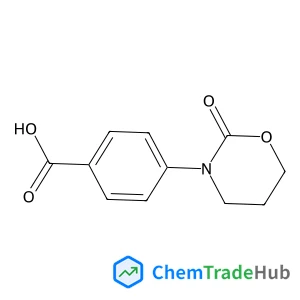
2-Methyl-2-propanyl [1-(3-nitro-2-pyridinyl)-4-piperidinyl]carbamate
CAS号:
833452-36-1
分子式:
C15H22N4O4
推荐供应商







免责声明
本页面提供的学术期刊信息仅供参考和研究使用。我们与任何期刊出版商均无关联,也不处理投稿事宜。如有投稿相关咨询,请直接联系相关期刊出版商。
如发现页面信息有误,请发送邮件至 support@chemtradehub.com 联系我们。我们将及时核实并处理您的问题。