



Highly sensitive label-free fluorescent detection of Hg2+ ions by DNA molecular machine-based Ag nanoclusters
文献信息
发布日期
2013-01-31
DOI
10.1039/C3AN00029J
影响因子
4.616
作者
Jinjin Yin, Xiaoxiao He, Xuekun Jia, Kemin Wang, Fengzhou Xu
查看原文
摘要
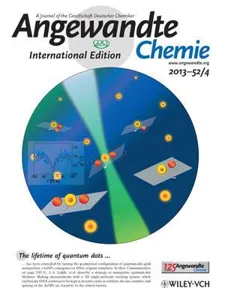
We present here a highly selective and sensitive label-free method to detect Hg2+ ions in aqueous solution by using DNA molecular machine-based fluorescent Ag nanoclusters (AgNCs). This mechanism is based on the Hg2+ ions triggering machine-like operations of DNA and the “product” of the machine being used to stabilize fluorescent AgNCs. In this method, a tailored DNA, containing a sequence for Hg2+ ions recognition, a sequence-specific nicking site for Nb BbvC I and a sequence complementary to the DNA as a template for the synthesis of fluorescent AgNCs, was firstly designed. In the presence of Hg2+ ions, the machine’s function operations were triggered. A series of machine-like operations, including replication, scission, and displacement then occurred with the addition of polymerase/dNTPs/Nb BbvC I, which manufactured lots of “product” DNA. The “product” DNA could act as a template for the preparation of fluorescent AgNCs. Thus the fluorescence of the AgNCs could be used as a signal transduction of this DNA machine, which was related to the concentration of the Hg2+ ions. The repeated synthesis of the “product” and its template effect for AgNCs synthesis led to signal amplification in the assay of Hg2+ ions. A linear response to the concentration of Hg2+ ions was observed in the range from 0.08 nM to 20 nM and a detection limit of 0.08 nM was obtained. By contrast, the operation of the machine could not be executed in an Hg2+ ion-free system. Moreover, the detection was not only label-free but also specific for Hg2+ ions without being affected by other metal ions.
相关文献
Enhanced photocurrent density of hematite thin films on FTO substrates: effect of post-annealing temperature
Eun Soo Cho, Myung Jong Kang, Young Soo Kang
2015-05-26
Paper
DOI: 10.1039/C5CP01823D
Effect of sodium salicylate and sodium deoxycholate on fibrillation of bovine serum albumin: comparison of fluorescence, SANS and DLS techniques
J. Dey, S. Kumar, V. K. Aswal, L. V. Panicker, K. Ismail, P. A. Hassan
2015-05-12
Paper
DOI: 10.1039/C5CP01666E
Structure and segregation of dopant–defect complexes at grain boundaries in nanocrystalline doped ceria
Pratik P. Dholabhai, Jeffery A. Aguiar, Longjia Wu, Terry G. Holesinger, Toshihiro Aoki, Ricardo H. R. Castro, Blas P. Uberuaga
2015-05-11
Paper
DOI: 10.1039/C5CP02200B
“On-the-fly” coupled cluster path-integral molecular dynamics: impact of nuclear quantum effects on the protonated water dimer
Thomas Spura, Hossam Elgabarty
2015-01-30
Paper
DOI: 10.1039/C4CP05192K
Phase separation induced shell thickness variations in electrospun hollow Bioglass 45S5 fiber mats for drug delivery applications
D. Durgalakshmi, S. Balakumar
2015-05-06
Paper
DOI: 10.1039/C5CP01738F
Gated electron transfer reactions of truncated hemoglobin from Bacillus subtilis differently orientated on SAM-modified electrodes
Deby Fapyane, Andrey Kartashov, Claes von Wachenfeldt, Elena E. Ferapontova
2015-05-06
Paper
DOI: 10.1039/C5CP00960J
Orbital entanglement and CASSCF analysis of the Ru–NO bond in a Ruthenium nitrosyl complex
Leon Freitag, Stefan Knecht, Sebastian F. Keller, Mickaël G. Delcey, Thomas Bondo Pedersen, Roland Lindh, Markus Reiher, Leticia González
2015-03-10
Paper
DOI: 10.1039/C4CP05278A
Simulation of X-ray absorption spectra with orthogonality constrained density functional theory
Wallace D. Derricotte, Francesco A. Evangelista
2015-01-27
Paper
DOI: 10.1039/C4CP05509H
Strain induced crystallization and melting of natural rubber during dynamic cycles
Catherine Gauthier, Etienne Munch, Dominique Thiaudière
2015-05-08
Paper
DOI: 10.1039/C5CP00384A
Transmission electron microscopy finds plenty of room on the surface
Wei Zhang, Wei Tao Zheng
2015-05-06
Perspective
DOI: 10.1039/C5CP01705J
您可能还喜欢
化合物问答
P11(CAS号:848644-86-0)安全吗?
P11作为一种化学化合物,需要谨慎处理。一般来说,该化合物无毒,但在操作过程中仍需遵循实验室安全规定,避免皮肤接触和吸入。建议在通风良好的环境中操作,并佩戴适当...
848644-86-0L-Histidyl-L-seryl-L...
化合物问答
氨甲环酸杂质C(CAS号:330838-52-3)通常如何合成?
氨甲环酸杂质C通常通过氨甲环酸的衍生物与环己烯进行缩合反应合成。常见的合成方法包括一步合成法和多步合成法,其中多步合成法可以提高产物的选择性和产率。反应通常在无...
330838-52-34-(Aminomethyl)-1-cy...
化合物问答
(±)-茉莉酸(CAS号:221682-41-3)通常如何合成?
(±)-茉莉酸的合成通常采用生物合成或者化学合成的方法。化学合成方法中,可以通过2-戊烯-1-醇与环戊酮的缩合反应,再经过氧化反应得到目标产物。该反应需要温和的...
221682-41-3{3-Oxo-2-[(2E)-2-pen...
化合物问答
(4S,4'S)-2,2'-(1,1-环己烷二基)双(4-异丙基-4,5-二氢-1,3-噁唑)(CAS号:1373357-00-6)安全吗?
(4S,4'S)-2,2'-(1,1-环己烷二基)双(4-异丙基-4,5-二氢-1,3-噁唑)属于有机化合物,应遵循实验室安全规范。在操作时应佩戴适当的个人防护...
1373357-00-6(4S,4'S)-2,2'-(1,1-C...
化合物问答
什么是6-苄氧基-5-甲氧基-2-羧基吲哚(CAS号:2495-92-3)?
6-苄氧基-5-甲氧基-2-羧基吲哚是一种有机化合物,分子式为C16H15NO3。它是一种含有苄氧基、甲氧基和羧基官能团的吲哚衍生物。
2495-92-36-(Benzyloxy)-5-meth...
化合物问答
丙二酸丁酯乙酯(CAS号:17373-84-1)安全吗?
丙二酸丁酯乙酯属于易燃物质,具有一定的毒性。在操作时应佩戴防护眼镜和手套,避免接触皮肤和眼睛。储存时应远离热源和火源,避免阳光直射,以减少火灾和爆炸的风险。
17373-84-1Butyl ethyl malonate
化合物问答
2-碘-3-甲基吡嗪(CAS号:58139-08-5)的市场或研究趋势如何?
2-碘-3-甲基吡嗪作为一种特殊结构的化合物,目前在工业和学术研究中的应用相对有限。然而,随着对特定化学结构及其潜在应用的深入研究,预计未来可能在农药、医药等领...
58139-08-52-Iodo-3-methylpyraz...
化合物问答
千层纸素A-7-0-β-D-葡萄糖醛酸苷甲酯(CAS号:82475-01-2)的物理化学性质是什么?
千层纸素A-7-0-β-D-葡萄糖醛酸苷甲酯是一种白色结晶固体,分子量为616.27 g/mol。该化合物在水中溶解度较低,在有机溶剂中溶解度较高。其反应活性主...
82475-01-25-Hydroxy-8-methoxy-...
化合物问答
什么是7-苄基-4,7-二氮杂螺[2.5]辛烷(CAS号:1222106-45-7)?
7-苄基-4,7-二氮杂螺[2.5]辛烷是一种有机化合物,其结构由一个环状的7-苄基-4,7-二氮杂螺环和一个苯基组成。该化合物的分子式为C14H16N2。它具...
1222106-45-77-Benzyl-4,7-diazasp...
化合物问答
在合成中是否有丁酰胺酸甲酯(CAS号:53171-39-4)的替代品?
丁酰胺酸甲酯的合成中可能的替代品包括其他氨基酸衍生物,如乙酰胺酸甲酯或丙酰胺酸甲酯。这些替代品在某些合成路线中可能更为便利或成本更低。
53171-39-4Methyl 4-amino-4-oxo...
来源期刊
Analyst

CiteScore:
7.8
自引率:
5.6%
年发文量:
653
Analyst publishes analytical and bioanalytical research that reports premier fundamental discoveries and inventions, and the applications of those discoveries, unconfined by traditional discipline barriers.
推荐化合物
![2-Methyl-2-propanyl 4-oxo-3,9-diazabicyclo[4.2.1]nonane-9-carboxylate structure](https://cnstatic.chemtradehub.com/structs/131/1312456-05-5-9a15.webp "2-Methyl-2-propanyl 4-oxo-3,9-diazabicyclo[4.2.1]nonane-9-carboxylate structure")
2-Methyl-2-propanyl 4-oxo-3,9-diazabicyclo[4.2.1]nonane-9-carboxylate
CAS号:
1312456-05-5
分子式:
C12H20N2O3
推荐供应商



免责声明
本页面提供的学术期刊信息仅供参考和研究使用。我们与任何期刊出版商均无关联,也不处理投稿事宜。如有投稿相关咨询,请直接联系相关期刊出版商。
如发现页面信息有误,请发送邮件至 support@chemtradehub.com 联系我们。我们将及时核实并处理您的问题。