





A liquid CO2-compatible hydrocarbon surfactant: experiment and modelling
文献信息
发布日期
2013-10-03
DOI
10.1039/C3CP52571F
影响因子
3.676
作者
Soumi Banerjee, J. Mieke Kleijn, Martien A. Cohen Stuart, Frans A. M. Leermakers
查看原文
摘要
Surfactants soluble in liquid CO2 are rare and knowledge on interfacial and self-assembly behaviour is fragmented. We found that polyoxyethylene (5) isooctylphenyl ether is interfacially active at the water–liquid CO2 interface. Water–liquid CO2 interfacial tension was measured at various surfactant concentrations at 50 bar and 283 K using the pendant drop method, and a CMC like cusp was observed at a surfactant concentration of ∼50 mM in the bulk liquid CO2. This system was modelled applying the self-consistent field theory of Scheutjens and Fleer (SF-SCF). We use a free-volume approach, wherein the chemical potential of the vacancies was linked to the pressure and the molecules were described using a freely-jointed chain model on a united atom level. The model indicates that typically the water–vapour interface is wet by CO2. Interestingly, a window of partial wetting was identified at the water–vapour interface as a function of the chemical potential of the surfactant. The second-order nature of both wetting transitions is attributed to the close proximity to the critical point of the CO2–vapour system. Furthermore, the SF-SCF theory was used to study the self-assembly of the surfactant in bulk CO2 or water, focusing on the three-phase coexistence, that is at P/Psat = 1. Above ∼40 mM in the CO2-rich phase, the theory indicates stable water swollen reverse micelles with an aggregation number of ∼100. The analysis further shows the stability of compressible CO2-swollen surfactant bilayers in the bulk water phase at elevated surfactant concentrations. Finally it was found that the critical reverse micellar concentration (in liquid CO2) increases and the aggregation number decreases with increasing pressure.
相关文献
Accelerated nanoparticles synthesis in alcohol–water-mixture-based solution plasma
Tomohito Sudare
2015-10-27
Communication
DOI: 10.1039/C5CP05168A
Interfacial electronic structure and charge transfer of hybrid graphene quantum dot and graphitic carbon nitride nanocomposites: insights into high efficiency for photocatalytic solar water splitting
Zuju Ma, Rongjian Sa, Qiaohong Li, Kechen Wu
2015-11-26
Paper
DOI: 10.1039/C5CP05847C
Ab initio variational predictions for understanding highly congested spectra: rovibrational assignment of 108 new methane sub-bands in the icosad range (6280–7800 cm−1)
Michaël Rey, Vladimir G. Tyuterev
2015-11-12
Paper
DOI: 10.1039/C5CP05265C
Optimization of Al2O3/TiO2 nanolaminate thin films prepared with different oxide ratios, for use in organic light-emitting diode encapsulation, via plasma-enhanced atomic layer deposition
Lae Ho Kim, Yong Jin Jeong, Tae Kyu An, Seonuk Park, Jin Hyuk Jang, Sooji Nam, Jaeyoung Jang, Se Hyun Kim, Chan Eon Park
2015-11-23
Paper
DOI: 10.1039/C5CP06713H
Design and characterisation of bodipy sensitizers for dye-sensitized NiO solar cells
Jean-François Lefebvre, Fiona A. Black, E. Stephen Davies, Tönu Pullerits, Christopher J. Wood, Karel Zidek
2015-11-27
Paper
DOI: 10.1039/C5CP05177K
Theoretical description of efficiency enhancement in DSSCs sensitized by newly synthesized heteroleptic Ru complexes
Yavar T. Azar, Mahmoud Payami
2015-10-09
Paper
DOI: 10.1039/C5CP02947C
Ab initio electronic structure study of a model water splitting dimer complex
Amendra Fernando, Christine M. Aikens
2015-11-17
Paper
DOI: 10.1039/C5CP04112K
pH-responsive ion transport in polyelectrolyte multilayers of poly(diallyldimethylammonium chloride) (PDADMAC) and poly(4-styrenesulfonic acid-co-maleic acid) (PSS-MA) bearing strong- and weak anionic groups
Eliana Maza, Jimena S. Tuninetti, Nikolaos Politakos, Wolfgang Knoll, Sergio Moya, Omar Azzaroni
2015-10-05
Paper
DOI: 10.1039/C5CP03965G
Ultrafast charge carrier relaxation and charge transfer processes in CdS/CdTe thin films
Ruvini Dharmadasa, I. M. Dharmadasa, Thad Druffel
2015-05-27
Paper
DOI: 10.1039/C5CP01652E
您可能还喜欢
化合物问答
什么是2-氨基戊烷(CAS号:63493-28-7)?
2-氨基戊烷,又名pentan-2-amine,是一种有机化合物,分子式为C5H11NH2。它是一种无色透明液体,有氨味。该化合物在工业和研究中有一定的应用。
63493-28-7pentan-2-amine
化合物问答
反式-4-[4-[[[5-[(3,4-二氟苯基)氨基]-1,3,4-恶二唑-2-基]羰基]氨基]苯基]环己烷乙酸(CAS号:892489-52-0)的物理化学性质是什么?
该化合物为白色固体,分子量为552.31 g/mol。它在水中溶解度较低,在有机溶剂如乙腈、乙酸乙酯中有较好的溶解性。该化合物具有较高的化学稳定性,对酸和碱具有...
892489-52-0Trans-4-[4-[[[5-[(3,...
化合物问答
如何处理含有Pyrotinib dimaleate(CAS号:1397922-61-0)的废料?
处理含有Pyrotinib dimaleate 的废料时,应遵循当地的法规要求。首先,收集废料并进行分类,确保没有与其他化学品混合。然后,采取适当的物理和化学处...
1397922-61-0(2E)-N-(4-{[3-Chloro...
化合物问答
在合成中是否有4-(5-5-乙基-1,2,4-噁二唑-3-基)苯甲酸乙酯(CAS号:1166756-79-1)的替代品?
在合成过程中,可以考虑使用其他结构类似的化合物作为替代品,例如苯甲酸酯类化合物,如2-乙基-5-甲基噁二唑基苯甲酸乙酯等。这些替代品可能具有相似的化学性质,但在...
1166756-79-1Ethyl 4-(5-ethyl-1,2...
化合物问答
如何处理含有1-((叔丁氧基羰基)氨基)环丁烷甲酸甲酯(CAS号:880166-10-9)的废料?
处理含有该化合物的废液时,应先确保其完全反应并转化为无害物质。对于未反应的化合物,建议采用中和处理后进行蒸馏回收,剩余物可使用化学氧化法或焚烧法进行无害化处理。...
880166-10-9Methyl 1-({[(2-methy...
化合物问答
2-({[3,5-二(三氟甲基)苯基]磺酰基}氨基)-4-(甲基硫代)丁酸甲酯(CAS号:175202-21-8)的市场或研究趋势如何?
目前该化合物主要应用于药物合成领域,尤其在开发新型抗癌药物方面具有潜在应用。随着制药行业的持续发展,对于高效、低毒的合成中间体需求增加,预计该化合物的研究和应用...
175202-21-8Methyl N-{[3,5-bis(t...
化合物问答
N,N-乙烯双(碘乙酰胺)(CAS号:7250-43-3)的物理化学性质是什么?
N,N-乙烯双(碘乙酰胺)是一种白色或类白色固体,易溶于乙醇、丙酮等有机溶剂,但在水中溶解度较低。该化合物具有较高的反应活性,可以与其他含有活性氢的化合物发生酰...
7250-43-3N,N'-1,2-Ethanediylb...
化合物问答
7-Fluoro-1H-spiro[furo[3,4-c]pyridine-3,4'-piperidine](CAS号:1283090-73-2)通常如何合成?
该化合物可以通过环合反应合成,首先合成吡啶和哌啶的衍生物,然后在合适的条件下进行环合反应得到目标化合物。常用的催化剂包括某些金属盐类,产率一般在70%-90%之...
1283090-73-27-Fluoro-1H-spiro[fu...
化合物问答
处理3-乙酰滇乌碱(CAS号:80787-51-5)时应注意哪些实验室安全事项?
在处理3-乙酰滇乌碱时,应穿戴适当的个人防护装备(PPE),如实验服、手套(丁腈手套或PVC手套)、护目镜和口罩。实验应在通风橱中进行,以减少吸入或皮肤接触的风...
80787-51-54-Methylaconitane-1,...
化合物问答
如何储存2-溴-5-硝基-4-羧酸(CAS号:1053655-82-5)?
2-溴-5-硝基-4-羧酸应存放在阴凉、干燥、通风良好的地方,远离火源和热源。避免与还原剂、碱性物质接触。储存容器应密封,防止吸湿。
1053655-82-52-Bromo-5-nitropyrid...
来源期刊
Physical Chemistry Chemical Physics

CiteScore:
5.5
自引率:
10.3%
年发文量:
3036
Physical Chemistry Chemical Physics (PCCP) is an international journal co-owned by 19 physical chemistry and physics societies from around the world. This journal publishes original, cutting-edge research in physical chemistry, chemical physics and biophysical chemistry. To be suitable for publication in PCCP, articles must include significant innovation and/or insight into physical chemistry; this is the most important criterion that reviewers and Editors will judge against when evaluating submissions. The journal has a broad scope and welcomes contributions spanning experiment, theory, computation and data science. Topical coverage includes spectroscopy, dynamics, kinetics, statistical mechanics, thermodynamics, electrochemistry, catalysis, surface science, quantum mechanics, quantum computing and machine learning. Interdisciplinary research areas such as polymers and soft matter, materials, nanoscience, energy, surfaces/interfaces, and biophysical chemistry are welcomed if they demonstrate significant innovation and/or insight into physical chemistry. Joined experimental/theoretical studies are particularly appreciated when complementary and based on up-to-date approaches.
推荐化合物
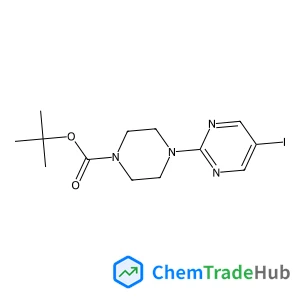
2-Methyl-2-propanyl 4-(5-iodo-2-pyrimidinyl)-1-piperazinecarboxylate
CAS号:
1027616-32-5
分子式:
C13H19IN4O2
![4-{[4-(Trifluoromethoxy)benzyl]oxy}benzonitrile structure](https://cnstatic.chemtradehub.com/structs/103/1036629-63-6-2172.webp "4-{[4-(Trifluoromethoxy)benzyl]oxy}benzonitrile structure")
推荐供应商





免责声明
本页面提供的学术期刊信息仅供参考和研究使用。我们与任何期刊出版商均无关联,也不处理投稿事宜。如有投稿相关咨询,请直接联系相关期刊出版商。
如发现页面信息有误,请发送邮件至 support@chemtradehub.com 联系我们。我们将及时核实并处理您的问题。