


Photodissociation of singlet oxygen in the UV region
文献信息
发布日期
2013-12-16
DOI
10.1039/C3CP54696A
影响因子
3.676
作者
Zahid Farooq, Dimitri A. Chestakov, Bin Yan, Gerrit C. Groenenboom, Wim J. van der Zande, David H. Parker
查看原文
摘要
Photodissociation of singlet oxygen, O2 a1Δg, by ultraviolet radiation in the region from 200 to 240 nm has been investigated using velocity map imaging of the atomic oxygen photofragments. Singlet oxygen molecules are generated in a pulsed discharge and studied by one-laser photodissociation and detection around 226 nm as well as two color photodissociation at various wavelengths in the range from 200 to 240 nm. A simple model of the discharge on and off signal indicates efficient conversion of O2 X3Σg−(v = 0) in the parent beam to O2 a1Δg(v = 0–2). Minute amounts of highly excited vibrational levels of ground state O2 X3Σg−(v > 0) are detected but no evidence is found for production of the O2 b1Σg+ state. Over the decreasing wavelength range 240–200 nm the a1Δg-state signal relative to the X3Σg−(v = 0) signal decreases strongly. Around 226 nm the a1Δg(v = 0–2) states averaged branching ratio percentage for O(3Pjj = 2 : 1 : 0) is found to be 56 : 36 : 8 (±5%), respectively. The anisotropy parameter for photodissociation of a1Δg(v = 0–2) averages to β = 1.3 ± 0.4. The a1Δg(v = 0) photodissociation cross section is found to 3–10 times stronger than theory predicts. Furthermore, the photodissociation image shows a strong parallel character, (i.e., transition moment parallel to the molecular axis) while theory predicts a predominantly negative character.
期刊推荐

European Journal of Wood and Wood Products
Pure and Applied Chemistry
Helvetica Chimica Acta
Journal of Catalysis

Israel Journal of Chemistry
Nature
Pharmacological Reviews
Kinetics and Catalysis
Proceedings of the National Academy of Sciences of the United States of America
Journal of Organometallic Chemistry
相关文献
Formal reductive addition of acetonitrile to aldehydes and ketones‡
Karim Muratov, Ekaterina Kuchuk, Sreekumar Vellalath, Oleg I. Afanasyev, Alexei P. Moskovets, Gleb Denisov, Denis Chusov
2018-09-28
Paper
DOI: 10.1039/C8OB01992D
Metal- and base-free synthesis of functionalized α,α-difluoroimines via electrophilic fluorination of N-substituted enamines
Fangyi Li, Changfu Qiu, Guangwei Yin, Chunhua Wang, Zheng Li
2018-09-13
Communication
DOI: 10.1039/C8OB01941J
Reactions of 5-mercaptoazoles and pyridine-2-thiones with acetylenic esters. Selectivity of the formation of novel fused thiazin-4-ones and thiazolidin-4-ones
Vasiliy A. Bakulev, Vera S. Berseneva, Natalia P. Belskaia, Yury Yu. Morzherin, Andreiy Zaitsev, Wim Dehaen, Ingrid Luyten, Suzanne Toppet
2002-12-05
Paper
DOI: 10.1039/B207854F
Differential effects of bromination on substrates and inhibitors of kynureninase from Pseudomonas fluorescens
Christian Heiss, Jay Anderson
2002-12-09
Paper
DOI: 10.1039/B208910F
From α-keto acids to nitrile oxides enabled by copper nitrate: a facile access to fused isoxazolines
Yuping Zhu, Tianqi Liu, Bingxin Liu, Houguang Shi, Qitao Tan
2021-12-10
Research Article
DOI: 10.1039/D1QO01574E
d-/l-Isothymidine incorporation in the core sequence of aptamer BC15 enhanced its binding affinity to the hnRNP A1 protein
Liyu Li, Kunfeng Li, Guangpu Zhang, Yuan Ma, Baobin Cai, Shaohua Li, Hongmei Ding, Jiali Deng, Xiyan Nan, Jing Sun, Yun Wu, Ningsheng Shao, Lihe Zhang, Zhenjun Yang
2018-09-19
Paper
DOI: 10.1039/C8OB01454J
Catalytic asymmetric Tamura cycloaddition of homophthalic anhydrides with 2-arylidene-1,3-diones
Han Xu, Feng Sha, Qiong Li, Xin-Yan Wu
2018-09-19
Paper
DOI: 10.1039/C8OB01970C
A stereodivergent, two-directional synthesis of stereoisomeric C-linked disaccharide mimetics
Michael Harding, Robert Hodgson, Tahir Majid, Kenneth J. McDowall
2002-12-17
Paper
DOI: 10.1039/B208781B
Catalytic asymmetric Henry reactions of silyl nitronates with aldehydes
Tine Risgaard, Kurt V. Gothelf, Karl Anker Jørgensen
2002-12-03
Paper
DOI: 10.1039/B208859M
您可能还喜欢
化合物问答
(5-氨基吡唑-3-基)乙酸(CAS号:174891-10-2)的物理化学性质是什么?
(5-氨基吡唑-3-基)乙酸是一种无色至白色固体,分子量为174.15 g/mol。它在水中具有较好的溶解性,在有机溶剂中的溶解度较低。该化合物具有较好的反应活...
174891-10-2(3-Amino-1H-pyrazol-...
化合物问答
3-氟-4,5-二氯苯胺(CAS号:35754-38-2)适用哪些法规指南?
3-氟-4,5-二氯苯胺受到多项法规指南的约束,包括但不限于GHS(全球化学品统一分类和标签制度)的危险分类标准、欧盟的REACH法规(注册、评估、授权和限制)...
35754-38-23,4-Dichloro-5-fluor...
化合物问答
什么是(R)-(+)-2,2',6,6'-四甲氧基-4,4'-联(二(3,5-二甲苯基基)膦基)-3,3'-二联吡啶(CAS号:442905-33-1)?
这是一种有机化合物,化学名为(R)-(+)-2,2',6,6'-四甲氧基-4,4'-联(二(3,5-二甲苯基基)膦基)-3,3'-二联吡啶,CAS号为44290...
442905-33-14,4'-Bis[bis(3,5-dim...
化合物问答
1-氨基-2-氰基萘(CAS号:3100-67-2)应用于哪些行业?
1-氨基-2-氰基萘在医药、聚合物、传感器和半导体等行业中有应用。在医药领域,它可用作中间体合成某些药物。在聚合物行业,它可以用于制备具有特定性能的聚合物。此外...
3100-67-21-Amino-2-naphthonit...
化合物问答
如何处理含有1-溴-4-(异丙氧基甲基)苯(CAS号:98446-84-5)的废料?
处理含1-溴-4-(异丙氧基甲基)苯的废料时,首先应确保废液收集在防渗漏的容器中,避免泄露。然后,可以考虑采用化学降解法或物理吸附法进行处理。在特定条件下,可通...
98446-84-51-Bromo-4-(isopropox...
化合物问答
6-Chloro-8-(trifluoromethyl)chroman-4-one(CAS号:1344889-75-3)的主要用途是什么?
6-氯-8-三氟甲基-2,3-二氢-4H-色喃-4-酮主要用于有机合成中的中间体,也可作为研究试剂使用。
1344889-75-36-Chloro-8-(trifluor...
化合物问答
7-乙氧基-2-萘酚(CAS号:57944-44-2)通常如何合成?
7-乙氧基-2-萘酚通常通过N-乙氧基化反应合成,首先将2-萘酚与乙醇钠在乙醇中反应生成7-乙氧基-2-萘酚钠盐,再通过酸化进一步得到7-乙氧基-2-萘酚。该合...
57944-44-27-Ethoxy-2-naphthol
化合物问答
4-(1,1-二氧硫代吗啉)丁醇(CAS号:59801-41-1)适用哪些法规指南?
该化合物需遵循一系列的法规指南,包括但不限于GHS全球统一分类和标签制度,其分类可能包括易燃液体和可能危害水生环境。在欧洲,还需遵循REACH法规,确保物质和混...
59801-41-14-(4-Hydroxybutyl)th...
化合物问答
4-甲氧基苄基叠氮甲酸酯(CAS号:25474-85-5)的物理化学性质是什么?
4-甲氧基苄基叠氮甲酸酯是一种无色液体,具有一定的挥发性。其分子量为198.16,熔点为-69°C,沸点为105°C。该化合物在水中溶解度较低,在有机溶剂如乙醇...
25474-85-54-Methoxybenzyl carb...
化合物问答
如何处理含有4-氯-2-氟嘧啶(CAS号:51422-00-5)的废料?
含有4-氯-2-氟嘧啶的废料应按照危险废物处理。首先,应收集并分类这些废料,避免与其他废物混合。然后,可以采用焚烧处理或者交由专业机构进行处置。在处理过程中,需...
51422-00-54-Chloro-2-fluoropyr...
来源期刊
Physical Chemistry Chemical Physics

CiteScore:
5.5
自引率:
10.3%
年发文量:
3036
Physical Chemistry Chemical Physics (PCCP) is an international journal co-owned by 19 physical chemistry and physics societies from around the world. This journal publishes original, cutting-edge research in physical chemistry, chemical physics and biophysical chemistry. To be suitable for publication in PCCP, articles must include significant innovation and/or insight into physical chemistry; this is the most important criterion that reviewers and Editors will judge against when evaluating submissions. The journal has a broad scope and welcomes contributions spanning experiment, theory, computation and data science. Topical coverage includes spectroscopy, dynamics, kinetics, statistical mechanics, thermodynamics, electrochemistry, catalysis, surface science, quantum mechanics, quantum computing and machine learning. Interdisciplinary research areas such as polymers and soft matter, materials, nanoscience, energy, surfaces/interfaces, and biophysical chemistry are welcomed if they demonstrate significant innovation and/or insight into physical chemistry. Joined experimental/theoretical studies are particularly appreciated when complementary and based on up-to-date approaches.
推荐化合物
![N-{[(2-Methyl-2-propanyl)oxy]carbonyl}-L-methionylglycine structure](https://cnstatic.chemtradehub.com/structs/234/23446-03-9-e1e5.webp "N-{[(2-Methyl-2-propanyl)oxy]carbonyl}-L-methionylglycine structure")
![(2R,6S)-6-[(Benzyloxy)methyl]-4-{[(2-methyl-2-propanyl)oxy]carbonyl}-2-morpholinecarboxylic acid structure](https://cnstatic.chemtradehub.com/structs/109/1093085-91-6-3382.webp "(2R,6S)-6-[(Benzyloxy)methyl]-4-{[(2-methyl-2-propanyl)oxy]carbonyl}-2-morpholinecarboxylic acid structure")
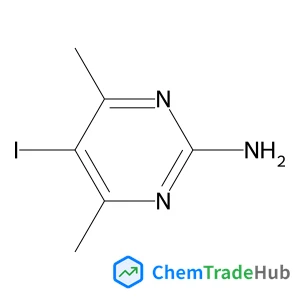
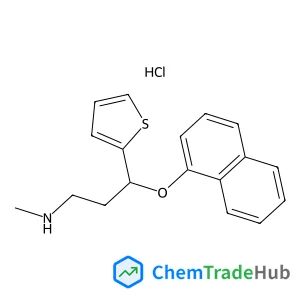
N-Methyl-3-(1-naphthyloxy)-3-(2-thienyl)-1-propanamine hydrochloride (1:1)
CAS号:
1188266-11-6
分子式:
C18H20ClNOS
推荐供应商





免责声明
本页面提供的学术期刊信息仅供参考和研究使用。我们与任何期刊出版商均无关联,也不处理投稿事宜。如有投稿相关咨询,请直接联系相关期刊出版商。
如发现页面信息有误,请发送邮件至 support@chemtradehub.com 联系我们。我们将及时核实并处理您的问题。