


![S-[2,3-Bis(palmitoyloxy)propyl]-N-[(9H-fluoren-9-ylmethoxy)(hydroxy)methylene]cysteine structure](https://cnstatic.chemtradehub.com/structs/210/210532-98-2-f6a7.webp "S-[2,3-Bis(palmitoyloxy)propyl]-N-[(9H-fluoren-9-ylmethoxy)(hydroxy)methylene]cysteine structure")
Conversion of glucose and cellulose into value-added products in water and ionic liquids
文献信息
发布日期
2013-07-31
DOI
10.1039/C3GC41141A
影响因子
10.182
作者
Jinliang Song, Honglei Fan, Jun Ma, Buxing Han
查看原文
摘要
Lignocellulosic biomass contains about 45% cellulose. Conversion of cellulose and cellulose-derived glucose into value-added chemicals and liquid fuels benefits sustainable development of our society and has received much attention. Water and ionic liquids (ILs) are two kinds of green solvents. The unusual properties of the green solvents provide some unique advantages for efficient and greener conversion of cellulose and glucose, which have been studied extensively. This review discusses mainly the recent progress in the conversion of glucose and cellulose in water or ILs by oxidation, hydrogenation, and dehydration reactions. An outlook is presented in the last part of the article to highlight the challenges and opportunities related to this interesting area of great importance.
相关文献
A dual-mode green emissive fluorescent probe for real-time detection of doxycycline in milk using a smartphone sensing platform
Ruiqing Sun, Ping Liu, Yingjia Dong, Qingli Yang, Yongchao Ma
2023-11-14
Paper
DOI: 10.1039/D3AY01850D
Membraneless, self-powered immunosensing of a cardiac biomarker by exploiting a PEC platform based on CaBi2Ta2O9 combined with bismuth oxyiodides
Greicy Kelly Cerqueira Caldas, Guilherme de Abreu Souza, Alan Silva de Menezes, Silma Regina Ferreira Pereira, Rita de Cássia Silva Luz, Flavio Santos Damos
2023-11-02
Paper
DOI: 10.1039/D3AY01309J
Fibrous capsule-resistant, controllably degradable and functionalizable zwitterion-albumin hybrid hydrogels
Zuolong Liu, Xianchi Zhou, Yongcheng Chen, Yanwen Ni, Zihao Zhu, Wenzhong Cao, Kexin Chen, Yu Yan
2023-11-29
Paper
DOI: 10.1039/D3BM01783D
Natural products applied in acute kidney injury treatment: polymer matters
Bo Yu, Qiao Jin, Jian Ji
2023-12-06
Minireview
DOI: 10.1039/D3BM01772A
A homogeneous label-free electrochemical aptasensor based on an omega-like DNA nanostructure for progesterone detection
Zaofen Wang, Weiping Shi, Yunzhu Tan, Bingqian Liu
2023-11-13
Paper
DOI: 10.1039/D3AY01255G
Spectroscopic/colorimetric dual-mode rapid and ultrasensitive detection of reactive oxygen species based on shape-dependent silver nanostructures
Varsha UshaVipinachandran, Susanta Kumar Bhunia
2023-11-14
Paper
DOI: 10.1039/D3AY01749D
A phosphonium ionic liquid conjugated magnetic graphitic carbon nitride nanocomposite: an effective sample pretreatment tool for selenium separation and determination
Emmanuvel Arputharaj, Shivangi Singh, Raghavendra Rao Pasupuleti, Chun-An Kuo, Wei-Jyun Ya, Yu-Hui Huang, You-Rong Wu
2023-11-09
Paper
DOI: 10.1039/D3AY01312J
Precise temperature control and rapid heating/cooling of infrared spectroscopy samples with a two-stage thermoelectric device
2023-12-04
Paper
DOI: 10.1039/D3AY01627G
An adaptive extended Gaussian peak derivative reweighted penalised least squares method for baseline correction
Xiaoshan Li, Xiaojun Tang, Bin Wang, Youshui Lu, Houqing Chen
2023-10-19
Paper
DOI: 10.1039/D3AY01389H
Antiepileptic drug concentration detection based on Raman spectroscopy and an improved snake optimization-convolutional neural network algorithm
Xinghu Fu, Xiqing Cao, Zizhen Fu, Zhexu Huang, Wa Jin, Guangwei Fu, Weihong Bi
2023-11-07
Paper
DOI: 10.1039/D3AY01631E
您可能还喜欢
化合物问答
如何储存1,2-环己二酮环乙缩醛(CAS号:4746-96-7)?
1,2-环己二酮环乙缩醛应储存在阴凉、干燥、通风良好的地方,避免阳光直射。建议使用密封容器保存,并保持环境温度在室温范围内,远离火源和热源。
4746-96-71,4-Dioxaspiro[4.5]d...
化合物问答
Ecopladib(CAS号:381683-92-7)的市场或研究趋势如何?
Ecopladib作为一种新型的药物,主要应用于治疗高胆固醇等疾病。目前,市场和研究趋势显示,Ecopladib因其独特的药理作用而受到关注。随着对心血管疾病治...
381683-92-7Ecopladib
化合物问答
2,3-Dimethyl-3H-imidazo[4,5-c]pyridine(CAS号:52538-09-7)通常如何合成?
2,3-二甲基-3H-咪唑[4,5-c]吡啶通常通过咪唑和2,3-二甲基吡啶的缩合反应合成。具体来说,将咪唑和2,3-二甲基吡啶在适当的溶剂中进行加热或加压反应...
52538-09-72,3-Dimethyl-3H-imid...
化合物问答
2,3,4,5-tetrahydro-1H-3-苯并氮杂环;盐酸盐(CAS号:17379-01-0)的市场或研究趋势如何?
该化合物在药物化学和有机合成中有一定的应用。近年来,随着对新型药物化合物的需求增加,该化合物的研究趋势主要集中在探索其生物活性,尤其是其在神经系统疾病治疗中的潜...
17379-01-02,3,4,5-Tetrahydro-1...
68-90-6(2-Ethyl-1-benzofura...
化合物问答
如何储存盐酸甘氨酸丁酯(CAS号:13048-99-2)?
盐酸甘氨酸丁酯应储存在阴凉、干燥、通风良好的地方,避免阳光直射和高温环境,温度应控制在25℃以下。储存容器应密封,避免与空气中的水分和酸性物质接触,以防发生水解...
13048-99-2Butyl glycinate hydr...
化合物问答
什么是2-Iodo-N,N-dimethylbenzamide(CAS号:54616-46-5)?
2-碘-N,N-二甲基苯胺是一种有机化合物,化学名为2-Iodo-N,N-dimethylbenzamide。其分子式为C<sub>9</sub>H<sub>1...
54616-46-52-Iodo-N,N-dimethylb...
16817-90-6N-Cyclohexylglycinam...
化合物问答
5-溴-2-(4H-1,2,4-三唑-4-基)吡啶(CAS号:959240-99-4)的市场或研究趋势如何?
随着医药、农药和新材料领域的发展,该化合物作为关键中间体的应用日益增多。特别是在药物合成中,由于其独特的化学性质,可以用于合成多种药物分子。未来的研究趋势可能集...
959240-99-45-Bromo-2-(4H-1,2,4-...
化合物问答
2,4-二溴-6-三氟甲基嘧啶(CAS号:785778-00-9)通常如何合成?
2,4-二溴-6-三氟甲基嘧啶通常通过溴化反应合成。首先,将6-三氟甲基嘧啶与溴化剂(如液溴)在适当的溶剂(如二氯甲烷、四氢呋喃)中反应,加入适当的催化剂(如四...
785778-00-92,4-Dibromo-6-(trifl...
来源期刊
Green Chemistry

CiteScore:
16.1
自引率:
7.5%
年发文量:
944
Green Chemistry provides a unique forum for the publication of innovative research on the development of alternative green and sustainable technologies. The scope of Green Chemistry is based on, but not limited to, the definition proposed by Anastas and Warner (Green Chemistry: Theory and Practice, P T Anastas and J C Warner, Oxford University Press, Oxford, 1998). Green chemistry is the utilisation of a set of principles that reduces or eliminates the use or generation of hazardous substances in the design, manufacture and application of chemical products. Green Chemistry is at the frontiers of this continuously-evolving interdisciplinary science and publishes research that attempts to reduce the environmental impact of the chemical enterprise by developing a technology base that is inherently non-toxic to living things and the environment. Submissions on all aspects of research relating to the endeavour are welcome. The journal publishes original and significant cutting-edge research that is likely to be of wide general appeal. To be published, work must present a significant advance in green chemistry. Papers must contain a comparison with existing methods and demonstrate advantages over those methods before publication can be considered. For more information please see this Editorial. Coverage includes the following, but is not limited to: Design (e.g. biomimicry, design for degradation/recycling/reduced toxicity…) Reagents & Feedstocks (e.g. renewables, CO2, solvents, auxiliary agents, waste utilization…) Synthesis (e.g. organic, inorganic, synthetic biology…) Catalysis (e.g. homogeneous, heterogeneous, enzyme, whole cell…) Process (e.g. process design, intensification, separations, recycling, efficiency…) Energy (e.g. renewable energy, fuels, photovoltaics, fuel cells, energy storage, energy carriers…) Applications (e.g. electronics, dyes, consumer products, coatings, pharmaceuticals, preservatives, building materials, chemicals for industry/agriculture/mining…) Impact (e.g. safety, metrics, LCA, sustainability, (eco)toxicology…) Green chemistry is, by definition, a continuously-evolving frontier. Therefore, the inclusion of a particular material or technology does not, of itself, guarantee that a paper is suitable for the journal. To be suitable, the novel advance should have the potential for reduced environmental impact relative to the state of the art. Green Chemistry does not normally deal with research associated with 'end-of-pipe' or remediation issues.
推荐化合物
![N-[2-(4-Hydroxyphenoxy)-4-nitrophenyl]methanesulfonamide structure](https://cnstatic.chemtradehub.com/structs/109/109032-22-6-7c88.webp "N-[2-(4-Hydroxyphenoxy)-4-nitrophenyl]methanesulfonamide structure")
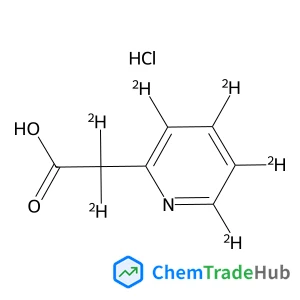
2,2-dideuterio-2-(3,4,5,6-tetradeuterio-2-pyridyl)acetic acid;hydrochloride
CAS号:
1329799-67-8
分子式:
C7H2ClD6NO2
推荐供应商



免责声明
本页面提供的学术期刊信息仅供参考和研究使用。我们与任何期刊出版商均无关联,也不处理投稿事宜。如有投稿相关咨询,请直接联系相关期刊出版商。
如发现页面信息有误,请发送邮件至 support@chemtradehub.com 联系我们。我们将及时核实并处理您的问题。