


Synthesis of donor–acceptor copolymers based on anthracene derivatives for polymer solar cells
文献信息
发布日期
2013-04-23
DOI
10.1039/C3PY00430A
影响因子
5.582
作者
Chunchen Liu, Wanzhu Cai, Xing Guan, Chunhui Duan, Qifan Xue, Lei Ying, Fei Huang, Yong Cao
查看原文
摘要
A series of narrow band gap donor–acceptor type conjugated copolymers based on 2,6-linked anthracene derivatives are synthesized via Suzuki copolymerization. The resulting copolymers typically exhibit dual absorption characteristics in both solution and as thin films with optical band gaps in the range of 1.85–2.13 eV. By varying the substitutions from alkyloxy to aromatic thienyl and phenyl groups in the 9,10-positions of the anthracene unit, the constructed two-dimensional 2,6-linked anthracene structures lead to broader absorption, lower-lying highest occupied molecular orbitals, as well as improved charge carrier mobilities of the resulting copolymers relative to the alkyloxy side chain substituted counterparts. Additionally, it was found that the sizes of the substitutions in the benzo[c][1,2,5]thiadiazole acceptor also play an important role in the optoelectronic properties of these anthracene based conjugated copolymers. The best polymer solar cell device with a power conversion efficiency of 4.34% and a high open circuit voltage of 0.98 V was realized based on the resulting materials. Our results indicate that substantial optimization in the sizes and patterns of substitutions of both the 2,6-linked anthracene donor and benzo[c][1,2,5]thiadiazole acceptor may potentially lead to high performance narrow band gap copolymers for solar cell applications.
期刊推荐

Canadian Metallurgical Quarterly

Advances in Colloid and Interface Science

Chemistry of Heterocyclic Compounds
Accounts of Chemical Research
Chemistry of Natural Compounds
Bulletin of the Chemical Society of Japan
Ferroelectrics

Corrosion Science
Journal of the American Chemical Society

Anti-Corrosion Methods and Materials
相关文献
Amphiphilic nanosheet self-assembly at the water/oil interface: computer simulations
Wenjun Xiang, Shuangliang Zhao, Xianyu Song, Shenwen Fang, Fen Wang, Cheng Zhong, Zhaoyang Luo
2017-02-10
Paper
DOI: 10.1039/C6CP08654C
Surface fouling as a mechanism for chemotaxis in isotropic catalytic swimmers
2017-09-05
Paper
DOI: 10.1039/C7CP05102F
Retraction: Two-dimensional nanosheets associated with one-dimensional single-crystalline nanorods self-assembled into three-dimensional flower-like Mn3O4 hierarchical architectures
2017-08-30
Retraction
DOI: 10.1039/C7CP90192E
Photomanipulation of the anchoring strength using a spontaneously adsorbed layer of azo dendrimers
Hajnalka Nádasi, Ralf Stannarius, Alexey Eremin, Ken Ishikawa, Osamu Haba, Koichiro Yonetake, Hideo Takezoe, Fumito Araoka
2017-03-02
Paper
DOI: 10.1039/C6CP08461C
Retraction: Facile synthesis of hierarchical Mn3O4 superstructures and efficient catalytic performance
2017-08-30
Retraction
DOI: 10.1039/C7CP90191G
Solid surface vs. liquid surface: nanoarchitectonics, molecular machines, and DNA origami
Taizo Mori, Waka Nakanishi, Jonathan P. Hill
2017-06-20
Perspective
DOI: 10.1039/C7CP02280H
On the calculation of second-order magnetic properties using subsystem approaches in a relativistic framework
Małgorzata Olejniczak, Radovan Bast, André Severo Pereira Gomes
2017-02-17
Paper
DOI: 10.1039/C6CP08561J
Spin–orbit interaction and Renner–Teller effect in HCCCCH+ studied by high-resolution photoelectron spectroscopy
2017-08-22
Paper
DOI: 10.1039/C7CP04759B
Two-photon absorption of the spatially confined LiH molecule
Justyna Kozłowska, Marta Chołuj, Robert Zaleśny, Wojciech Bartkowiak
2017-02-15
Paper
DOI: 10.1039/C6CP07368A
您可能还喜欢
化合物问答
(3-氨苯基)环丙基甲酮(CAS号:162174-75-6)的主要用途是什么?
(3-氨苯基)环丙基甲酮主要用于合成化学中间体,特别是在药物化学领域作为原料。它还可以用于有机合成反应中,作为催化剂或反应物。
162174-75-6(3-Aminophenyl)(cycl...
化合物问答
如何储存亚胺菌(CAS号:136470-79-6)?
亚胺菌应储存在干燥、阴凉处,避免直接暴露于光线下。建议使用密封容器储存,防止吸潮和污染。具体的储存条件应参考产品的安全数据表(MSDS)或药品说明书。
136470-79-6Abacavir EP Impurity...
化合物问答
2-氯-2,2-二氟乙酰胺(CAS号:354-28-9)应用于哪些行业?
2-氯-2,2-二氟乙酰胺在医药、聚合物、传感器、半导体等领域有广泛应用。在医药领域,它作为中间体用于合成其他药物;在聚合物领域,用作聚合引发剂或稳定剂;在传感...
354-28-92-Chloro-2,2-difluor...
化合物问答
处理4-甲基-3-硝基-1,1-联苯(CAS号:53812-68-3)时应注意哪些实验室安全事项?
在处理4-甲基-3-硝基-1,1-联苯时,应佩戴手套、护目镜和实验室外套等个人防护装备(PPE),确保在通风橱中操作以减少吸入风险。若发生泄露,应立即使用沙子或...
53812-68-34'-Methyl-3-nitro-1,...
化合物问答
(2S)-羟基(苯基)乙酸 (2R)-N-苄基-1-(4-甲氧基苯基)丙-2-胺盐(CAS号:188690-84-8)应用于哪些行业?
该化合物广泛应用于医药、聚合物和半导体行业。在医药领域,它是某些药物中间体的重要组成部分;在聚合物领域,可用作增塑剂;在半导体行业,可用于制造光刻胶。
188690-84-8Benzeneacetic acid, ...
化合物问答
在合成中是否有芬苯哒唑砜-D3标准品(CAS号:1228182-49-7)的替代品?
芬苯哒唑砜-D3标准品的替代品可能包括类似的苯并咪唑类化合物,如芬苯哒唑本身或其非同位素标记版本。这些替代品在结构上与芬苯哒唑砜-D3相似,但在具体应用中需进行...
1228182-49-7(~2~H_3_)Methyl [5-(...
化合物问答
2-氟-4-硝基苯乙酸(CAS号:315228-19-4)通常如何合成?
2-氟-4-硝基苯乙酸可以通过一系列化学反应合成,通常是从4-氟苯胺开始,首先进行硝化反应生成4-氟-2-硝基苯胺,然后进行乙酰化反应得到目标产物。具体的合成步...
315228-19-42-(2-fluoro-4-nitrop...
化合物问答
2-氟-4-甲氧基苯乙酸(CAS号:883531-28-0)通常如何合成?
2-氟-4-甲氧基苯乙酸通常通过将4-甲氧基苯乙酸与氟化试剂(如氟化氰)反应来合成。反应通常在无水条件下进行,使用催化剂如六氟磷酸锂或四氟硼酸锂以提高选择性和产...
883531-28-02-Fluoro-4-methoxyph...
化合物问答
什么是4SC 202;4SC202(CAS号:1186222-89-8)?
4SC 202;4SC202是一种化学化合物,其化学名称为(2E)-N-(2-氨基苯基)-3-(1-{[4-(1-甲基-1H-吡唑-4-基)苯基]磺酰基}-1H...
1186222-89-8(2E)-N-(2-Aminopheny...
132980-99-53,5-Difluorobenzamid...
来源期刊
Polymer Chemistry

CiteScore:
8.6
自引率:
7.3%
年发文量:
457
Polymer Chemistry welcomes submissions in all areas of polymer science that have a strong focus on macromolecular chemistry. Manuscripts may cover a broad range of fields, yet no direct application focus is required.
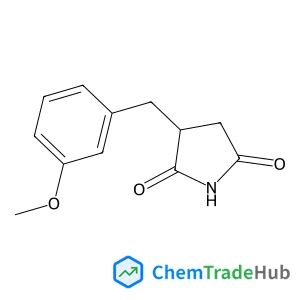
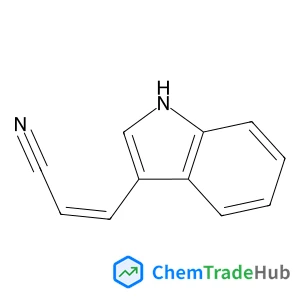
推荐化合物
推荐供应商





免责声明
本页面提供的学术期刊信息仅供参考和研究使用。我们与任何期刊出版商均无关联,也不处理投稿事宜。如有投稿相关咨询,请直接联系相关期刊出版商。
如发现页面信息有误,请发送邮件至 support@chemtradehub.com 联系我们。我们将及时核实并处理您的问题。