


Combining surface topography with polymer chemistry: exploring new interfacial biological phenomena
文献信息
发布日期
2013-07-29
DOI
10.1039/C3PY00739A
影响因子
5.582
作者
Dan Li, Qing Zheng, Yanwei Wang, Hong Chen
查看原文
摘要
The review focuses on the combination of surface topography and surface chemical modification with the grafting of polymer chains to develop optimal material interfaces for biological and biomedical applications. Understanding how surface chemistry and topography correlate with the interfacial properties and biological functions of a material is important for the development of biomaterials. Synergies between these two properties are known to exist, but have not been exploited extensively for biomaterial design. Preliminary studies suggest that the combination of surface topography and chemistry may not only enhance surface properties, but may also give biological properties that are opposite to those of the corresponding smooth surface, and even other unexpected biological properties. This review summarizes some recent studies in this area, mostly carried out in our own laboratory, as examples to illustrate how synergistic properties and functions may be obtained by combining surface topography with polymer chemistry. It is hoped that this review will stimulate a more thorough exploration of the topography–chemistry synergy as a means of injecting “new life” into efforts to develop novel bio-functional surfaces.
期刊推荐
Journal of Natural Medicines
Russian Journal of Applied Chemistry
Russian Chemical Bulletin

Chemistry Education Research and Practice
Russian Journal of General Chemistry
Saudi Pharmaceutical Journal
Current Opinion in Solid State & Materials Science
Acta Materialia
Crystallography Reports
Russian Journal of Organic Chemistry
相关文献
Fitting potential energy and induced dipole surfaces of the van der Waals complex CH4–N2 using non-product quadrature grids
Yulia N. Kalugina, Iouli E. Gordon
2021-08-04
Paper
DOI: 10.1039/D1CP02161C
Subtle structure matters: boosting surface-directed photoelectron transfer via the introduction of specific monovalent oxygen vacancies in TiO2
Fei Li, Dong Wang, Xue-Qing Gong
2021-08-18
Paper
DOI: 10.1039/D1CP02787E
On the structure of Au11(SR)9 and Au13(SR)11 clusters
C. Emilio Cárdenas, A. Tlahuice-Flores
2021-08-06
Paper
DOI: 10.1039/D1CP02332B
Effect of Hf doping on He behavior in tritium storage material ZrCo
You Yu, Yanhong Shen, Jiangfeng Song
2021-08-13
Paper
DOI: 10.1039/D1CP01803E
Mechanical properties of nonstoichiometric cubic titanium carbide TiCy
2021-08-16
Paper
DOI: 10.1039/D1CP02697F
Progress in phase-sensitive sum frequency generation spectroscopy
Shoichi Yamaguchi, Takuhiro Otosu
2021-06-25
Perspective
DOI: 10.1039/D1CP01994E
Improving the theoretical description of Ln(iii)/An(iii) separation with phosphinic acid ligands: a benchmarking study of structure and selectivity‡
Robert C. Chapleski, Jr., Alexander S. Ivanov, Kirk A. Peterson, Vyacheslav S. Bryantsev
2021-08-17
Paper
DOI: 10.1039/D1CP02466C
Electrochemical Pourbaix diagrams of Mg–Zn alloys from first-principles calculations and experimental thermodynamic data
Dominik Legut
2021-08-06
Paper
DOI: 10.1039/D1CP02754A
Crown ethers in hydrogenated graphene
Kai Guo, Sitong Liu, Haoming Tu, Zhikun Wang, Liang Chen, Haiqing Lin, Maosheng Miao, Jing Xu, Wei Liu
2021-08-12
Paper
DOI: 10.1039/D1CP03069H
您可能还喜欢
化合物问答
如何储存1,2-环己二酮环乙缩醛(CAS号:4746-96-7)?
1,2-环己二酮环乙缩醛应储存在阴凉、干燥、通风良好的地方,避免阳光直射。建议使用密封容器保存,并保持环境温度在室温范围内,远离火源和热源。
4746-96-71,4-Dioxaspiro[4.5]d...
化合物问答
Ecopladib(CAS号:381683-92-7)的市场或研究趋势如何?
Ecopladib作为一种新型的药物,主要应用于治疗高胆固醇等疾病。目前,市场和研究趋势显示,Ecopladib因其独特的药理作用而受到关注。随着对心血管疾病治...
381683-92-7Ecopladib
化合物问答
2,3-Dimethyl-3H-imidazo[4,5-c]pyridine(CAS号:52538-09-7)通常如何合成?
2,3-二甲基-3H-咪唑[4,5-c]吡啶通常通过咪唑和2,3-二甲基吡啶的缩合反应合成。具体来说,将咪唑和2,3-二甲基吡啶在适当的溶剂中进行加热或加压反应...
52538-09-72,3-Dimethyl-3H-imid...
化合物问答
2,3,4,5-tetrahydro-1H-3-苯并氮杂环;盐酸盐(CAS号:17379-01-0)的市场或研究趋势如何?
该化合物在药物化学和有机合成中有一定的应用。近年来,随着对新型药物化合物的需求增加,该化合物的研究趋势主要集中在探索其生物活性,尤其是其在神经系统疾病治疗中的潜...
17379-01-02,3,4,5-Tetrahydro-1...
68-90-6(2-Ethyl-1-benzofura...
化合物问答
如何储存盐酸甘氨酸丁酯(CAS号:13048-99-2)?
盐酸甘氨酸丁酯应储存在阴凉、干燥、通风良好的地方,避免阳光直射和高温环境,温度应控制在25℃以下。储存容器应密封,避免与空气中的水分和酸性物质接触,以防发生水解...
13048-99-2Butyl glycinate hydr...
化合物问答
什么是2-Iodo-N,N-dimethylbenzamide(CAS号:54616-46-5)?
2-碘-N,N-二甲基苯胺是一种有机化合物,化学名为2-Iodo-N,N-dimethylbenzamide。其分子式为C<sub>9</sub>H<sub>1...
54616-46-52-Iodo-N,N-dimethylb...
16817-90-6N-Cyclohexylglycinam...
化合物问答
5-溴-2-(4H-1,2,4-三唑-4-基)吡啶(CAS号:959240-99-4)的市场或研究趋势如何?
随着医药、农药和新材料领域的发展,该化合物作为关键中间体的应用日益增多。特别是在药物合成中,由于其独特的化学性质,可以用于合成多种药物分子。未来的研究趋势可能集...
959240-99-45-Bromo-2-(4H-1,2,4-...
化合物问答
2,4-二溴-6-三氟甲基嘧啶(CAS号:785778-00-9)通常如何合成?
2,4-二溴-6-三氟甲基嘧啶通常通过溴化反应合成。首先,将6-三氟甲基嘧啶与溴化剂(如液溴)在适当的溶剂(如二氯甲烷、四氢呋喃)中反应,加入适当的催化剂(如四...
785778-00-92,4-Dibromo-6-(trifl...
来源期刊
Polymer Chemistry

CiteScore:
8.6
自引率:
7.3%
年发文量:
457
Polymer Chemistry welcomes submissions in all areas of polymer science that have a strong focus on macromolecular chemistry. Manuscripts may cover a broad range of fields, yet no direct application focus is required.
推荐化合物
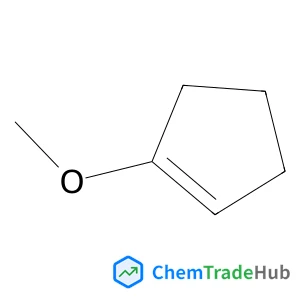
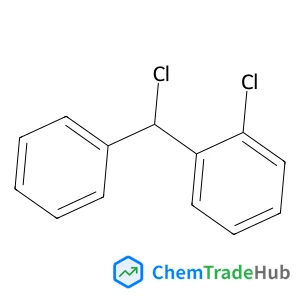
![N-[2-(4-Hydroxyphenoxy)-4-nitrophenyl]methanesulfonamide structure](https://cnstatic.chemtradehub.com/structs/109/109032-22-6-7c88.webp "N-[2-(4-Hydroxyphenoxy)-4-nitrophenyl]methanesulfonamide structure")
推荐供应商





免责声明
本页面提供的学术期刊信息仅供参考和研究使用。我们与任何期刊出版商均无关联,也不处理投稿事宜。如有投稿相关咨询,请直接联系相关期刊出版商。
如发现页面信息有误,请发送邮件至 support@chemtradehub.com 联系我们。我们将及时核实并处理您的问题。