











![(3R,5R)-1-[(Benzyloxy)carbonyl]-5-methyl-3-piperidinecarboxylic acid structure](https://cnstatic.chemtradehub.com/structs/126/1269757-29-0-c552.webp "(3R,5R)-1-[(Benzyloxy)carbonyl]-5-methyl-3-piperidinecarboxylic acid structure")
(3R,5R)-1-[(Benzyloxy)carbonyl]-5-methyl-3-piperidinecarboxylic acid
CAS号:
1269757-29-0
分子式:
C15H19NO4
Carlo Gonzato, Pamela Pasetto, Fahmi Bedoui, Pierre-Emmanuel Mazeran, Karsten Haupt
Molecularly imprinted polymers (MIPs) are synthetic polymeric receptors, capable of specifically binding a target molecule, just like a biological antibody. There has been a recent trend to improve the properties of these materials by using modern methods of controlled radical polymerization (CRPs) for their synthesis. Despite the recognized advantages associated with their “living character”, the effect of the “controlled nature” has still to be clearly demonstrated. This is far from obvious as the high amounts of short cross-linkers normally used for their synthesis complicate the formation of homogeneous polymer networks. In order to gain more insights into the potential benefits for the binding properties of MIPs resulting from the use of CRPs, the imprinting of a model target (S-propranolol) has been used to compare reversible addition–fragmentation chain transfer polymerisation (RAFT) and free-radical polymerisation (FRP) on acrylic and methacrylic matrices. While most MIPs are based on methacrylates, we used acrylates as a “difficult imprinting matrix” for comparison. In fact, the absence of the methyl groups in their polymer back-bone reduces their entanglement, resulting in a more flexible network. This renders the material more difficult to imprint, and at the same time makes it easier to evaluate the effects of RAFT polymerization and FRP on structural parameters and thus binding properties. Moreover, we also progressively reduced the amount of cross-linking in order to explore the effects of RAFT and FRP on a wider range of scaffold rigidities. Although MIPs are normally highly cross-linked, some recent emerging applications require lower degrees of cross-linking. Binding experiments, SEM, BET, DMA, swelling and nanoindentation analyses revealed that RAFT is effective in promoting the synthesis of more homogeneous networks compared to FRP, even at very high cross-linker contents, which results in higher target affinities, especially in the case of acrylates.
Anna Maria Ferrari, Khaled E. El-Kelany, Francesco Silvio Gentile, Maddalena D’Amore, Roberto Dovesi
DOI: 10.1039/D1CP02363B
Zhizhou Wu, Liuyang Li, Xuedong Zhou, Xiujian Zhao, Baoshun Liu
DOI: 10.1039/D1CP03135J
Shoichi Yamaguchi, Takuhiro Otosu
DOI: 10.1039/D1CP01994E
DOI: 10.1039/D1CP03146E
Anastasia D. Volosatova, Mariia A. Lukianova, Pavel V. Zasimov, Vladimir I. Feldman
DOI: 10.1039/D1CP01598B
Chao Wu
DOI: 10.1039/D1CP02764F
Zexiong Yang, Haiqian Zhao, Delin Wang, Li Yin, Kenxiang Cai, Zehua Lin, Tao Chen, Chufen Yang
DOI: 10.1039/D1CP02750F
Maddalena Bin, Rafat Yousif, Sharon Berkowicz, Sudipta Das, Daniel Schlesinger, Fivos Perakis
DOI: 10.1039/D1CP02126E
Georgia L. Thornton, Ryan Phelps, Andrew J. Orr-Ewing
DOI: 10.1039/D1CP03137F
Zachary Morrow, Hyuk-Yong Kwon, C. T. Kelley, Elena Jakubikova
DOI: 10.1039/D1CP03446D
1,2-环己二酮环乙缩醛应储存在阴凉、干燥、通风良好的地方,避免阳光直射。建议使用密封容器保存,并保持环境温度在室温范围内,远离火源和热源。
Ecopladib作为一种新型的药物,主要应用于治疗高胆固醇等疾病。目前,市场和研究趋势显示,Ecopladib因其独特的药理作用而受到关注。随着对心血管疾病治...
2,3-二甲基-3H-咪唑[4,5-c]吡啶通常通过咪唑和2,3-二甲基吡啶的缩合反应合成。具体来说,将咪唑和2,3-二甲基吡啶在适当的溶剂中进行加热或加压反应...
该化合物在药物化学和有机合成中有一定的应用。近年来,随着对新型药物化合物的需求增加,该化合物的研究趋势主要集中在探索其生物活性,尤其是其在神经系统疾病治疗中的潜...
盐酸甘氨酸丁酯应储存在阴凉、干燥、通风良好的地方,避免阳光直射和高温环境,温度应控制在25℃以下。储存容器应密封,避免与空气中的水分和酸性物质接触,以防发生水解...
2-碘-N,N-二甲基苯胺是一种有机化合物,化学名为2-Iodo-N,N-dimethylbenzamide。其分子式为C<sub>9</sub>H<sub>1...
随着医药、农药和新材料领域的发展,该化合物作为关键中间体的应用日益增多。特别是在药物合成中,由于其独特的化学性质,可以用于合成多种药物分子。未来的研究趋势可能集...
2,4-二溴-6-三氟甲基嘧啶通常通过溴化反应合成。首先,将6-三氟甲基嘧啶与溴化剂(如液溴)在适当的溶剂(如二氯甲烷、四氢呋喃)中反应,加入适当的催化剂(如四...

Polymer Chemistry welcomes submissions in all areas of polymer science that have a strong focus on macromolecular chemistry. Manuscripts may cover a broad range of fields, yet no direct application focus is required.
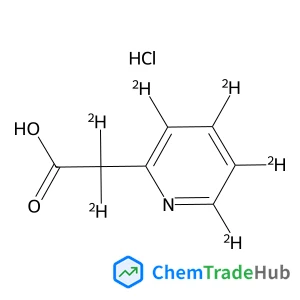
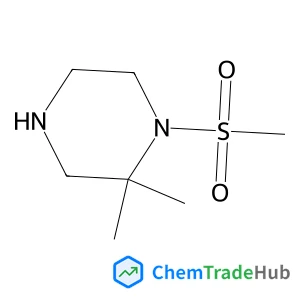
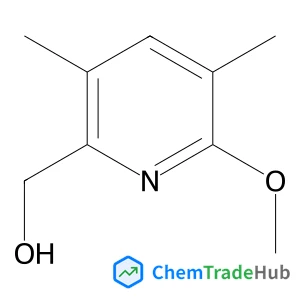
![(2E)-3-(3-Chlorophenyl)-N-{2-[4-(methylsulfonyl)-1-piperazinyl]-2-oxoethyl}acrylamide structure](https://cnstatic.chemtradehub.com/structs/250/2505001-54-5-c1e9.webp "(2E)-3-(3-Chlorophenyl)-N-{2-[4-(methylsulfonyl)-1-piperazinyl]-2-oxoethyl}acrylamide structure")



