





![4-[(4-Bromophenyl)sulfonyl]thiomorpholine structure](https://cnstatic.chemtradehub.com/structs/223/223555-81-5-2d67.webp "4-[(4-Bromophenyl)sulfonyl]thiomorpholine structure")
Morphological effects of the nanostructured ceria support on the activity and stability of CuO/CeO2 catalysts for the water-gas shift reaction
文献信息
发布日期
2014-07-03
DOI
10.1039/C4CP02276A
影响因子
3.676
作者
W. Q. Xu, A. C. Johnston-Peck, F. Z. Zhao, S. D. Senanayake, A. Martínez-Arias, W. J. Liu
查看原文
摘要
Three CuO/CeO2 catalyst with different morphologies of ceria, namely nanospheres, nanorods and nanocubes, were synthesized and used to catalyze the water-gas shift (WGS) reaction. The reactivity tests showed that the Cu supported on the ceria nanospheres exhibited both the highest activity and superior stability when compared with the nanocube and nanorod ceria catalysts. Operando X-ray diffraction (XRD), X-ray absorption fine structure (XAFS) and diffuse reflectance Fourier transform infrared spectroscopy (DRIFTS) methods were used to characterize these catalysts in their working state. High resolution electron microscopy (HRTEM, STEM) was used to look at the local atomic structure and nano-scale morphology. Our results show that the morphology of the ceria support, which can involve different crystal faces and concentrations of defects and imperfections, has a critical impact on the catalytic properties and influences: (1) the dispersion of CuO in the as-synthesized catalyst; (2) the particle size of metallic Cu upon reduction during the WGS reaction, (3) the stability of the metallic Cu upon variations of temperature, and (4) the dissociation of water on the ceria support. The nanosphere ceria catalyst showed an excellent water dissociation capability, the best dispersion of Cu and a strong Cu–Ce interaction, therefore delivering the best performance among the three WGS catalysts. The metallic Cu, which is the active species during the WGS reaction, was more stabilized on the nanospheres than on the nanorods and nanocubes and thus led to a better stability of the nanosphere catalyst than the other two architectures. Each catalyst exhibited a distinctive line-shape in the 800–1600 cm−1 region of the DRIFTS spectra, pointing to the existence of different types of carbonate or carboxylate species as surface intermediates for the WGS.
相关文献
Time-domain electrostatic force spectroscopy on nanostructured lithium-ion conducting glass ceramics: analysis and interpretation of relaxation times
Ahmet Taskiran, André Schirmeisen, Harald Fuchs, Hartmut Bracht, Bernhard Roling
2009-04-17
Paper
DOI: 10.1039/B900175C
Electrochemical impedance study of the polymerization of pyrrole on high surface area carbon electrodes
Reza B. Moghaddam, Peter G. Pickup
2010-03-17
Paper
DOI: 10.1039/B925381E
Effective temperature representation of quantum delocalization effects on the dynamics of NO(A2Σ+←X2Π+) photoexcitation in Ne matrices
L. García-Reyes, J. Rubayo-Soneira
2009-04-28
Paper
DOI: 10.1039/B819355J
Defect interactions and ionic transport in scandia stabilized zirconia
R. Devanathan, S. Thevuthasan, J. D. Gale
2009-04-22
Paper
DOI: 10.1039/B902764E
Time-resolved spectroscopy of dye-labeled photoactive yellow protein suggests a pathway of light-induced structural changes in the N-terminal cap
Daniel Hoersch, Harald Otto, Michael A. Cusanovich, Maarten P. Heyn
2009-03-03
Paper
DOI: 10.1039/B821345C
Equation-of-state modeling of mixtures with ionic liquids
Costas Tsioptsias, Ioannis Tsivintzelis, Costas Panayiotou
2010-03-16
Paper
DOI: 10.1039/C000208A
Ellipsometric study of the displacement of milk proteins from the oil–water interface by the non-ionic surfactant C10E8
James P. R. Day, Paul D. A. Pudney, Colin D. Bain
2010-03-16
Paper
DOI: 10.1039/B921887D
Hydrogen-induced mitigation of O on Ru(100): a density-functional study
I. N. Yakovkin
2009-05-11
Paper
DOI: 10.1039/B903099A
SERS observation of soft C–H vibrational mode of bifunctional alkanethiol molecules adsorbed at Au and Agelectrodes
Inga Razmute-Razmė, Zenonas Kuodis, Olegas Eicher-Lorka, Gediminas Niaura
2010-02-18
Communication
DOI: 10.1039/B921291D
Excited-state lifetime of propadienylidene, l-C3H2
Bastian Noller, Markus Margraf, Christian Schröter, Thomas Schultz, Ingo Fischer
2009-04-16
Paper
DOI: 10.1039/B901765H
您可能还喜欢
化合物问答
2-Bromo-4-chloro-1-(difluoromethyl)benzene(CAS号:1261476-50-9)的市场或研究趋势如何?
随着环保要求的提高和安全意识的增强,该化合物的研究和应用趋势正逐渐转向更安全、更环境友好的替代品。市场关注点主要集中在开发新型合成方法和绿色化学路径,以减少有害...
1261476-50-92-Bromo-4-chloro-1-(...
化合物问答
如何处理含有2,9 - 二苯基-1,10 - 菲罗啉(CAS号:25677-69-4)的废料?
处理含有2,9 - 二苯基 - 1,10 - 菲罗啉的废料时,应先将其收集在适当的容器中,避免与其他化学品混合。随后,可以通过水解或氧化等方法进行处理,直至达到...
25677-69-42,9-Diphenyl-1,10-ph...
化合物问答
处理(6-氯-吡嗪-3-基)-(4-乙基-哌嗪-1-基)-甲酮(CAS号:1178836-15-1)时应注意哪些实验室安全事项?
处理(6-氯-吡嗪-3-基)-(4-乙基-哌嗪-1-基)-甲酮时,应穿戴适当的个人防护装备(PPE),包括手套、护目镜和实验室外套。在通风橱中操作以确保良好的通...
1178836-15-1(6-Chloro-3-pyridazi...
化合物问答
处理(R)-2-氯-1-(2,4-二氯苯基)乙醇(CAS号:114446-57-0)时应注意哪些实验室安全事项?
在处理(R)-2-氯-1-(2,4-二氯苯基)乙醇时,应佩戴防护眼镜、实验室外套和手套,确保通风橱开启以减少接触和吸入的风险。避免直接接触皮肤和眼睛。处理过程中...
114446-57-0(1R)-2-Chloro-1-(2,4...
化合物问答
在合成中是否有3-氯-6-(3-氯哌啶-1-基)吡嗪(CAS号:1185310-37-5)的替代品?
可考虑使用类似结构的化合物作为替代品,如3-氯-6-(哌啶-1-基)吡嗪或3-氯-6-(2-氯哌啶-1-基)吡嗪,这些化合物在结构上与目标化合物相似,可能具有相...
1185310-37-53-Chloro-6-(3-chloro...
化合物问答
苯并三氮唑-5-甲酸乙酯(CAS号:73605-91-1)通常如何合成?
该化合物可以通过乙酸乙酯与5-溴-1H-苯并三氮唑的反应合成,通常在无水条件下进行。合成过程中,需要使用适当的溶剂如乙酸乙酯,并在适当的温度下反应。该反应具有较...
73605-91-1Ethyl 1H-benzotriazo...
化合物问答
什么是一水硫酸镁(CAS号:14168-73-1)?
一水硫酸镁是一种无机化合物,化学式为MgSO₄·H₂O,CAS号为14168-73-1。它由镁离子、硫酸根离子和一个结晶水分子组成,通常呈现为白色粉末或颗粒状固...
14168-73-1Magnesium sulfate hy...
化合物问答
氘代-1,3-二氯-2-丙醇(CAS号:1173020-20-6)应用于哪些行业?
氘代-1,3-二氯-2-丙醇主要应用于医药和有机合成领域,作为研究化合物的氘代替代品,用于标记和追踪反应过程。此外,在聚合物和半导体生产中也有一定的应用潜力。
1173020-20-61,3-Dichloro-2-(~2~H...
化合物问答
如何储存氰乙酸环己酯(CAS号:52688-11-6)?
氰乙酸环己酯应储存在阴凉、干燥、通风良好的环境中,远离火源和热源,防止阳光直射。储存容器应密封良好,避免与空气接触,防止发生不必要的反应。
52688-11-6Cyclohexyl cyanoacet...
化合物问答
2-碘-4-硝基苯胺(CAS号:6293-83-0)的市场或研究趋势如何?
目前,2-碘-4-硝基苯胺在医药和农药领域有一定的研究和应用,尤其是在开发新型药物和农药产品方面。然而,由于其潜在的环境和健康风险,行业正趋向于寻找更为安全和环...
6293-83-02-iodo-4-nitroanilin...
来源期刊
Physical Chemistry Chemical Physics

CiteScore:
5.5
自引率:
10.3%
年发文量:
3036
Physical Chemistry Chemical Physics (PCCP) is an international journal co-owned by 19 physical chemistry and physics societies from around the world. This journal publishes original, cutting-edge research in physical chemistry, chemical physics and biophysical chemistry. To be suitable for publication in PCCP, articles must include significant innovation and/or insight into physical chemistry; this is the most important criterion that reviewers and Editors will judge against when evaluating submissions. The journal has a broad scope and welcomes contributions spanning experiment, theory, computation and data science. Topical coverage includes spectroscopy, dynamics, kinetics, statistical mechanics, thermodynamics, electrochemistry, catalysis, surface science, quantum mechanics, quantum computing and machine learning. Interdisciplinary research areas such as polymers and soft matter, materials, nanoscience, energy, surfaces/interfaces, and biophysical chemistry are welcomed if they demonstrate significant innovation and/or insight into physical chemistry. Joined experimental/theoretical studies are particularly appreciated when complementary and based on up-to-date approaches.
推荐化合物

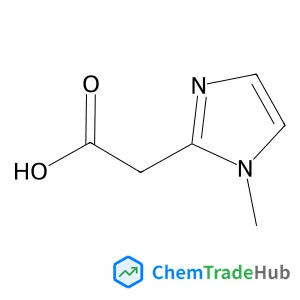

1-(3',5'-Di-O-benzoyl-2'-deoxy-2'-fluoro-b-D-arabinofuranosyl)thymine
CAS号:
97614-47-6
分子式:
C24H21FN2O7

推荐供应商





免责声明
本页面提供的学术期刊信息仅供参考和研究使用。我们与任何期刊出版商均无关联,也不处理投稿事宜。如有投稿相关咨询,请直接联系相关期刊出版商。
如发现页面信息有误,请发送邮件至 support@chemtradehub.com 联系我们。我们将及时核实并处理您的问题。