









Decomposition of nitrous oxide on Fe-doped boron nitride nanotubes: the ligand effect
文献信息
发布日期
2014-09-16
DOI
10.1039/C4CP02728K
影响因子
3.676
作者
Natcha Injan, Jakkapan Sirijaraensre
查看原文
摘要
N2O decomposition on iron–doped boron nitride nanotubes (Fe–BNNTs) was investigated by means of the density functional theory (M06-L). Two different forms of Fe–BNNTs, which are substitutions of the Fe atom into the boron-vacancy and nitrogen-vacancy sites of BNNTs, were used as the catalyst. Influence of the support plays a crucial role in the electronic configuration and catalytic reactivity of the iron atom. With the nitrogen surrounding (Fe(B)–BNNT), the iron behaves as a Lewis acid for accepting an electron from the lone-pair orbital of the N2O oxygen atom (η1-O complex). The catalytic process over this one at the transition state involves a synergistic σ-donation from the HOMO of N2O into a LUMO of the catalyst and the π-back-bonding from the metal d orbital into the π* orbital of N2O, leading to the cleavage of the N–O bond. The activation for this step is 22.5 kcal mol−1. With the boron surrounding (Fe(N)–BNNT), the iron acting as a Lewis base plays a different role as compared with the iron in the case of Fe(B)–BNNTs. The HOMO of Fe(N)–BNNTs promotes the side-on binding mode of N2O on the iron center (η2-O,N complex), leading to the weakening of the N–O bond at the adsorption state. As a result, the decomposition over the Fe(N)–BNNTs takes place easily without an energy barrier.
相关文献
Reversible folding/unfolding of linear molecular strands into helical channel-like complexes upon proton-modulated binding and release of metal ions
Adrian-Mihail Stadler, Nathalie Kyritsakas, Jean-Marie Lehn
2004-08-11
Communication
DOI: 10.1039/B407168A
Efficient boron removal by using mesoporous matrices grafted with saccharides
Gertrudis Rodríguez-López, M. Dolores Marcos, Ramón Martínez-Máñez, Félix Sancenón, Juan Soto, Luis A. Villaescusa, Danile Beltrán, Pedro Amorós
2004-08-19
Communication
DOI: 10.1039/B406611A
The surprisingly beneficial effect of soft donors on the performance of early transition metal olefin polymerisation catalysts
Daniel C. H. Oakes, Brian S. Kimberley, Vernon C. Gibson, David J. Jones, Andrew J. P. White, David J. Williams
2004-08-23
Communication
DOI: 10.1039/B409870F
Motion of methanol adsorbed in porous coordination polymer with paramagnetic metal ions
Satoshi Horike, Ryotaro Matsuda, Ryo Kitaura, Susumu Kitagawa, Takahiro Iijima, Kazunaka Endo, Yoshiki Kubota, Masaki Takata
2004-08-20
Communication
DOI: 10.1039/B406883A
Water reduction and oxidation on Pt–Ru/Y2Ta2O5N2catalyst under visible light irradiation
Meiying Liu, Wansheng You, Zhibin Lei, Guohua Zhou, Jianjun Yang, Guopeng Wu, Guijun Ma, Guoyou Luan, Tuyoshi Takata, Michikazu Hara, Can Li
2004-08-19
Communication
DOI: 10.1039/B407892F
Facile deposition of copper-doped diamond-like carbon nanocomposite films by a liquid-phase electrochemical route
Heqing Jiang, Lina Huang, Zhijun Zhang, Tao Xu, Weimin Liu
2004-08-19
Communication
DOI: 10.1039/B408497G
Intramolecular nucleophilic carbonyl trapping of α-ketenyl radicals by an amino group
Mami Tojino, Yoshitaka Uenoyama, Takahide Fukuyama, Ilhyong Ryu
2004-09-14
Communication
DOI: 10.1039/B408746A
First lanthanide dipolar complexes for second-order nonlinear optics
Katell Sénéchal, Loïc Toupet, Isabelle Ledoux, Joseph Zyss, Hubert Le Bozec, Olivier Maury
2004-09-08
Communication
DOI: 10.1039/B407073A
A thermally stable nanoporous nickel 5-sulfoisophthalate; crystal structure and adsorption properties
Dae Sung Kim, Paul M. Forster, Ronan Le Toquin, Anthony K. Cheetham
2004-08-17
Communication
DOI: 10.1039/B408535C
Polysulfones: solid organic catalysts for the chemoselective cleavage of methyl-substituted allyl ethers under neutral conditions
Dean Marković, Peter Steunenberg, Martin Ekstrand, Pierre Vogel
2004-09-21
Communication
DOI: 10.1039/B410965A
您可能还喜欢
化合物问答
什么是2-氨基戊烷(CAS号:63493-28-7)?
2-氨基戊烷,又名pentan-2-amine,是一种有机化合物,分子式为C5H11NH2。它是一种无色透明液体,有氨味。该化合物在工业和研究中有一定的应用。
63493-28-7pentan-2-amine
化合物问答
反式-4-[4-[[[5-[(3,4-二氟苯基)氨基]-1,3,4-恶二唑-2-基]羰基]氨基]苯基]环己烷乙酸(CAS号:892489-52-0)的物理化学性质是什么?
该化合物为白色固体,分子量为552.31 g/mol。它在水中溶解度较低,在有机溶剂如乙腈、乙酸乙酯中有较好的溶解性。该化合物具有较高的化学稳定性,对酸和碱具有...
892489-52-0Trans-4-[4-[[[5-[(3,...
化合物问答
如何处理含有Pyrotinib dimaleate(CAS号:1397922-61-0)的废料?
处理含有Pyrotinib dimaleate 的废料时,应遵循当地的法规要求。首先,收集废料并进行分类,确保没有与其他化学品混合。然后,采取适当的物理和化学处...
1397922-61-0(2E)-N-(4-{[3-Chloro...
化合物问答
在合成中是否有4-(5-5-乙基-1,2,4-噁二唑-3-基)苯甲酸乙酯(CAS号:1166756-79-1)的替代品?
在合成过程中,可以考虑使用其他结构类似的化合物作为替代品,例如苯甲酸酯类化合物,如2-乙基-5-甲基噁二唑基苯甲酸乙酯等。这些替代品可能具有相似的化学性质,但在...
1166756-79-1Ethyl 4-(5-ethyl-1,2...
化合物问答
如何处理含有1-((叔丁氧基羰基)氨基)环丁烷甲酸甲酯(CAS号:880166-10-9)的废料?
处理含有该化合物的废液时,应先确保其完全反应并转化为无害物质。对于未反应的化合物,建议采用中和处理后进行蒸馏回收,剩余物可使用化学氧化法或焚烧法进行无害化处理。...
880166-10-9Methyl 1-({[(2-methy...
化合物问答
2-({[3,5-二(三氟甲基)苯基]磺酰基}氨基)-4-(甲基硫代)丁酸甲酯(CAS号:175202-21-8)的市场或研究趋势如何?
目前该化合物主要应用于药物合成领域,尤其在开发新型抗癌药物方面具有潜在应用。随着制药行业的持续发展,对于高效、低毒的合成中间体需求增加,预计该化合物的研究和应用...
175202-21-8Methyl N-{[3,5-bis(t...
化合物问答
N,N-乙烯双(碘乙酰胺)(CAS号:7250-43-3)的物理化学性质是什么?
N,N-乙烯双(碘乙酰胺)是一种白色或类白色固体,易溶于乙醇、丙酮等有机溶剂,但在水中溶解度较低。该化合物具有较高的反应活性,可以与其他含有活性氢的化合物发生酰...
7250-43-3N,N'-1,2-Ethanediylb...
化合物问答
7-Fluoro-1H-spiro[furo[3,4-c]pyridine-3,4'-piperidine](CAS号:1283090-73-2)通常如何合成?
该化合物可以通过环合反应合成,首先合成吡啶和哌啶的衍生物,然后在合适的条件下进行环合反应得到目标化合物。常用的催化剂包括某些金属盐类,产率一般在70%-90%之...
1283090-73-27-Fluoro-1H-spiro[fu...
化合物问答
处理3-乙酰滇乌碱(CAS号:80787-51-5)时应注意哪些实验室安全事项?
在处理3-乙酰滇乌碱时,应穿戴适当的个人防护装备(PPE),如实验服、手套(丁腈手套或PVC手套)、护目镜和口罩。实验应在通风橱中进行,以减少吸入或皮肤接触的风...
80787-51-54-Methylaconitane-1,...
化合物问答
如何储存2-溴-5-硝基-4-羧酸(CAS号:1053655-82-5)?
2-溴-5-硝基-4-羧酸应存放在阴凉、干燥、通风良好的地方,远离火源和热源。避免与还原剂、碱性物质接触。储存容器应密封,防止吸湿。
1053655-82-52-Bromo-5-nitropyrid...
来源期刊
Physical Chemistry Chemical Physics

CiteScore:
5.5
自引率:
10.3%
年发文量:
3036
Physical Chemistry Chemical Physics (PCCP) is an international journal co-owned by 19 physical chemistry and physics societies from around the world. This journal publishes original, cutting-edge research in physical chemistry, chemical physics and biophysical chemistry. To be suitable for publication in PCCP, articles must include significant innovation and/or insight into physical chemistry; this is the most important criterion that reviewers and Editors will judge against when evaluating submissions. The journal has a broad scope and welcomes contributions spanning experiment, theory, computation and data science. Topical coverage includes spectroscopy, dynamics, kinetics, statistical mechanics, thermodynamics, electrochemistry, catalysis, surface science, quantum mechanics, quantum computing and machine learning. Interdisciplinary research areas such as polymers and soft matter, materials, nanoscience, energy, surfaces/interfaces, and biophysical chemistry are welcomed if they demonstrate significant innovation and/or insight into physical chemistry. Joined experimental/theoretical studies are particularly appreciated when complementary and based on up-to-date approaches.
推荐化合物
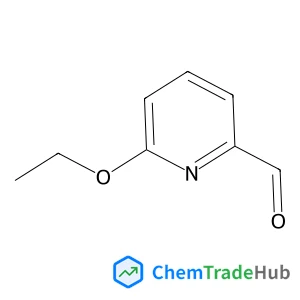
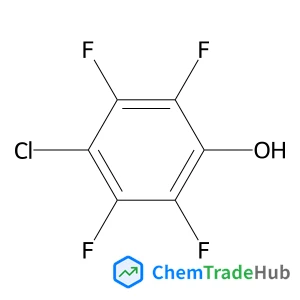
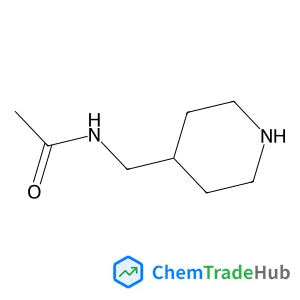
![N-{15-[(2,5-Dioxo-1-pyrrolidinyl)oxy]-15-oxo-3,6,9,12-tetraoxapentadec-1-yl}-2-(2-propyn-1-yloxy)acetamide structure](https://cnstatic.chemtradehub.com/structs/210/2101206-92-0-2eb5.webp "N-{15-[(2,5-Dioxo-1-pyrrolidinyl)oxy]-15-oxo-3,6,9,12-tetraoxapentadec-1-yl}-2-(2-propyn-1-yloxy)acetamide structure")
推荐供应商






免责声明
本页面提供的学术期刊信息仅供参考和研究使用。我们与任何期刊出版商均无关联,也不处理投稿事宜。如有投稿相关咨询,请直接联系相关期刊出版商。
如发现页面信息有误,请发送邮件至 support@chemtradehub.com 联系我们。我们将及时核实并处理您的问题。