












Coherency strain and its effect on ionic conductivity and diffusion in solid electrolytes – an improved model for nanocrystalline thin films and a review of experimental data
文献信息
发布日期
2014-10-02
DOI
10.1039/C4CP03055A
影响因子
3.676
作者
C. Korte, J. Keppner, A. Peters, N. Schichtel, H. Aydin, J. Janek
查看原文
摘要
A phenomenological and analytical model for the influence of strain effects on atomic transport in columnar thin films is presented. A model system consisting of two types of crystalline thin films with coherent interfaces is assumed. Biaxial mechanical strain ε0 is caused by lattice misfit of the two phases. The conjoined films consist of columnar crystallites with a small diameter l. Strain relaxation by local elastic deformation, parallel to the hetero-interface, is possible along the columnar grain boundaries. The spatial extent δ0 of the strained hetero-interface regions can be calculated, assuming an exponential decay of the deformation-forces. The effect of the strain field on the local ionic transport in a thin film is then calculated by using the thermodynamic relation between (isostatic) pressure and free activation enthalpy ΔG#. An expression describing the total ionic transport relative to bulk transport of a thin film or a multilayer as a function of the layer thickness is obtained as an integral average over strained and unstrained regions. The expression depends only on known material constants such as Young modulus Y, Poisson ratio ν and activation volume ΔV#, which can be combined as dimensionless parameters. The model is successfully used to describe own experimental data from conductivity and diffusion studies. In the second part of the paper a comprehensive literature overview of experimental studies on (fast) ion transport in thin films and multilayers along solid–solid hetero-interfaces is presented. By comparing and reviewing the data the observed interface effects can be classified into three groups: (i) transport along interfaces between extrinsic ionic conductors (and insulator), (ii) transport along an open surface of an extrinsic ionic conductor and (iii) transport along interfaces between intrinsic ionic conductors. The observed effects in these groups differ by about five orders of magnitude in a very consistent way. The modified interface transport in group (i) is most probably caused by strain effects, misfit dislocations or disordered transition regions.
相关文献
Conformational disorder and solvation properties of the key-residues of a protein in water–ethanol mixed solutions
Dayanidhi Mohanta, Santanu Santra, Madhurima Jana
2017-11-21
Paper
DOI: 10.1039/C7CP06022J
Hydration peculiarities of graphene oxides with multiple oxidation degrees
Antenor J. Paulista Neto, Vitaly V. Chaban, Eudes E. Fileti
2017-11-20
Paper
DOI: 10.1039/C7CP06549C
The shape of the electronic circular dichroism spectrum of (2,6-dimethylphenyl)(phenyl)methanol: interplay between conformational equilibria and vibronic effects
Daniele Padula, Javier Cerezo, Gennaro Pescitelli, Fabrizio Santoro
2017-11-16
Paper
DOI: 10.1039/C7CP06369E
Electrochemical aspects of photocatalysis: Au@FeS2 nanocomposite for removal of industrial pollutant
Gurpreet Kaur, Pooja D., Manjeet Kumar, Anup Thakur, Rajni Bala, Akshay Kumar
2017-11-16
Paper
DOI: 10.1039/C7CP06289C
The promoting effect of tetravalent cerium on the oxygen evolution activity of copper oxide catalysts
Zhu Chen, Coleman X. Kronawitter, Xiaofang Yang, Yao-wen Yeh, Nan Yao, Bruce E. Koel
2017-10-18
Paper
DOI: 10.1039/C7CP05248K
Biological application of water-based electrochemically synthesized CuO leaf-like arrays: SERS response modulated by the positional isomerism and interface type
E. Proniewicz, S. Vantasin, T. K. Olszewski, B. Boduszek, Y. Ozaki
2017-11-13
Paper
DOI: 10.1039/C7CP06001G
Carbon vacancies in Ti2CT2 MXenes: defects or a new opportunity?
Xiaohui Wang
2017-11-10
Paper
DOI: 10.1039/C7CP06593K
Ion chemistry at elevated ion–molecule interaction energies in a selected ion flow-drift tube: reactions of H3O+, NO+ and O2+ with saturated aliphatic ketones
Anatolii Spesyvyi, David Smith, Patrik Španěl
2017-11-16
Paper
DOI: 10.1039/C7CP05795D
Adsorption and diffusion of hydrogen and oxygen in FCC-Co: a first-principles study
Wusong Liu, Jian Zhou
2017-11-20
Paper
DOI: 10.1039/C7CP07208B
Photo-induced radical polarization and liquid-state dynamic nuclear polarization using fullerene nitroxide derivatives
Guoquan Liu, Shu-Hao Liou, Nikolay Enkin, Igor Tkach
2017-11-10
Paper
DOI: 10.1039/C7CP06073D
您可能还喜欢
化合物问答
4-[4-三氟甲基苯基]恶唑(CAS号:1126636-40-5)通常如何合成?
4-[4-三氟甲基苯基]恶唑通常通过将4-三氟甲基苯酚与异硫氰酸苯酯在有机溶剂中进行酯化反应合成。该反应可在无水条件下,使用适当的催化剂,如四丁基氢氧化铵,以提...
1126636-40-54-(4-(Trifluoromethy...
59729-32-71-[3-(Dimethylamino)...
化合物问答
RockPhos Pd G3(CAS号:2009020-38-4)通常如何合成?
RockPhos Pd G3 通常通过钯催化偶联反应合成,使用配体 (2'-Amino-2-biphenylyl)(methanesulfonato-kappa...
2009020-38-4(2'-Amino-2-biphenyl...
化合物问答
1-哌啶甲酰胺(CAS号:2158-03-4)的市场或研究趋势如何?
1-哌啶甲酰胺作为有机合成中的重要中间体,其市场需求主要受医药、农药、染料等行业推动。近年来,随着新药开发和绿色化学的发展,该化合物的研究趋势集中在开发更高效、...
2158-03-41-Piperidinecarboxam...
化合物问答
2-(二苯基膦基)乙胺(CAS号:4848-43-5)适用哪些法规指南?
2-(二苯基膦基)乙胺适用于多种法规指南,包括但不限于《全球化学品统一分类和标签制度》(GHS),欧盟《化学品注册、评估、授权和限制》法规(REACH),以及美...
4848-43-52-(Diphenylphosphino...
化合物问答
如何储存间苯二甲酸二烯丙酯(CAS号:1087-21-4)?
间苯二甲酸二烯丙酯应储存在阴凉、干燥、通风良好的地方,远离火源和热源。储存容器应密封,避免光照和高温。储存温度应控制在25℃以下,相对湿度应低于80%。避免与其...
1087-21-4Diallyl isophthalate
化合物问答
什么是间甲苯异硫代异氰酸酯(CAS号:621-30-7)?
间甲苯异硫代异氰酸酯是一种有机化合物,分子式为C7H7NO2S,具有刺激性气味。它是一种重要的有机合成中间体,在合成其他化合物时广泛应用。
621-30-71-Isothiocyanato-3-m...
化合物问答
在合成中是否有N-Boc-D-苯丙氨醇(CAS号:106454-69-7)的替代品?
在合成中,可以考虑使用N-Cbz-D-苯丙氨醇或N-Fmoc-D-苯丙氨醇作为替代品。这些化合物同样具有保护氨基的功能,且在合成过程中表现出良好的反应性能。
106454-69-72-Methyl-2-propanyl ...
化合物问答
3-羟甲基-2-氧异丙基吡啶(CAS号:954240-50-7)的主要用途是什么?
3-羟甲基-2-氧异丙基吡啶主要用于有机合成领域,可以作为合成其他药物、农药或精细化学品的中间体。此外,它还可能在实验室研究中作为特定反应的前体或溶剂。
954240-50-7(2-Isopropoxy-3-pyri...
化合物问答
6-氨基-9-甲基嘌呤(CAS号:700-00-5)应用于哪些行业?
6-氨基-9-甲基嘌呤目前主要应用于医药行业,作为某些药物的中间体。此外,它还可能用于聚合物、传感器和半导体的某些领域,作为功能性单体或掺杂剂。
700-00-59-Methyl-9H-purin-6-...
来源期刊
Physical Chemistry Chemical Physics

CiteScore:
5.5
自引率:
10.3%
年发文量:
3036
Physical Chemistry Chemical Physics (PCCP) is an international journal co-owned by 19 physical chemistry and physics societies from around the world. This journal publishes original, cutting-edge research in physical chemistry, chemical physics and biophysical chemistry. To be suitable for publication in PCCP, articles must include significant innovation and/or insight into physical chemistry; this is the most important criterion that reviewers and Editors will judge against when evaluating submissions. The journal has a broad scope and welcomes contributions spanning experiment, theory, computation and data science. Topical coverage includes spectroscopy, dynamics, kinetics, statistical mechanics, thermodynamics, electrochemistry, catalysis, surface science, quantum mechanics, quantum computing and machine learning. Interdisciplinary research areas such as polymers and soft matter, materials, nanoscience, energy, surfaces/interfaces, and biophysical chemistry are welcomed if they demonstrate significant innovation and/or insight into physical chemistry. Joined experimental/theoretical studies are particularly appreciated when complementary and based on up-to-date approaches.
推荐化合物

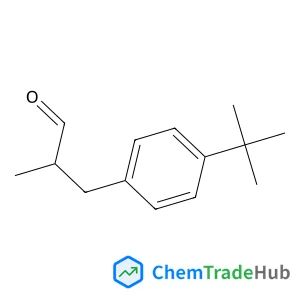
![[2',6'-bis(propan-2-yloxy)-[1,1'-biphenyl]-3-yl]dicyclohexylphosphane structure](https://cnstatic.chemtradehub.com/structs/787/787618-22-8-dda2.webp "[2',6'-bis(propan-2-yloxy)-[1,1'-biphenyl]-3-yl]dicyclohexylphosphane structure")
[2',6'-bis(propan-2-yloxy)-[1,1'-biphenyl]-3-yl]dicyclohexylphosphane
CAS号:
787618-22-8
分子式:
C30H43O2P
推荐供应商


免责声明
本页面提供的学术期刊信息仅供参考和研究使用。我们与任何期刊出版商均无关联,也不处理投稿事宜。如有投稿相关咨询,请直接联系相关期刊出版商。
如发现页面信息有误,请发送邮件至 support@chemtradehub.com 联系我们。我们将及时核实并处理您的问题。