


![S-[2,3-Bis(palmitoyloxy)propyl]-N-[(9H-fluoren-9-ylmethoxy)(hydroxy)methylene]cysteine structure](https://cnstatic.chemtradehub.com/structs/210/210532-98-2-f6a7.webp "S-[2,3-Bis(palmitoyloxy)propyl]-N-[(9H-fluoren-9-ylmethoxy)(hydroxy)methylene]cysteine structure")
Reverse micelles based on β-cyclodextrin-incorporated amphiphilic polyurethane copolymers for protein delivery
文献信息
发布日期
2014-05-07
DOI
10.1039/C4PY00278D
影响因子
5.582
作者
Xiaoxu Du, Nan Song, Ying-Wei Yang, Guolin Wu, Jianbiao Ma, Hui Gao
查看原文
摘要
A series of amphiphilic polyurethane (PU) copolymers were synthesized by a condensation reaction of poly(ethylene glycol) (PEG) of different molecular weights and 1,6-hexamethylene diisocyanate (HDI), with/without end-capped heptakis(2,6-di-O-methyl)-β-cyclodextrin (DM-β-CD). Their chemical structures were characterized by Fourier transform infrared (FT-IR) spectroscopy and proton nuclear magnetic resonance (1H-NMR) spectroscopy. Their molecular weights, thermal properties and crystallization properties were investigated using gel permeation chromatography (GPC) and differential scanning calorimetry (DSC), respectively. A model protein, bovine serum albumin (BSA), was encapsulated into the PU reverse micelles (RMs) with/without DM-β-CD entities using an emulsification method in dichloromethane (DCM), and then further transferred in biocompatible oil, i.e., ethyl oleate. The diameter of RMs in DCM decreased from 180–480 nm to 100–280 nm upon heating, as determined by dynamic light scattering (DLS), and it was spherical in shape, as observed using a scanning electron microscope (SEM). The encapsulation efficiency (EE) and loading capacity (LC) of BSA in the RMs composed of DM-β-CD-containing PUs were much higher than those without DM-β-CD. In vitro release studies showed that the release rate of RMs of DM-β-CD-containing PUs was faster than their counter parts without DM-β-CD. Interestingly, among all the RMs in the present study, the RMs of DM-β-CD-containing PUs composed of the irregular segments of both PEG1000 and PEG2000 exhibited the highest EE and LC, and the fastest release rate of its cargo. These results highlight the ability of RMs of proper PU composition to act as carriers for protein in an oleous phase with good EE and proper release behavior, paving a new way for the application of PU-based RMs in protein or peptide delivery.
期刊推荐
New Journal of Chemistry

Chemical Communications
Journal of Peptide Science
Saudi Pharmaceutical Journal

Chemistry Education Research and Practice
Organic Process Research & Development
Russian Journal of Bioorganic Chemistry
Journal of Saudi Chemical Society
Current Opinion in Solid State & Materials Science

Acta Materialia
相关文献
Lanthanide-induced conformational change of methanol dehydrogenase involving coordination change of cofactor pyrroloquinoline quinone
2019-09-04
Paper
DOI: 10.1039/C9CP03953H
Hysteresis in graphene nanoribbon field-effect devices
Akimitsu Narita, Hai I. Wang
2020-02-18
Paper
DOI: 10.1039/D0CP00298D
BAR-based multi-dimensional nonequilibrium pulling for indirect construction of QM/MM free energy landscapes: from semi-empirical to ab initio
2019-09-25
Paper
DOI: 10.1039/C9CP04113C
The ground state of KO revisited: the millimeter and submillimeter spectrum of potassium oxide
Mark A. Burton, Benjamin T. Russ, Matthew P. Bucchino, Phillip M. Sheridan, Lucy M. Ziurys
2019-09-19
Paper
DOI: 10.1039/C9CP03465J
Caffeine destabilizes preformed Aβ protofilaments: insights from all atom molecular dynamics simulations
Shivani Gupta
2019-09-16
Paper
DOI: 10.1039/C9CP04162A
H/D solvent isotope effects on the photoracemization reaction of enantiomeric the tris(2,2′-bipyridine)ruthenium(ii) complex and its analogues
Masahiro Asahara, Haruhiko Kurimoto, Masato Nakamizu, Shingo Hattori, Kazuteru Shinozaki
2020-03-02
Paper
DOI: 10.1039/C9CP06758B
Computational analysis of the orientation persistence length of the polymer chain orientation
Falk Niefind, Andreas Neff, Stefan C. B. Mannsfeld, Axel Kahnt, Bernd Abel
2019-09-09
Paper
DOI: 10.1039/C9CP02944C
Metallic FeSe monolayer as an anode material for Li and non-Li ion batteries: a DFT study
Xiaodong Lv, Fengyu Li, Jian Gong, Jinxing Gu, Shiru Lin, Zhongfang Chen
2020-03-20
Paper
DOI: 10.1039/D0CP00967A
Charge separation, recombination and intersystem crossing of directly connected perylenemonoimide–carbazole electron donor/acceptor dyads
Xue Zhang, Ayhan Elmali, Ruomeng Duan, Qingyun Liu, Wei Ji, Chen Li, Ahmet Karatay
2020-02-24
Paper
DOI: 10.1039/C9CP06914C
A revised model of silicon oxidation during the dissolution of silicon in HF/HNO3 mixtures
Anja Rietig, Thomas Langner, Jörg Acker
2019-09-17
Paper
DOI: 10.1039/C9CP04429A
您可能还喜欢
化合物问答
如何储存1,2-环己二酮环乙缩醛(CAS号:4746-96-7)?
1,2-环己二酮环乙缩醛应储存在阴凉、干燥、通风良好的地方,避免阳光直射。建议使用密封容器保存,并保持环境温度在室温范围内,远离火源和热源。
4746-96-71,4-Dioxaspiro[4.5]d...
化合物问答
Ecopladib(CAS号:381683-92-7)的市场或研究趋势如何?
Ecopladib作为一种新型的药物,主要应用于治疗高胆固醇等疾病。目前,市场和研究趋势显示,Ecopladib因其独特的药理作用而受到关注。随着对心血管疾病治...
381683-92-7Ecopladib
化合物问答
2,3-Dimethyl-3H-imidazo[4,5-c]pyridine(CAS号:52538-09-7)通常如何合成?
2,3-二甲基-3H-咪唑[4,5-c]吡啶通常通过咪唑和2,3-二甲基吡啶的缩合反应合成。具体来说,将咪唑和2,3-二甲基吡啶在适当的溶剂中进行加热或加压反应...
52538-09-72,3-Dimethyl-3H-imid...
化合物问答
2,3,4,5-tetrahydro-1H-3-苯并氮杂环;盐酸盐(CAS号:17379-01-0)的市场或研究趋势如何?
该化合物在药物化学和有机合成中有一定的应用。近年来,随着对新型药物化合物的需求增加,该化合物的研究趋势主要集中在探索其生物活性,尤其是其在神经系统疾病治疗中的潜...
17379-01-02,3,4,5-Tetrahydro-1...
68-90-6(2-Ethyl-1-benzofura...
化合物问答
如何储存盐酸甘氨酸丁酯(CAS号:13048-99-2)?
盐酸甘氨酸丁酯应储存在阴凉、干燥、通风良好的地方,避免阳光直射和高温环境,温度应控制在25℃以下。储存容器应密封,避免与空气中的水分和酸性物质接触,以防发生水解...
13048-99-2Butyl glycinate hydr...
化合物问答
什么是2-Iodo-N,N-dimethylbenzamide(CAS号:54616-46-5)?
2-碘-N,N-二甲基苯胺是一种有机化合物,化学名为2-Iodo-N,N-dimethylbenzamide。其分子式为C<sub>9</sub>H<sub>1...
54616-46-52-Iodo-N,N-dimethylb...
16817-90-6N-Cyclohexylglycinam...
化合物问答
5-溴-2-(4H-1,2,4-三唑-4-基)吡啶(CAS号:959240-99-4)的市场或研究趋势如何?
随着医药、农药和新材料领域的发展,该化合物作为关键中间体的应用日益增多。特别是在药物合成中,由于其独特的化学性质,可以用于合成多种药物分子。未来的研究趋势可能集...
959240-99-45-Bromo-2-(4H-1,2,4-...
化合物问答
2,4-二溴-6-三氟甲基嘧啶(CAS号:785778-00-9)通常如何合成?
2,4-二溴-6-三氟甲基嘧啶通常通过溴化反应合成。首先,将6-三氟甲基嘧啶与溴化剂(如液溴)在适当的溶剂(如二氯甲烷、四氢呋喃)中反应,加入适当的催化剂(如四...
785778-00-92,4-Dibromo-6-(trifl...
来源期刊
Polymer Chemistry

CiteScore:
8.6
自引率:
7.3%
年发文量:
457
Polymer Chemistry welcomes submissions in all areas of polymer science that have a strong focus on macromolecular chemistry. Manuscripts may cover a broad range of fields, yet no direct application focus is required.
推荐化合物
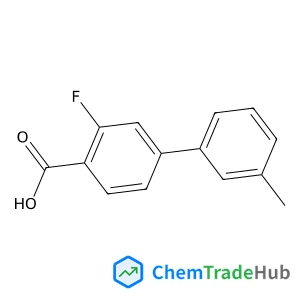
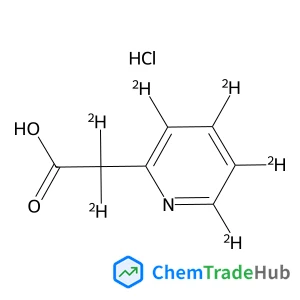
2,2-dideuterio-2-(3,4,5,6-tetradeuterio-2-pyridyl)acetic acid;hydrochloride
CAS号:
1329799-67-8
分子式:
C7H2ClD6NO2
推荐供应商





免责声明
本页面提供的学术期刊信息仅供参考和研究使用。我们与任何期刊出版商均无关联,也不处理投稿事宜。如有投稿相关咨询,请直接联系相关期刊出版商。
如发现页面信息有误,请发送邮件至 support@chemtradehub.com 联系我们。我们将及时核实并处理您的问题。