


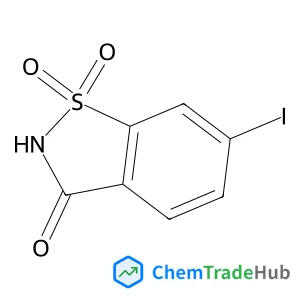
A tumor-targeting dextran–apoprotein conjugate integrated with enediyne chromophore shows highly potent antitumor efficacy
文献信息
发布日期
2014-05-20
DOI
10.1039/C4PY00532E
影响因子
5.582
作者
Bin Li, Xiu-jun Liu, Liang Li, Sheng-hua Zhang, Yi Li, Dian-dong Li, Yong-su Zhen
查看原文
摘要
A novel polymer–protein conjugate, Dex–rLDP, was prepared through conjugation of recombinant apoprotein (rLDP) of antitumor antibiotic lidamycin (LDM) to a macromolecular carrier, dextran T40, by the periodate oxidation–hydroboron reduction method. Its structure was verified by means of SDS-PAGE, HPLC, FT-IR, CD and MALDI-TOF MS. The weight-average molecular weight (Mw) of the glycoconjugate was 66.6 kDa, determined by MALDI-TOF MS, suggesting that approximately 3 mol of rLDP was attached per mole of oxidized dextran. The particle size, zeta potential and thermal stability of the dextranated conjugate were further characterized by TEM, DLS, and DSC. The DSC analysis revealed that dextranation can markedly enhance the thermal stability of the recombinant protein. To empower the conjugate with highly potent cytotoxicity, the resulting Dex–rLDP was then assembled with the active enediyne (AE) chromophore of LDM to generate an enediyne-energized conjugate, namely Dex–rLDP–AE. In vitro MTT assay clearly indicated that the cytotoxicity of Dex–rLDP–AE was at least an order of magnitude higher than that of free LDM. At tolerable doses, Dex–rLDP–AE markedly suppressed the growth of human carcinoma xenografts and transplantable murine hepatoma. Notably, selective accumulation and retention of the fluorescently labeled Dex–rLDP within the tumor was detected by in vivo fluorescence imaging in tumor-bearing mice. The observed results indicate that this cross-linking strategy offers important implications for controlled and targeted drug delivery to solid tumors, and the enediyne-energized dextran–apoprotein conjugate is a potentially promising candidate for tumor targeted therapy.
期刊推荐
Organic Process Research & Development

Chemistry Education Research and Practice
Russian Journal of Bioorganic Chemistry

Journal of Natural Medicines
Drug Discovery Today
Nature Medicine
Russian Journal of Coordination Chemistry

Saudi Pharmaceutical Journal

New Journal of Chemistry

Journal of Saudi Chemical Society
相关文献
Metallic FeSe monolayer as an anode material for Li and non-Li ion batteries: a DFT study
Xiaodong Lv, Fengyu Li, Jian Gong, Jinxing Gu, Shiru Lin, Zhongfang Chen
2020-03-20
Paper
DOI: 10.1039/D0CP00967A
Magnon-driven interfacial magnetoelectric coupling in Co/PMN-PT multiferroic heterostructures
Changjun Jiang
2019-09-03
Paper
DOI: 10.1039/C9CP04169A
Simulation guided design of silver nanostructures for plasmon-enhanced fluorescence, singlet oxygen generation and SERS applications
2020-02-07
Paper
DOI: 10.1039/C9CP06029D
Enhanced carrier mobility and tunable electronic properties in α-tellurene monolayer via an α-tellurene and h-BN heterostructure
Xingtao Jia, Yujin Liu, Weiyang Yu, Baoji Wang, Xuefeng Yang, Qin Wang
2020-02-26
Paper
DOI: 10.1039/D0CP00269K
Structure, electrical conductivity and oxygen transport properties of perovskite-type oxides CaMn1−x−yTixFeyO3−δ
Rian Ruhl, Jia Song, Vincent Thoréton, Sathya Prakash Singh, Kjell Wiik, Yngve Larring, Henny J. M. Bouwmeester
2019-09-18
Paper
DOI: 10.1039/C9CP04911H
Effect of mild nanoscopic confinement on the dynamics of ionic liquids
Daria Noferini, Olaf Holderer, Henrich Frielinghaus
2020-04-09
Paper
DOI: 10.1039/C9CP05200C
A detailed description of the CO molecule adsorbed in InOF-1
Bruno Landeros-Rivera, Ilich A. Ibarra, Mariana L. Díaz-Ramírez, Rubicelia Vargas, Hugo A. Lara-García, Jorge Garza, Ana Martínez
2020-03-16
Paper
DOI: 10.1039/D0CP00579G
Hydration structure and water exchange kinetics at xenotime–water interfaces: implications for rare earth minerals separation‡
Santanu Roy, Lili Wu, Sriram Goverapet Srinivasan, Andrew G. Stack, Alexandra Navrotsky, Vyacheslav S. Bryantsev
2020-02-26
Paper
DOI: 10.1039/D0CP00087F
Efficient thermal- and photocatalysts made of Au nanoparticles on MgAl-layered double hydroxides for energy and environmental applications
2019-09-16
Paper
DOI: 10.1039/C9CP04445K
Iodide conversion to iodate in aqueous and solid aerosols exposed to ozone
Carolina Moreno, María-Teresa Baeza-Romero, Óscar Gálvez, Vicente López Arza, James C. Ianni, Eva Espíldora
2020-02-17
Paper
DOI: 10.1039/C9CP05601G
您可能还喜欢
化合物问答
如何储存1,2-环己二酮环乙缩醛(CAS号:4746-96-7)?
1,2-环己二酮环乙缩醛应储存在阴凉、干燥、通风良好的地方,避免阳光直射。建议使用密封容器保存,并保持环境温度在室温范围内,远离火源和热源。
4746-96-71,4-Dioxaspiro[4.5]d...
化合物问答
Ecopladib(CAS号:381683-92-7)的市场或研究趋势如何?
Ecopladib作为一种新型的药物,主要应用于治疗高胆固醇等疾病。目前,市场和研究趋势显示,Ecopladib因其独特的药理作用而受到关注。随着对心血管疾病治...
381683-92-7Ecopladib
化合物问答
2,3-Dimethyl-3H-imidazo[4,5-c]pyridine(CAS号:52538-09-7)通常如何合成?
2,3-二甲基-3H-咪唑[4,5-c]吡啶通常通过咪唑和2,3-二甲基吡啶的缩合反应合成。具体来说,将咪唑和2,3-二甲基吡啶在适当的溶剂中进行加热或加压反应...
52538-09-72,3-Dimethyl-3H-imid...
化合物问答
2,3,4,5-tetrahydro-1H-3-苯并氮杂环;盐酸盐(CAS号:17379-01-0)的市场或研究趋势如何?
该化合物在药物化学和有机合成中有一定的应用。近年来,随着对新型药物化合物的需求增加,该化合物的研究趋势主要集中在探索其生物活性,尤其是其在神经系统疾病治疗中的潜...
17379-01-02,3,4,5-Tetrahydro-1...
68-90-6(2-Ethyl-1-benzofura...
化合物问答
如何储存盐酸甘氨酸丁酯(CAS号:13048-99-2)?
盐酸甘氨酸丁酯应储存在阴凉、干燥、通风良好的地方,避免阳光直射和高温环境,温度应控制在25℃以下。储存容器应密封,避免与空气中的水分和酸性物质接触,以防发生水解...
13048-99-2Butyl glycinate hydr...
化合物问答
什么是2-Iodo-N,N-dimethylbenzamide(CAS号:54616-46-5)?
2-碘-N,N-二甲基苯胺是一种有机化合物,化学名为2-Iodo-N,N-dimethylbenzamide。其分子式为C<sub>9</sub>H<sub>1...
54616-46-52-Iodo-N,N-dimethylb...
16817-90-6N-Cyclohexylglycinam...
化合物问答
5-溴-2-(4H-1,2,4-三唑-4-基)吡啶(CAS号:959240-99-4)的市场或研究趋势如何?
随着医药、农药和新材料领域的发展,该化合物作为关键中间体的应用日益增多。特别是在药物合成中,由于其独特的化学性质,可以用于合成多种药物分子。未来的研究趋势可能集...
959240-99-45-Bromo-2-(4H-1,2,4-...
化合物问答
2,4-二溴-6-三氟甲基嘧啶(CAS号:785778-00-9)通常如何合成?
2,4-二溴-6-三氟甲基嘧啶通常通过溴化反应合成。首先,将6-三氟甲基嘧啶与溴化剂(如液溴)在适当的溶剂(如二氯甲烷、四氢呋喃)中反应,加入适当的催化剂(如四...
785778-00-92,4-Dibromo-6-(trifl...
来源期刊
Polymer Chemistry

CiteScore:
8.6
自引率:
7.3%
年发文量:
457
Polymer Chemistry welcomes submissions in all areas of polymer science that have a strong focus on macromolecular chemistry. Manuscripts may cover a broad range of fields, yet no direct application focus is required.
推荐化合物
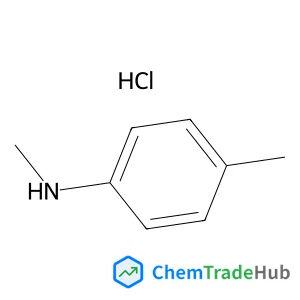
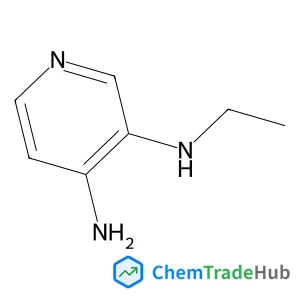

推荐供应商



免责声明
本页面提供的学术期刊信息仅供参考和研究使用。我们与任何期刊出版商均无关联,也不处理投稿事宜。如有投稿相关咨询,请直接联系相关期刊出版商。
如发现页面信息有误,请发送邮件至 support@chemtradehub.com 联系我们。我们将及时核实并处理您的问题。