


Controlled synthesis of β-sheet polymers based on side-chain amyloidogenic short peptide segments via RAFT polymerization
文献信息
发布日期
2014-07-01
DOI
10.1039/C4PY00620H
影响因子
5.582
作者
Sonu Kumar, Rituparna Acharya, Urmi Chatterji, Priyadarsi De
查看原文
摘要
A strategy is documented that exploits the controlled synthesis of side-chain peptide based stimuli-responsive hybrid macromolecules inspired by amyloid based β-sheet forming peptides. Well-defined side-chain peptidic polymers have been synthesized via the reversible addition–fragmentation chain transfer (RAFT) polymerization technique using a representative methacrylate monomer with a short peptide segment (Leu-Val-Phe) corresponding to the amyloid β-peptide Aβ1–42. Furthermore, the monomethoxy poly(ethylene glycol) (mPEG) macro-chain transfer agent is employed for RAFT polymerization of this peptidic monomer to prepare peptide based amphiphilic nano-carriers, a promising reservoir for hydrophobic Nile red dye or doxorubicin based anticancer drug molecules. These hybrid materials can easily produce primary amino groups in terminals of side-chains that can be protonated or deprotonated by changing the pH of the aqueous medium, thus providing “smart” pH-responsiveness, cationic characteristics and complexation capabilities with DNA to form polyplexes. Circular dichroism (CD) spectroscopy demonstrates the formation of a secondary structure from these peptidic polymers and they adopted the β-sheet conformation, which were stable against heat in the experimental temperature range and solvent polarity. Solid-state FT-IR spectroscopy has been performed to understand the formation of β-sheets as well as to distinguish between their parallel and antiparallel propensity. In vitro cytotoxicity testing indicates the biocompatible nature of these peptidic materials, and confocal laser scanning microscopy (CLSM) images revealed cellular uptake of their drug/dye loaded micelles, which potentially offers them as a suitable candidate with dual bioapplications for drug delivery as well as gene transfer.
期刊推荐

Chemical Communications

New Journal of Chemistry

Journal of Saudi Chemical Society

Chemistry Education Research and Practice

Russian Journal of General Chemistry
Russian Journal of Applied Chemistry
Russian Journal of Coordination Chemistry
Organic Process Research & Development
Journal of Peptide Science

Acta Materialia
相关文献
Chromism based on supramolecular H-bonds
Chuanlang Zhan, Xunlei Ding, Shanlin Zhang, Xin Zhang, Huiying Liu, Lili Chen, Yishi Wu, Hongbing Fu, Shenggui He, Yan Huang, Jiannian Yao
2013-05-20
Paper
DOI: 10.1039/C3CP51268A
Marine natural products from the deep Pacific as potential non-linear optical chromophores
Bruce F. Milne, Patrick Norman, Fernando Nogueira, Cláudia Cardoso
2013-07-24
Paper
DOI: 10.1039/C3CP52528G
Remarkable magnetism and ferromagnetic coupling in semi-sulfuretted transition-metal dichalcogenides
Yungang Zhou, Chengfei Yang, Xia Xiang, Xiaotao Zu
2013-06-18
Paper
DOI: 10.1039/C3CP51518D
A low-cost bio-inspired integrated carbon counter electrode for high conversion efficiency dye-sensitized solar cells
Chunlei Wang, Fanning Meng, Mingxing Wu, Xiao Lin, Tonghua Wang, Jieshan Qiu, Tingli Ma
2013-06-27
Communication
DOI: 10.1039/C3CP52525B
Towards systematically improvable models for actinides in condensed phase: the electronic spectrum of uranyl in Cs2UO2Cl4 as a test case
André Severo Pereira Gomes, Christoph R. Jacob, Florent Réal, Lucas Visscher, Valérie Vallet
2013-07-12
Paper
DOI: 10.1039/C3CP52090K
Functionalized 129Xe as a potential biosensor for membrane fluidity
Matthias Schnurr, Christopher Witte, Leif Schröder
2013-06-07
Communication
DOI: 10.1039/C3CP51227D
An in situXAFS study—the formation mechanism of gold nanoparticles from X-ray-irradiated ionic liquid
2013-05-21
Paper
DOI: 10.1039/C3CP51743H
Extending the distance range accessed with continuous wave EPR with Gd3+spin probes at high magnetic fields
Devin T. Edwards, Zhidong Ma, Daniella Goldfarb
2013-05-15
Paper
DOI: 10.1039/C3CP43787F
Kinetics of Schottky defect formation and annihilation in single crystal TlBr
Harry L. Tuller, Melanie Kuhn, Guido Ciampi, William Higgins, Kanai S. Shah
2013-06-05
Paper
DOI: 10.1039/C3CP51043C
Estimation of electrode ionomer oxygen permeability and ionomer-phase oxygen transport resistance in polymer electrolyte fuel cells
Satheesh Sambandam, Javier Parrondo, Vijay Ramani
2013-07-10
Paper
DOI: 10.1039/C3CP51450A
您可能还喜欢
化合物问答
4,5-二甲基-2-硝基苯甲酸(CAS号:4315-14-4)的市场或研究趋势如何?
4,5-二甲基-2-硝基苯甲酸主要应用于制药、染料和农药等行业。由于其潜在的毒性,其市场趋势可能受到法规限制和环保考量的影响,推动了替代产品的研发。在研究领域,...
4315-14-44,5-Dimethyl-2-nitro...
化合物问答
处理直接黑22(CAS号:6473-13-8)时应注意哪些实验室安全事项?
处理直接黑22时应穿戴适当的个人防护装备(PPE),包括实验服、手套、护目镜和口罩。操作应在通风橱内进行,以避免吸入有害气体。如果发生泄漏,应立即清理,并使用大...
6473-13-82-Naphthalenesulfoni...
化合物问答
处理2,1,3-苯并噻二唑-4-基异氰酸酯(CAS号:342411-14-7)时应注意哪些实验室安全事项?
处理2,1,3-苯并噻二唑-4-基异氰酸酯时应注意以下安全事项:穿戴个人防护装备,如实验室外套、防护眼镜和手套;在通风橱中操作,确保良好的通风;保持实验室环境干...
342411-14-74-Isocyanato-2,1,3-b...
化合物问答
如何处理含有Δ-8,9-脱氢雌酮(CAS号:204077-66-7)的废料?
含有Δ-8,9-脱氢雌酮的废料需要进行适当的处理以确保环境和人体安全。首先,收集废液并存放于密封容器中,避免泄漏。其次,可以考虑将其转化为无害物质或通过专业处理...
204077-66-7Thioquinapiperifil d...
化合物问答
如何储存5-溴戊酸(CAS号:2067-33-6)?
5-溴戊酸应储存在阴凉、干燥、通风良好的环境中,避免阳光直射。建议在室温(约15-25°C)下保存,保持相对湿度低于60%。应使用密封的玻璃或塑料容器,并远离热...
2067-33-65-Bromopentanoic aci...
化合物问答
4-(甲基亚磺酰基)苯胺(CAS号:22865-62-9)应用于哪些行业?
4-(甲基亚磺酰基)苯胺在医药、聚合物和传感器等领域有一定的应用。在医药方面,它可以用作合成药物的中间体;在聚合物领域,可以作为合成特殊性能高分子材料的单体;在...
22865-62-94-Methylsulfinylanil...
化合物问答
什么是1-(2-FLUOROPHENYL)-5-METHYL-1H-PYRAZOLE-4-CARBOHYDRAZIDE(CAS号:618092-58-3)?
1-(2-氟苯基)-5-甲基-1H-吡唑-4-亚甲基肼是一种有机化合物,其分子式为C9H9FN3O。该化合物具有特定的物理化学性质,如熔点、沸点等,但具体值需查...
618092-58-31-(2-Fluorophenyl)-5...
化合物问答
Dauricumine(CAS号:345641-00-1)通常如何合成?
Dauricumine通常通过复杂的合成路线制备,涉及多个步骤,包括环化、氧化、卤化等反应。合成过程中使用了多种催化剂和试剂,例如金属催化剂、氧化剂等。产率通常...
345641-00-1(1R,1'S,5R,6'S,8'S)-...
化合物问答
5-氰基苯酞(CAS号:82104-74-3)安全吗?
5-氰基苯酞在正常使用条件下相对安全,但其具有一定的毒性,需谨慎操作。在实验或工业应用中,应采取适当的防护措施,如佩戴防护手套、护目镜和实验服,确保通风良好。误...
82104-74-31-Oxo-1,3-dihydro-2-...
化合物问答
2-Methyl-1-(phenylsulfonyl)-1H-pyrrolo[2,3-b]pyridin-5-amine(CAS号:1186502-59-9)安全吗?
该化合物在使用时需要谨慎操作。虽然其毒性和健康风险尚未完全明确,但建议在通风良好的环境中操作,并穿戴适当的个人防护装备,如手套和防护眼镜。
1186502-59-92-Methyl-1-(phenylsu...
来源期刊
Polymer Chemistry

CiteScore:
8.6
自引率:
7.3%
年发文量:
457
Polymer Chemistry welcomes submissions in all areas of polymer science that have a strong focus on macromolecular chemistry. Manuscripts may cover a broad range of fields, yet no direct application focus is required.
推荐化合物
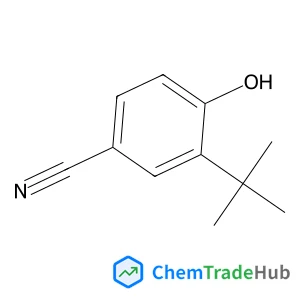
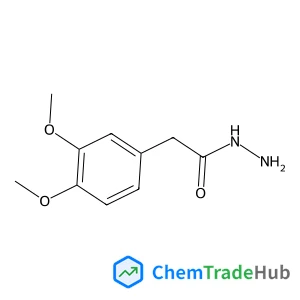
![2-{[(1R,2S)-2-Aminocyclohexyl]amino}-4-{[3-(2H-1,2,3-triazol-2-yl)phenyl]amino}-5-pyrimidinecarboxamide structure](https://cnstatic.chemtradehub.com/structs/137/1370261-96-3-40df.webp "2-{[(1R,2S)-2-Aminocyclohexyl]amino}-4-{[3-(2H-1,2,3-triazol-2-yl)phenyl]amino}-5-pyrimidinecarboxamide structure")
![[4-(Isobutyrylamino)phenyl]boronic acid structure](https://cnstatic.chemtradehub.com/structs/874/874219-50-8-6ab5.webp "[4-(Isobutyrylamino)phenyl]boronic acid structure")
推荐供应商





免责声明
本页面提供的学术期刊信息仅供参考和研究使用。我们与任何期刊出版商均无关联,也不处理投稿事宜。如有投稿相关咨询,请直接联系相关期刊出版商。
如发现页面信息有误,请发送邮件至 support@chemtradehub.com 联系我们。我们将及时核实并处理您的问题。