


Zinc complex based photoinitiating systems for acrylate polymerization under air; in situ formation of Zn-based fillers and composites
文献信息
发布日期
2014-07-28
DOI
10.1039/C4PY00716F
影响因子
5.582
作者
D.-L. Versace, J. Bourgon, E. Leroy, F. Dumur, D. Gigmes, J. P. Fouassier, J. Lalevée
查看原文
摘要
[N,N′-Bis(salicylidene)-1,2-phenylenediamine]zinc(II) (ZnC) exhibits unexpected properties as a photoinitiator or additive for both free-radical photopolymerization reactions and in situ formation of Zn-based fillers under light activation and aerated conditions. The ZnC/2,2-dimethoxy-2-phenylacetophenone (DMPA) and ZnC/N-methyldiethanolamine (MDEA) couples are characterized by remarkable properties: (i) a photoinitiating efficiency for the radical polymerization of an acrylate matrix under air higher than that of a reference Type I photoinitiator such as DMPA (final conversion of ∼30–45% vs. 15%) and therefore a good ability to overcome the oxygen inhibition effect and (ii) a never reported in situ formation of Zn-based fillers (100 μm thick sticks) or composites. The photochemical properties of the ZnC are investigated by fluorescence and UV-visible spectroscopy and Electron Spin Resonance (ESR). The photodecomposition of ZnC under air is governed by either an addition of peroxyl radicals onto ZnC when associated with DMPA, or a H-abstraction mechanism when combined with MDEA. When using a ZnC/MDEA/silver salt photoinitiating system, a highly efficient polymerization of the acrylate matrix under air and a concomitant in situ production of Ag(0) NPs are observed.
期刊推荐
Russian Journal of General Chemistry
Crystallography Reports

Journal of Natural Medicines
Organic Process Research & Development

Current Opinion in Solid State & Materials Science
Chemical Communications
Russian Journal of Applied Chemistry

Journal of Peptide Science

Russian Journal of Organic Chemistry

Acta Materialia
相关文献
Propagation of nanopores during anodic etching of n-InP in KOH
Robert P. Lynch, Nathan Quill, Shohei Nakahara, D. Noel Buckley
2013-07-31
Paper
DOI: 10.1039/C3CP52253A
Superior power density solid oxidefuel cells by enlarging the three-phase boundary region of a NiO–Ce0.8Gd0.2O1.9 composite anode through optimized surface structure
Daeil Yoon, Qing Su, Haiyan Wang, Arumugam Manthiram
2013-07-09
Paper
DOI: 10.1039/C3CP52679H
Methodological keys for accurate simulations
Ymène Houari, Adèle D. Laurent
2013-05-17
Paper
DOI: 10.1039/C3CP50791B
Time-resolved photoelectron spectroscopy of adenine and adenosine in aqueous solution
Franziska Buchner, Hans-Hermann Ritze, Jan Lahl, Andrea Lübcke
2013-05-07
Paper
DOI: 10.1039/C3CP51057C
Amphiphile nanoarchitectonics: from basic physical chemistry to advanced applications
Muruganathan Ramanathan, Lok Kumar Shrestha, Qingmin Ji
2013-04-05
Perspective
DOI: 10.1039/C3CP50620G
Electrochemical synthesis of vertically aligned zinc nanowires using track-etched polycarbonate membranes as templates
Z. Liu, M. S. Ghazvini, F. Endres
2013-05-15
Paper
DOI: 10.1039/C3CP51325D
Donor–acceptor–donor thienyl/bithienyl-benzothiadiazole/quinoxaline model oligomers: experimental and theoretical studies
João Pina, J. Seixas de Melo, D. Breusov, Ullrich Scherf
2013-08-08
Paper
DOI: 10.1039/C3CP52056K
Multidimensional local mode calculations for the vibrational spectra of OH−(H2O)2 and OH−(H2O)2·Ar
Masato Morita, Kaito Takahashi
2013-07-01
Paper
DOI: 10.1039/C3CP51903A
您可能还喜欢
化合物问答
4,5-二甲基-2-硝基苯甲酸(CAS号:4315-14-4)的市场或研究趋势如何?
4,5-二甲基-2-硝基苯甲酸主要应用于制药、染料和农药等行业。由于其潜在的毒性,其市场趋势可能受到法规限制和环保考量的影响,推动了替代产品的研发。在研究领域,...
4315-14-44,5-Dimethyl-2-nitro...
化合物问答
处理直接黑22(CAS号:6473-13-8)时应注意哪些实验室安全事项?
处理直接黑22时应穿戴适当的个人防护装备(PPE),包括实验服、手套、护目镜和口罩。操作应在通风橱内进行,以避免吸入有害气体。如果发生泄漏,应立即清理,并使用大...
6473-13-82-Naphthalenesulfoni...
化合物问答
处理2,1,3-苯并噻二唑-4-基异氰酸酯(CAS号:342411-14-7)时应注意哪些实验室安全事项?
处理2,1,3-苯并噻二唑-4-基异氰酸酯时应注意以下安全事项:穿戴个人防护装备,如实验室外套、防护眼镜和手套;在通风橱中操作,确保良好的通风;保持实验室环境干...
342411-14-74-Isocyanato-2,1,3-b...
化合物问答
如何处理含有Δ-8,9-脱氢雌酮(CAS号:204077-66-7)的废料?
含有Δ-8,9-脱氢雌酮的废料需要进行适当的处理以确保环境和人体安全。首先,收集废液并存放于密封容器中,避免泄漏。其次,可以考虑将其转化为无害物质或通过专业处理...
204077-66-7Thioquinapiperifil d...
化合物问答
如何储存5-溴戊酸(CAS号:2067-33-6)?
5-溴戊酸应储存在阴凉、干燥、通风良好的环境中,避免阳光直射。建议在室温(约15-25°C)下保存,保持相对湿度低于60%。应使用密封的玻璃或塑料容器,并远离热...
2067-33-65-Bromopentanoic aci...
化合物问答
4-(甲基亚磺酰基)苯胺(CAS号:22865-62-9)应用于哪些行业?
4-(甲基亚磺酰基)苯胺在医药、聚合物和传感器等领域有一定的应用。在医药方面,它可以用作合成药物的中间体;在聚合物领域,可以作为合成特殊性能高分子材料的单体;在...
22865-62-94-Methylsulfinylanil...
化合物问答
什么是1-(2-FLUOROPHENYL)-5-METHYL-1H-PYRAZOLE-4-CARBOHYDRAZIDE(CAS号:618092-58-3)?
1-(2-氟苯基)-5-甲基-1H-吡唑-4-亚甲基肼是一种有机化合物,其分子式为C9H9FN3O。该化合物具有特定的物理化学性质,如熔点、沸点等,但具体值需查...
618092-58-31-(2-Fluorophenyl)-5...
化合物问答
Dauricumine(CAS号:345641-00-1)通常如何合成?
Dauricumine通常通过复杂的合成路线制备,涉及多个步骤,包括环化、氧化、卤化等反应。合成过程中使用了多种催化剂和试剂,例如金属催化剂、氧化剂等。产率通常...
345641-00-1(1R,1'S,5R,6'S,8'S)-...
化合物问答
5-氰基苯酞(CAS号:82104-74-3)安全吗?
5-氰基苯酞在正常使用条件下相对安全,但其具有一定的毒性,需谨慎操作。在实验或工业应用中,应采取适当的防护措施,如佩戴防护手套、护目镜和实验服,确保通风良好。误...
82104-74-31-Oxo-1,3-dihydro-2-...
化合物问答
2-Methyl-1-(phenylsulfonyl)-1H-pyrrolo[2,3-b]pyridin-5-amine(CAS号:1186502-59-9)安全吗?
该化合物在使用时需要谨慎操作。虽然其毒性和健康风险尚未完全明确,但建议在通风良好的环境中操作,并穿戴适当的个人防护装备,如手套和防护眼镜。
1186502-59-92-Methyl-1-(phenylsu...
来源期刊
Polymer Chemistry

CiteScore:
8.6
自引率:
7.3%
年发文量:
457
Polymer Chemistry welcomes submissions in all areas of polymer science that have a strong focus on macromolecular chemistry. Manuscripts may cover a broad range of fields, yet no direct application focus is required.
推荐化合物
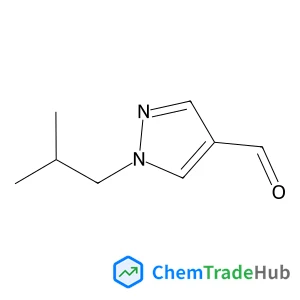
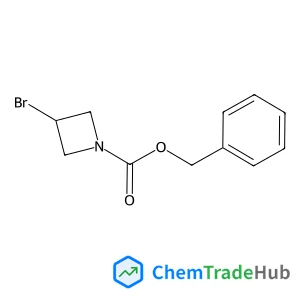
推荐供应商




免责声明
本页面提供的学术期刊信息仅供参考和研究使用。我们与任何期刊出版商均无关联,也不处理投稿事宜。如有投稿相关咨询,请直接联系相关期刊出版商。
如发现页面信息有误,请发送邮件至 support@chemtradehub.com 联系我们。我们将及时核实并处理您的问题。