


Multifunctional ATRP based pH responsive polymeric nanoparticles for improved doxorubicin chemotherapy in breast cancer by proton sponge effect/endo-lysosomal escape
文献信息
发布日期
2015-01-05
DOI
10.1039/C4PY01698J
影响因子
5.582
作者
Farhat Naz, Alok C. Bharti
查看原文
摘要
Folic acid and trastuzumab functionalized pH responsive biodegradable polymeric nanosystem comprising of poly(dimethylaminoethyl methacrylate)-poly(polyethylene glycol methacrylate)-poly(caprolactone)-poly(polyethylene glycol methacrylate)-poly(dimethylaminoethyl methacrylate) [PDMAEMA-PPEGMA-PCL-PPEGMA-PDMAEMA] was designed and developed for improving the chemotherapeutic efficacy of doxorubicin while minimizing its cardiotoxicity in breast cancer therapy. The nanosystem consists of multiple polyethylene glycol chains, which impart stealth nature to the nanoparticles. The polymer-doxorubicin conjugate via acid responsive hydrazone linkage resulted in enhanced doxorubicin release (∼89%) at endo-lysosomal pH when compared to that at physiological pH (∼29%). The nanoparticles also exhibited a proton sponge effect leading to endo-lysosomal escape of the nanoparticles, which resulted in minimal drug degradation and faster drug action. Folic acid and trastuzumab were incorporated in the nanosystem to selectively target breast cancer cells. In vitro and in vivo studies in breast cancer cell lines and Ehrlich ascites tumor bearing Swiss albino mice showed enhanced cellular uptake and improved therapeutic efficacy of the nanosystem with nanoparticles achieving ∼92% tumor regression when compared to ∼36% tumor regression observed with free doxorubicin. This enhanced therapeutic efficacy was achieved with minimal cardiotoxicity as observed in histopathology and blood biochemistry. The findings highlight the potential of the nanosystem in the chemotherapeutic management of breast cancer with its high therapeutic efficacy and minimal cardiotoxicity.
期刊推荐
Crystallography Reports
Russian Journal of Bioorganic Chemistry

Chemical Communications
Current Opinion in Solid State & Materials Science

Chemistry Education Research and Practice
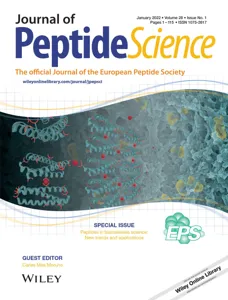
Journal of Peptide Science
Russian Journal of Organic Chemistry
Russian Journal of Coordination Chemistry
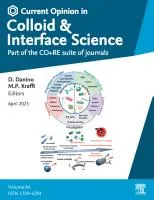
Current Opinion in Colloid & Interface Science
Russian Journal of Applied Chemistry
相关文献
American Leather Chemists Association. Analysis of myrobalans extract
Other
DOI: 10.1039/AN942670265B
Proceedings of the Society of Public Analysts and other Analytical Chemists
Other
DOI: 10.1039/AN943680133A
A new method for determining hydrogen by absorption in technical gas analysis
Paper
DOI: 10.1039/AN939640077B
您可能还喜欢
化合物问答
什么是3-表南美楝属二醇(CAS号:19942-04-2)?
3-表南美楝属二醇是一种具有特定立体化学结构的化合物,其分子式为C31H52O2,属于甾醇类化合物。它具有光学活性,是一种复杂的有机分子,主要存在于一些植物中。
19942-04-2(3S,5R,8R,9R,10R,13R...
化合物问答
3-羧基-5-碘苯甲酸甲酯(CAS号:50765-22-5)应用于哪些行业?
3-羧基-5-碘苯甲酸甲酯主要应用于医药行业,作为合成某些药物中间体的重要原料。此外,它还可能用于聚合物的改性、传感器的制备以及半导体材料的制备等领域。
50765-22-5Methyl 3-hydroxy-5-i...
化合物问答
什么是3-Bromoindolin-2-one(CAS号:22942-87-6)?
3-Bromoindolin-2-one是一种含有溴代基团的吲哚酮衍生物,分子式为C9H7BrNO。它是一种无色固体,具有一定的挥发性,熔点为158-159°C...
22942-87-63-Bromoindolin-2-one
化合物问答
如何处理含有L-Lysyl-L-phenylalanyl-L-isoleucylglycyl-L-leucyl-L-methioninamide(CAS号:2990-43-4)的废料?
对于含有该化合物的废液,应先进行中和处理,然后根据其毒性和活性选择合适的处置方法。可以考虑焚烧处理或由专业的化学品废物处理公司进行无害化处理。处理过程中需注意环...
2990-43-4L-Lysyl-L-phenylalan...
化合物问答
ANGIOTENSIN 1/2 + A (2 - 8)(CAS号:51833-76-2)的物理化学性质是什么?
ANGIOTENSIN 1/2 + A (2 - 8)是一种蛋白质类化合物,具有典型的蛋白质性质。它的分子量约为5900 Da。该化合物在水中具有一定的溶解性,...
51833-76-2ANGIOTENSIN 1/2 + A ...
化合物问答
如何储存2-甲基硫代嘧啶-5-硼酸频那酯(CAS号:940284-18-4)?
应将该化合物存放在阴凉干燥、通风良好的地方,避免阳光直射。建议将化合物密封保存在避光的、干燥的容器中,远离火源和高温环境。
940284-18-42-(Methylthio)-5-(4,...
化合物问答
什么是苏丹红IV氘代物 标准品(CAS号:1014689-18-9)?
苏丹红IV氘代物 标准品是一种含有氘代标记的苏丹红IV化合物,是一种用于化合物分析、结构确证以及代谢研究的标准物质。
1014689-18-91-[(E)-{2-Methyl-4-[...
化合物问答
(+)-2-Amino-6-propionamido-d3-tetrahydrobenzothiazole(CAS号:1217680-69-7)适用哪些法规指南?
该化合物需要遵循《全球化学品统一分类和标签制度》(GHS)中的分类和标签要求,具体分类需依据其毒性和物理化学性质。此外,还需要符合《欧盟化学品注册、评估、授权和...
1217680-69-7(+)-2-Amino-6-propio...
化合物问答
如何储存2-氨基-2-(2-吡啶)乙酸乙酯(CAS号:55243-15-7)?
2-氨基-2-(2-吡啶)乙酸乙酯应储存于阴凉、干燥、通风良好的环境中,避免高温和光照。应使用密封容器储存,并远离易燃物、氧化剂和其他危险化学品。
55243-15-7Ethyl 2-amino-2-(pyr...
化合物问答
3-羟基-4-甲氧基吡啶-2-羧酸(CAS号:210300-09-7)的主要用途是什么?
3-羟基-4-甲氧基吡啶-2-羧酸主要用于合成其他有机化合物,如药物合成、农药合成和染料合成等。此外,它还可用作中间体和试剂,在化学研究领域也有一定的应用。
210300-09-73-Hydroxy-4-methoxy-...
来源期刊
Polymer Chemistry

CiteScore:
8.6
自引率:
7.3%
年发文量:
457
Polymer Chemistry welcomes submissions in all areas of polymer science that have a strong focus on macromolecular chemistry. Manuscripts may cover a broad range of fields, yet no direct application focus is required.
推荐化合物
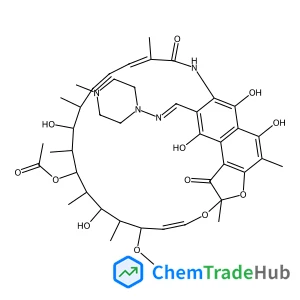
![Ethyl thieno[3,2-f]quinoline-2-carboxylate structure](https://cnstatic.chemtradehub.com/structs/299/29948-26-3-f62b.webp "Ethyl thieno[3,2-f]quinoline-2-carboxylate structure")
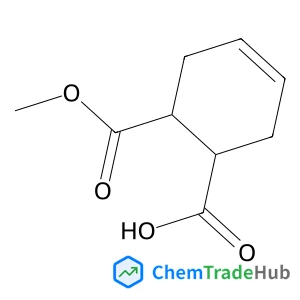
![(1S)-1,5-Anhydro-2-O-alpha-L-arabinopyranosyl-1-[5-hydroxy-7-({6-O-[3-(4-hydroxy-3-methoxyphenyl)propanoyl]-beta-D-glucopyranosyl}oxy)-2-(4-hydroxyphenyl)-4-oxo-4H-chromen-6-yl]-D-glucitol structure](https://cnstatic.chemtradehub.com/structs/225/2252345-81-4-bcff.webp "(1S)-1,5-Anhydro-2-O-alpha-L-arabinopyranosyl-1-[5-hydroxy-7-({6-O-[3-(4-hydroxy-3-methoxyphenyl)propanoyl]-beta-D-glucopyranosyl}oxy)-2-(4-hydroxyphenyl)-4-oxo-4H-chromen-6-yl]-D-glucitol structure")
推荐供应商





免责声明
本页面提供的学术期刊信息仅供参考和研究使用。我们与任何期刊出版商均无关联,也不处理投稿事宜。如有投稿相关咨询,请直接联系相关期刊出版商。
如发现页面信息有误,请发送邮件至 support@chemtradehub.com 联系我们。我们将及时核实并处理您的问题。