


![[3-(2,6-Dichlorophenyl)-5-isopropyl-1,2-oxazol-4-yl]methanol structure](https://cnstatic.chemtradehub.com/structs/278/278597-30-1-5c79.webp "[3-(2,6-Dichlorophenyl)-5-isopropyl-1,2-oxazol-4-yl]methanol structure")
Analysis of multi-source metabolomic data using joint and individual variation explained (JIVE)
文献信息
发布日期
2015-05-05
DOI
10.1039/C5AN00706B
影响因子
4.616
作者
Julia Kuligowski, David Pérez-Guaita, Ángel Sánchez-Illana, Zacarías León-González, Miguel de la Guardia, Eric F. Lock
查看原文
摘要
Metabolic profiling is increasingly being used for understanding biological processes but there is no single analytical technique that provides a complete quantitative or qualitative profiling of the metabolome. Data fusion (i.e. joint analysis of data from multiple sources) has the potential to circumvent this issue facilitating knowledge discovery and reliable biomarker identification. Another field of application of data fusion is the simultaneous analysis of metabolomic changes through several biofluids or tissues. However, metabolomics typically deals with large datasets, with hundreds to thousands of variables and the identification of shared and individual factors or structures across multiple sources is challenging due to the high variable to sample ratios and differences in intensity and noise range. In this work we apply a recent method, Joint and Individual Variation Explained (JIVE), for the integrated unsupervised analysis of metabolomic profiles from multiple data sources. This method separates the shared patterns among data sources (i.e. the joint structure) from the individual structure of each data source that is unrelated to the joint structure. Two examples are described to show the applicability of JIVE for the simultaneous analysis of multi-source data using: (i) plasma samples subjected to different analytical techniques, sample treatment and measurement conditions; and (ii) plasma and urine samples subjected to liquid chromatography-mass spectrometry measured using two ionization conditions.
期刊推荐

Saudi Pharmaceutical Journal

Chemistry Education Research and Practice
Russian Journal of Applied Chemistry

New Journal of Chemistry

Russian Journal of General Chemistry

Journal of Saudi Chemical Society

Acta Materialia

Russian Chemical Bulletin
Current Opinion in Colloid & Interface Science
Russian Journal of Organic Chemistry
相关文献
Functionalized polyesters from organocatalyzed ROP of gluOCA, the O-carboxyanhydride derived from glutamic acid
Olivier Thillaye du Boullay, Colin Bonduelle, Blanca Martin-Vaca, Didier Bourissou
2008-03-17
Communication
DOI: 10.1039/B800852C
Palladium-catalyzed three-component coupling of arynes with allylic acetates or halides and terminal alkynes promoted by cuprous iodide
Sivakolundu Bhuvaneswari, Masilamani Jeganmohan, Ming-Che Yang, Chien-Hong Cheng
2008-03-03
Communication
DOI: 10.1039/B800118A
Chromonic liquid crystals: properties and applications as functional materials
Suk-Wah Tam-Chang, Liming Huang
2008-01-07
Feature Article
DOI: 10.1039/B714319B
Central-ring functionalization and application of the rigid, aromatic, and H-shaped pentiptycene scaffold
Jye-Shane Yang, Jyu-Lun Yan
2008-02-14
Feature Article
DOI: 10.1039/B713428M
Preparation of silyl substituted crotylzinc reagents and their highly diastereoselectiveaddition to carbonyl compounds
Matthew D. Helm, Peter Mayer, Paul Knochel
2008-03-19
Communication
DOI: 10.1039/B802157K
Photoinduced CO release, cellular uptake and cytotoxicity of a tris(pyrazolyl)methane (tpm) manganese tricarbonyl complex
Johanna Niesel, Antonio Pinto, Harmel W. Peindy N'Dongo, Klaus Merz, Ingo Ott, Ronald Gust, Ulrich Schatzschneider
2008-02-08
Communication
DOI: 10.1039/B719075A
您可能还喜欢
化合物问答
如何储存8-溴-4-羟基-6-(三氟甲氧基)喹啉-3-羧酸乙酯(CAS号:1072944-81-0)?
8-溴-4-羟基-6-(三氟甲氧基)喹啉-3-羧酸乙酯应储存在阴凉、干燥的地方,避免光照和高温。建议使用密封容器进行储存,以防止水分和空气的影响。
1072944-81-0Ethyl 8-bromo-4-hydr...
化合物问答
2,2-二(2-呋喃基)丙烷(CAS号:17920-88-6)的市场或研究趋势如何?
2,2-二(2-呋喃基)丙烷的研究趋势主要集中在新型材料的开发和应用,如高分子材料、有机光电材料等。市场趋势方面,随着环保要求的提高和新材料的应用,该化合物的需...
17920-88-62,2'-(2,2-Propanediy...
化合物问答
如何处理含有螺[呋喃并[3,4-b]吡啶-5(7H),4'-哌啶]-7-酮盐酸盐(CAS号:475152-31-9)的废料?
对于含有螺[呋喃并[3,4-b]吡啶-5(7H),4'-哌啶]-7-酮盐酸盐的废料,应首先进行分类和分离,以减少危险物质的数量。随后,可以考虑通过化学氧化、生物...
475152-31-97H-Spiro[furo[3,4-b]...
化合物问答
Cinnamyl 3-aminobut-2-enoate(CAS号:113898-97-8)安全吗?
Cinnamyl 3-氨基丁-2-烯酸在接触皮肤和眼睛时可能会引起刺激。应避免吸入其粉尘和烟雾。操作时应穿戴适当的个人防护装备,如手套、护目镜和实验室外套。
113898-97-8Cinnamyl 3-aminobut-...
化合物问答
反式-2-十二碳烯二酸(CAS号:6402-36-4)的市场或研究趋势如何?
反式-2-十二碳烯二酸在医药、材料科学等领域有一定的应用,但其市场相对较小。近年来,由于环保意识的提升,对环境友好型化学品的需求增加,研究倾向于开发更绿色的合成...
6402-36-4Traumatic Acid
化合物问答
什么是(9ci)-1H-苯并咪唑-5-乙酸(CAS号:473895-86-2)?
(9ci)-1H-苯并咪唑-5-乙酸是一种含氮杂环化合物,其化学结构为1H-苯并咪唑-5-乙酸。该化合物具有特定的分子式C8H7NO2,属于有机酸类化合物。
473895-86-21H-Benzimidazol-5-yl...
化合物问答
酞菁蓝(CAS号:147-14-8)的主要用途是什么?
酞菁蓝主要用作颜料和染料,广泛应用于塑料、油墨、涂料、纺织品及橡胶工业中。它也用于光敏材料,如太阳能电池和光刻胶。在医疗领域,酞菁蓝因其光敏特性被用于某些光动力...
147-14-8Copper(2+) phthalocy...
化合物问答
5-甲基-1,2,3,4-四氢异喹啉(CAS号:123593-99-7)安全吗?
5-甲基-1,2,3,4-四氢异喹啉在使用和储存时需要谨慎处理。它具有一定的毒性,应避免吸入其蒸气或直接接触皮肤和眼睛。操作此化合物时,建议佩戴防护眼镜、实验服...
123593-99-75-Methyl-1,2,3,4-tet...
化合物问答
如何处理含有3',4',5'-三甲氧基苯乙酮(CAS号:1136-86-3)的废料?
含有3',4',5'-三甲氧基苯乙酮的废液应首先确保其是否为危险废物,根据当地法规确定处理方法。通常,这类有机废液可以采用中和反应降低其pH值,然后通过蒸馏或萃...
1136-86-31-(3,4,5-Trimethoxyp...
化合物问答
如何储存KI-7(CAS号:1489263-00-4)?
KI-7应储存在通风良好的干燥环境中,避免光照和高温。建议使用密封容器储存,并保持在阴凉处。储存温度应控制在室温范围内,一般建议不超过25°C。避免与氧化剂接触...
1489263-00-42-(1-Benzyl-1H-indol...
来源期刊
Analyst

CiteScore:
7.8
自引率:
5.6%
年发文量:
653
Analyst publishes analytical and bioanalytical research that reports premier fundamental discoveries and inventions, and the applications of those discoveries, unconfined by traditional discipline barriers.
推荐化合物
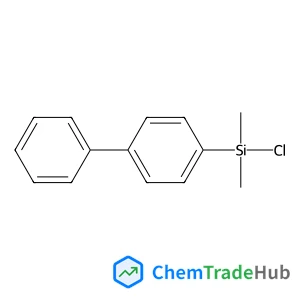
![Imidazo[1,2-c]pyrimidine structure](https://cnstatic.chemtradehub.com/structs/274/274-78-2-8b4c.webp "Imidazo[1,2-c]pyrimidine structure")
推荐供应商





免责声明
本页面提供的学术期刊信息仅供参考和研究使用。我们与任何期刊出版商均无关联,也不处理投稿事宜。如有投稿相关咨询,请直接联系相关期刊出版商。
如发现页面信息有误,请发送邮件至 support@chemtradehub.com 联系我们。我们将及时核实并处理您的问题。