












![[(1S,2S,3R,4S,7R,9S,10S,12R,15S)-4,12-Diacetyloxy-15-[(2R,3S)-3-benzamido-3-phenyl-2-(2,2,2-trichloroethoxycarbonyloxy)propanoyl]oxy-1,9-dihydroxy-10,14,17,17-tetramethyl-11-oxo-6-oxatetracyclo[11.3.1.03,10.04,7]heptadec-13-en-2-yl] benzoate structure](https://cnstatic.chemtradehub.com/structs/100/100431-55-8-7104.webp "[(1S,2S,3R,4S,7R,9S,10S,12R,15S)-4,12-Diacetyloxy-15-[(2R,3S)-3-benzamido-3-phenyl-2-(2,2,2-trichloroethoxycarbonyloxy)propanoyl]oxy-1,9-dihydroxy-10,14,17,17-tetramethyl-11-oxo-6-oxatetracyclo[11.3.1.03,10.04,7]heptadec-13-en-2-yl] benzoate structure")
Activation helix orientation of the estrogen receptor is mediated by receptor dimerization: evidence from molecular dynamics simulations
文献信息
发布日期
2015-04-16
DOI
10.1039/C5CP00327J
影响因子
3.676
作者
查看原文
摘要
In recent years, the nuclear receptors (NR) dynamics have been studied extensively by various approaches. However, the transition path of helix 12 (H12) to an agonist or an antagonist conformation and the exchange pathway between these states is not clear yet. A number of accelerated molecular dynamics (aMD) runs were performed on both an ERα monomer and a homodimer with a total length of 2.2 μs. We have been able to sample reasonably well the H12 conformational landscape to reproduce precisely both the agonist and the antagonist conformations, starting from an unfolded position, and to describe the transition path between them, even in the presence of an agonist ligand. These conformations were the most prevalent, suggesting that the extended H12 state is not likely to exist and that the natural ERα H12 position might exist in both the agonist and antagonist states. Remarkably, the H12 transition occurs and is regulated only in a dimer form and the proper agonist or antagonist H12 conformation can be achieved solely in one of the dimer subunits. These results clearly demonstrate that clusters of the two well-known H12 states exist by themselves in the protein free energy landscape, i.e. they are not constituted directly by the ligands, and dimerization favors the switch between them. Conversely, in a monomer, no transitions have been observed. Thus, the dimer formation helps the constitution of populations of discrete H12 conformational states and reshapes the conformational landscape. Further analyses have shown that these observations can be explained by specific interface and long range protein–protein interactions, resulting in conformational fluctuations in helices 5 and 11. Based on these results, a new ERα activation/deactivation mechanism and a sequence of binding events during receptor activity modulation have been suggested according to which ligands control the H12 conformation via alterations of the inter-dimer interactions. These findings agree with the HDX and fluorescence experiments and provide an explanation on a structural basis of these data, demonstrating that the dynamics of H12 are not altered greatly upon ligand binding and large fluctuations at the end of H11 are present.
相关文献
A kinetic and thermochemical database for organic sulfur and oxygen compounds
Caleb A. Class, Jorge Aguilera-Iparraguirre, William H. Green
2015-04-27
Paper
DOI: 10.1039/C4CP05631K
Promising gaseous and electrochemical hydrogen storage properties of porous Mg–Pd films under mild conditions
Gongbiao Xin, Huiping Yuan, Lijun Jiang, Shumao Wang, Xiaopeng Liu, Xingguo Li
2015-04-27
Paper
DOI: 10.1039/C5CP01897H
The biocompatibility and anti-biofouling properties of magnetic core–multishell Fe@C NWs–AAO nanocomposites
Eva Pellicer, Muhammad A. Zeeshan, Roman Grisch, Famin Qiu, Jordi Sort, Mahmut S. Sakar, Bradley J. Nelson, Salvador Pané
2015-04-22
Paper
DOI: 10.1039/C5CP01019E
Electrochemical behavior of thin-film Sm-doped ceria: insights from the point-contact configuration
Tae-Sik Oh, Sossina M. Haile
2015-04-21
Paper
DOI: 10.1039/C4CP05990E
One-pot synthesis and Nb4N5 surface modification of Nb4+ self-doped KNbO3 nanorods for enhanced visible-light-driven hydrogen production
Xia Wang, Zhentao Cui, Bing Liu, Minhua Cao
2015-04-27
Paper
DOI: 10.1039/C5CP01199J
A density functional theory insight towards the rational design of ionic liquids for SO2 capture
Gregorio García, Mert Atilhan, Santiago Aparicio
2015-04-20
Paper
DOI: 10.1039/C5CP00076A
Borazine: spin blocker or not?
Debojit Bhattacharya, Suranjan Shil, Anirban Misra, Laimutis Bytautas, Douglas J. Klein
2015-04-30
Paper
DOI: 10.1039/C5CP00801H
The first UV absorption band for indole is not due to two simultaneous orthogonal electronic transitions differing in dipole moment
2015-04-10
Paper
DOI: 10.1039/C5CP01170A
High-resolution probing heparan sulfate–antithrombin interaction on a single endothelial cell surface: single-molecule AFM studies
Cunlan Guo, Xian Fan, Hong Qiu, Wenyuan Xiao, Lianchun Wang, Bingqian Xu
2015-04-16
Paper
DOI: 10.1039/C5CP01305D
您可能还喜欢
化合物问答
如何储存1,2-环己二酮环乙缩醛(CAS号:4746-96-7)?
1,2-环己二酮环乙缩醛应储存在阴凉、干燥、通风良好的地方,避免阳光直射。建议使用密封容器保存,并保持环境温度在室温范围内,远离火源和热源。
4746-96-71,4-Dioxaspiro[4.5]d...
化合物问答
Ecopladib(CAS号:381683-92-7)的市场或研究趋势如何?
Ecopladib作为一种新型的药物,主要应用于治疗高胆固醇等疾病。目前,市场和研究趋势显示,Ecopladib因其独特的药理作用而受到关注。随着对心血管疾病治...
381683-92-7Ecopladib
化合物问答
2,3-Dimethyl-3H-imidazo[4,5-c]pyridine(CAS号:52538-09-7)通常如何合成?
2,3-二甲基-3H-咪唑[4,5-c]吡啶通常通过咪唑和2,3-二甲基吡啶的缩合反应合成。具体来说,将咪唑和2,3-二甲基吡啶在适当的溶剂中进行加热或加压反应...
52538-09-72,3-Dimethyl-3H-imid...
化合物问答
2,3,4,5-tetrahydro-1H-3-苯并氮杂环;盐酸盐(CAS号:17379-01-0)的市场或研究趋势如何?
该化合物在药物化学和有机合成中有一定的应用。近年来,随着对新型药物化合物的需求增加,该化合物的研究趋势主要集中在探索其生物活性,尤其是其在神经系统疾病治疗中的潜...
17379-01-02,3,4,5-Tetrahydro-1...
68-90-6(2-Ethyl-1-benzofura...
化合物问答
如何储存盐酸甘氨酸丁酯(CAS号:13048-99-2)?
盐酸甘氨酸丁酯应储存在阴凉、干燥、通风良好的地方,避免阳光直射和高温环境,温度应控制在25℃以下。储存容器应密封,避免与空气中的水分和酸性物质接触,以防发生水解...
13048-99-2Butyl glycinate hydr...
化合物问答
什么是2-Iodo-N,N-dimethylbenzamide(CAS号:54616-46-5)?
2-碘-N,N-二甲基苯胺是一种有机化合物,化学名为2-Iodo-N,N-dimethylbenzamide。其分子式为C<sub>9</sub>H<sub>1...
54616-46-52-Iodo-N,N-dimethylb...
16817-90-6N-Cyclohexylglycinam...
化合物问答
5-溴-2-(4H-1,2,4-三唑-4-基)吡啶(CAS号:959240-99-4)的市场或研究趋势如何?
随着医药、农药和新材料领域的发展,该化合物作为关键中间体的应用日益增多。特别是在药物合成中,由于其独特的化学性质,可以用于合成多种药物分子。未来的研究趋势可能集...
959240-99-45-Bromo-2-(4H-1,2,4-...
化合物问答
2,4-二溴-6-三氟甲基嘧啶(CAS号:785778-00-9)通常如何合成?
2,4-二溴-6-三氟甲基嘧啶通常通过溴化反应合成。首先,将6-三氟甲基嘧啶与溴化剂(如液溴)在适当的溶剂(如二氯甲烷、四氢呋喃)中反应,加入适当的催化剂(如四...
785778-00-92,4-Dibromo-6-(trifl...
来源期刊
Physical Chemistry Chemical Physics

CiteScore:
5.5
自引率:
10.3%
年发文量:
3036
Physical Chemistry Chemical Physics (PCCP) is an international journal co-owned by 19 physical chemistry and physics societies from around the world. This journal publishes original, cutting-edge research in physical chemistry, chemical physics and biophysical chemistry. To be suitable for publication in PCCP, articles must include significant innovation and/or insight into physical chemistry; this is the most important criterion that reviewers and Editors will judge against when evaluating submissions. The journal has a broad scope and welcomes contributions spanning experiment, theory, computation and data science. Topical coverage includes spectroscopy, dynamics, kinetics, statistical mechanics, thermodynamics, electrochemistry, catalysis, surface science, quantum mechanics, quantum computing and machine learning. Interdisciplinary research areas such as polymers and soft matter, materials, nanoscience, energy, surfaces/interfaces, and biophysical chemistry are welcomed if they demonstrate significant innovation and/or insight into physical chemistry. Joined experimental/theoretical studies are particularly appreciated when complementary and based on up-to-date approaches.
推荐化合物
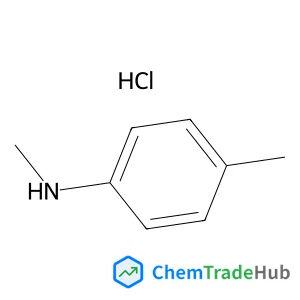
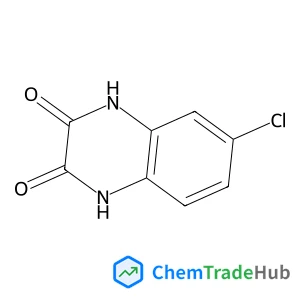
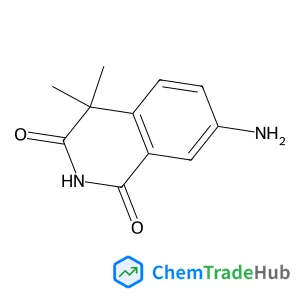
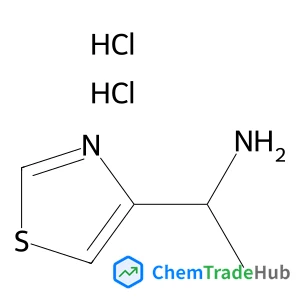
推荐供应商




免责声明
本页面提供的学术期刊信息仅供参考和研究使用。我们与任何期刊出版商均无关联,也不处理投稿事宜。如有投稿相关咨询,请直接联系相关期刊出版商。
如发现页面信息有误,请发送邮件至 support@chemtradehub.com 联系我们。我们将及时核实并处理您的问题。