


Borazine: spin blocker or not?
文献信息
发布日期
2015-04-30
DOI
10.1039/C5CP00801H
影响因子
3.676
作者
Debojit Bhattacharya, Suranjan Shil, Anirban Misra, Laimutis Bytautas, Douglas J. Klein
查看原文
摘要
The spin blocker capacity of borazine is investigated. Specifically, meta-B–B, meta-N–N and para-B–N connected borazines are used as spin-blocker couplers comprised of a pair of radicals: two iminonitroxides (IN); IN and tetrathiafulvalene radical cations (TTF); or two TTFs. Density functional theory (DFT) is used to elucidate the spin blocker capacity of the linkage-specific (meta or para) borazine-coupler and elaborate the role of the lowest unoccupied molecular orbital (LUMO) in magnetic–exchange. Furthermore, a qualitative relation between different magnetic aromaticity indices is made using both nuclear-independent chemical shift (NICS) and the harmonic oscillator model of aromaticity (HOMA). The NICS values are calculated at the centre of the borazine spacer fragment of these diradical species and then also at 0.5 Å increments of the virtual probe from this centre position up to an orthogonal distance of 2.0 Å from the centre. The HOMA values are calculated for the borazine ring fragment in these diradicals. Based on the HOMA and NICS values, it is evident that the borazine exhibits less aromatic character than benzene itself – due to the polar nature of B–N π-bonding. The LUMO mediated spin-exchange between the two consecutive singly occupied molecular orbitals (SOMOs) is explicitly discussed and confirmed to play a pivotal role. The parity of the coupler pathways, i.e. even or odd number of bonds along a selected pathway, between radical moieties is an important factor in predicting the nature and extent of magnetic exchange for these diradicals. Surprisingly, borazine does not always act as a spin-coupling blocker – rather in some cases the coupling is enhanced as compared to a homoatomic (carbon-based) benzene coupler.
期刊推荐
Atomization and Sprays
Colloid Journal
Critical Reviews in Solid State and Materials Sciences
Bioorganic & Medicinal Chemistry Letters
Heteroatom Chemistry
Acta Metallurgica Sinica-English Letters
Biocatalysis and Biotransformation
Journal of the Indian Institute of Science
Journal of Asian Natural Products Research
Medicinal Chemistry Research
相关文献
A kinetic and thermochemical database for organic sulfur and oxygen compounds
Caleb A. Class, Jorge Aguilera-Iparraguirre, William H. Green
2015-04-27
Paper
DOI: 10.1039/C4CP05631K
Activation and deformation of immobilized lipase on self-assembled monolayers with tailored wettability
Peng-Cheng Chen, Xiao-Jun Huang, Zhi-Kang Xu
2015-05-01
Paper
DOI: 10.1039/C5CP00802F
Electronic structure and photoelectron spectra of Bn with n = 26–29: an overview of structural characteristics and growth mechanism of boron clusters
Truong Ba Tai, Minh Tho Nguyen
2015-04-22
Paper
DOI: 10.1039/C5CP01851J
A low-cost and advanced SiOx–C composite with hierarchical structure as an anode material for lithium-ion batteries
Wenjun Wu, Jing Shi, Yunhui Liang, Fang Liu, Yi Peng, Huabin Yang
2015-04-24
Paper
DOI: 10.1039/C5CP01212K
Coordination properties of a metal chelator clioquinol to Zn2+ studied by static DFT and ab initio molecular dynamics
Luis Rodríguez-Santiago, Jorge Alí-Torres, Mariona Sodupe
2015-04-23
Paper
DOI: 10.1039/C5CP01615K
Simultaneous binding of a cyclophane and classical intercalators to DNA: observation of FRET-mediated white light emission
Krishnankutty S. Sanju, Prakash P. Neelakandan
2015-04-20
Paper
DOI: 10.1039/C5CP00208G
The first UV absorption band for indole is not due to two simultaneous orthogonal electronic transitions differing in dipole moment
2015-04-10
Paper
DOI: 10.1039/C5CP01170A
Perspectives on external electric fields in molecular simulation: progress, prospects and challenges
Niall J. English, Conor J. Waldron
2015-04-23
Perspective
DOI: 10.1039/C5CP00629E
Luminescence studies on SnO2 and SnO2:Eu nanocrystals grown by laser assisted flow deposition
N. F. Santos, J. Rodrigues, T. Holz, N. Ben Sedrine, A. Sena, A. J. Neves, F. M. Costa, T. Monteiro
2015-04-21
Paper
DOI: 10.1039/C4CP06114D
Correction: A rational computational study of surface defect-mediated stabilization of low-dimensional Pt nanostructures on TiN(100)
Young Joo Tak, Woosun Jang, Norina A. Richter, Aloysius Soon
2015-05-08
Correction
DOI: 10.1039/C5CP90064F
您可能还喜欢
化合物问答
如何储存1,2-环己二酮环乙缩醛(CAS号:4746-96-7)?
1,2-环己二酮环乙缩醛应储存在阴凉、干燥、通风良好的地方,避免阳光直射。建议使用密封容器保存,并保持环境温度在室温范围内,远离火源和热源。
4746-96-71,4-Dioxaspiro[4.5]d...
化合物问答
Ecopladib(CAS号:381683-92-7)的市场或研究趋势如何?
Ecopladib作为一种新型的药物,主要应用于治疗高胆固醇等疾病。目前,市场和研究趋势显示,Ecopladib因其独特的药理作用而受到关注。随着对心血管疾病治...
381683-92-7Ecopladib
化合物问答
2,3-Dimethyl-3H-imidazo[4,5-c]pyridine(CAS号:52538-09-7)通常如何合成?
2,3-二甲基-3H-咪唑[4,5-c]吡啶通常通过咪唑和2,3-二甲基吡啶的缩合反应合成。具体来说,将咪唑和2,3-二甲基吡啶在适当的溶剂中进行加热或加压反应...
52538-09-72,3-Dimethyl-3H-imid...
化合物问答
2,3,4,5-tetrahydro-1H-3-苯并氮杂环;盐酸盐(CAS号:17379-01-0)的市场或研究趋势如何?
该化合物在药物化学和有机合成中有一定的应用。近年来,随着对新型药物化合物的需求增加,该化合物的研究趋势主要集中在探索其生物活性,尤其是其在神经系统疾病治疗中的潜...
17379-01-02,3,4,5-Tetrahydro-1...
68-90-6(2-Ethyl-1-benzofura...
化合物问答
如何储存盐酸甘氨酸丁酯(CAS号:13048-99-2)?
盐酸甘氨酸丁酯应储存在阴凉、干燥、通风良好的地方,避免阳光直射和高温环境,温度应控制在25℃以下。储存容器应密封,避免与空气中的水分和酸性物质接触,以防发生水解...
13048-99-2Butyl glycinate hydr...
化合物问答
什么是2-Iodo-N,N-dimethylbenzamide(CAS号:54616-46-5)?
2-碘-N,N-二甲基苯胺是一种有机化合物,化学名为2-Iodo-N,N-dimethylbenzamide。其分子式为C<sub>9</sub>H<sub>1...
54616-46-52-Iodo-N,N-dimethylb...
16817-90-6N-Cyclohexylglycinam...
化合物问答
5-溴-2-(4H-1,2,4-三唑-4-基)吡啶(CAS号:959240-99-4)的市场或研究趋势如何?
随着医药、农药和新材料领域的发展,该化合物作为关键中间体的应用日益增多。特别是在药物合成中,由于其独特的化学性质,可以用于合成多种药物分子。未来的研究趋势可能集...
959240-99-45-Bromo-2-(4H-1,2,4-...
化合物问答
2,4-二溴-6-三氟甲基嘧啶(CAS号:785778-00-9)通常如何合成?
2,4-二溴-6-三氟甲基嘧啶通常通过溴化反应合成。首先,将6-三氟甲基嘧啶与溴化剂(如液溴)在适当的溶剂(如二氯甲烷、四氢呋喃)中反应,加入适当的催化剂(如四...
785778-00-92,4-Dibromo-6-(trifl...
来源期刊
Physical Chemistry Chemical Physics

CiteScore:
5.5
自引率:
10.3%
年发文量:
3036
Physical Chemistry Chemical Physics (PCCP) is an international journal co-owned by 19 physical chemistry and physics societies from around the world. This journal publishes original, cutting-edge research in physical chemistry, chemical physics and biophysical chemistry. To be suitable for publication in PCCP, articles must include significant innovation and/or insight into physical chemistry; this is the most important criterion that reviewers and Editors will judge against when evaluating submissions. The journal has a broad scope and welcomes contributions spanning experiment, theory, computation and data science. Topical coverage includes spectroscopy, dynamics, kinetics, statistical mechanics, thermodynamics, electrochemistry, catalysis, surface science, quantum mechanics, quantum computing and machine learning. Interdisciplinary research areas such as polymers and soft matter, materials, nanoscience, energy, surfaces/interfaces, and biophysical chemistry are welcomed if they demonstrate significant innovation and/or insight into physical chemistry. Joined experimental/theoretical studies are particularly appreciated when complementary and based on up-to-date approaches.
推荐化合物
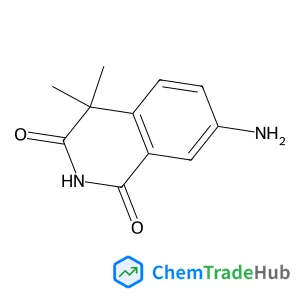
![1-[(4-Methylphenyl)sulfonyl]-3-(4,4,5,5-tetramethyl-1,3,2-dioxaborolan-2-yl)-1H-pyrrolo[2,3-b]pyridine-5-carbonitrile structure](https://cnstatic.chemtradehub.com/structs/143/1434747-57-5-fc0d.webp "1-[(4-Methylphenyl)sulfonyl]-3-(4,4,5,5-tetramethyl-1,3,2-dioxaborolan-2-yl)-1H-pyrrolo[2,3-b]pyridine-5-carbonitrile structure")
推荐供应商





免责声明
本页面提供的学术期刊信息仅供参考和研究使用。我们与任何期刊出版商均无关联,也不处理投稿事宜。如有投稿相关咨询,请直接联系相关期刊出版商。
如发现页面信息有误,请发送邮件至 support@chemtradehub.com 联系我们。我们将及时核实并处理您的问题。