


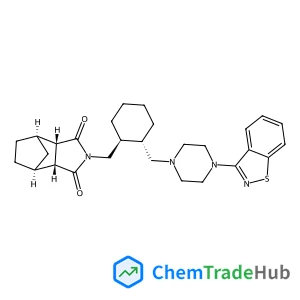
The preferred upconversion pathway for the red emission of lanthanide-doped upconverting nanoparticles, NaYF4:Yb3+,Er3+
文献信息
发布日期
2015-04-20
DOI
10.1039/C5CP01634G
影响因子
3.676
作者
Taeyoung Jung, Hong Li Jo, Sang Hwan Nam, Youngho Cho, Jongwoo Kim, Hyung Min Kim, Hohjai Lee, Kang Taek Lee
查看原文
摘要
Lanthanide-doped upconverting nanoparticles (UCNPs, NaYF4:Yb3+,Er3+) are well known for emitting visible photons upon absorption of two or more near-infrared (NIR) photons through energy transfer from the sensitizer (Yb3+) to the activator (Er3+). Of the visible emission bands (two green and one red band), it has been suggested that the red emission results from two competing upconversion pathways where the non-radiative relaxation occurs after the second energy transfer (pathway A, 4I15/2 → 4I11/2 → 4F7/2 → 2H11/2 → 4S3/2 → 4F9/2 → 4I15/2) or between the first and the second energy transfer (pathway B, 4I15/2 → 4I11/2 → 4I13/2 → 4F9/2 → 4I15/2). However, there has been no clear evidence or thorough analysis of the partitioning between the two pathways. We examined the spectra, power dependence, and time profiles of UCNP emission at either 980 nm or 488 nm excitation, to address which pathway is preferred. It turned out that the pathway B is predominant for the red emission over a wide range of excitation powers.
期刊推荐
Journal of the Indian Institute of Science
Biocatalysis and Biotransformation

Journal of Chemical Sciences
Atomization and Sprays
Bioorganic & Medicinal Chemistry

Critical Reviews in Solid State and Materials Sciences
Herald of the Russian Academy of Sciences

Topics in Catalysis
Acta Metallurgica Sinica-English Letters
Colloid Journal
相关文献
Construction of flexible photoelectrochemical solar cells based on ordered nanostructural BiOI/Bi2S3 heterojunction films
Huimin Jia, Weiwei He, Yan Lei, Lizhi Zhang, Zhi Zheng
2015-03-20
Paper
DOI: 10.1039/C4CP05749J
The biocompatibility and anti-biofouling properties of magnetic core–multishell Fe@C NWs–AAO nanocomposites
Eva Pellicer, Muhammad A. Zeeshan, Roman Grisch, Famin Qiu, Jordi Sort, Mahmut S. Sakar, Bradley J. Nelson, Salvador Pané
2015-04-22
Paper
DOI: 10.1039/C5CP01019E
Cleavage of hydrogen by activation at a single non-metal centre – towards new hydrogen storage materials
2015-04-20
Paper
DOI: 10.1039/C5CP00219B
High-resolution probing heparan sulfate–antithrombin interaction on a single endothelial cell surface: single-molecule AFM studies
Cunlan Guo, Xian Fan, Hong Qiu, Wenyuan Xiao, Lianchun Wang, Bingqian Xu
2015-04-16
Paper
DOI: 10.1039/C5CP01305D
A density functional theory insight towards the rational design of ionic liquids for SO2 capture
Gregorio García, Mert Atilhan, Santiago Aparicio
2015-04-20
Paper
DOI: 10.1039/C5CP00076A
Strong field laser control of photochemistry
Ignacio R. Solá, Jesús González-Vázquez, Rebeca de Nalda, Luis Bañares
2015-03-16
Perspective
DOI: 10.1039/C5CP00627A
Mesoscale simulation of the formation and dynamics of lipid-structured poly(ethylene oxide)-block-poly(methyl methacrylate) diblock copolymers
Dan Mu, Jian-Quan Li, Sheng-Yu Feng
2015-04-07
Paper
DOI: 10.1039/C5CP00561B
The first UV absorption band for indole is not due to two simultaneous orthogonal electronic transitions differing in dipole moment
2015-04-10
Paper
DOI: 10.1039/C5CP01170A
您可能还喜欢
化合物问答
如何储存1,2-环己二酮环乙缩醛(CAS号:4746-96-7)?
1,2-环己二酮环乙缩醛应储存在阴凉、干燥、通风良好的地方,避免阳光直射。建议使用密封容器保存,并保持环境温度在室温范围内,远离火源和热源。
4746-96-71,4-Dioxaspiro[4.5]d...
化合物问答
Ecopladib(CAS号:381683-92-7)的市场或研究趋势如何?
Ecopladib作为一种新型的药物,主要应用于治疗高胆固醇等疾病。目前,市场和研究趋势显示,Ecopladib因其独特的药理作用而受到关注。随着对心血管疾病治...
381683-92-7Ecopladib
化合物问答
2,3-Dimethyl-3H-imidazo[4,5-c]pyridine(CAS号:52538-09-7)通常如何合成?
2,3-二甲基-3H-咪唑[4,5-c]吡啶通常通过咪唑和2,3-二甲基吡啶的缩合反应合成。具体来说,将咪唑和2,3-二甲基吡啶在适当的溶剂中进行加热或加压反应...
52538-09-72,3-Dimethyl-3H-imid...
化合物问答
2,3,4,5-tetrahydro-1H-3-苯并氮杂环;盐酸盐(CAS号:17379-01-0)的市场或研究趋势如何?
该化合物在药物化学和有机合成中有一定的应用。近年来,随着对新型药物化合物的需求增加,该化合物的研究趋势主要集中在探索其生物活性,尤其是其在神经系统疾病治疗中的潜...
17379-01-02,3,4,5-Tetrahydro-1...
68-90-6(2-Ethyl-1-benzofura...
化合物问答
如何储存盐酸甘氨酸丁酯(CAS号:13048-99-2)?
盐酸甘氨酸丁酯应储存在阴凉、干燥、通风良好的地方,避免阳光直射和高温环境,温度应控制在25℃以下。储存容器应密封,避免与空气中的水分和酸性物质接触,以防发生水解...
13048-99-2Butyl glycinate hydr...
化合物问答
什么是2-Iodo-N,N-dimethylbenzamide(CAS号:54616-46-5)?
2-碘-N,N-二甲基苯胺是一种有机化合物,化学名为2-Iodo-N,N-dimethylbenzamide。其分子式为C<sub>9</sub>H<sub>1...
54616-46-52-Iodo-N,N-dimethylb...
16817-90-6N-Cyclohexylglycinam...
化合物问答
5-溴-2-(4H-1,2,4-三唑-4-基)吡啶(CAS号:959240-99-4)的市场或研究趋势如何?
随着医药、农药和新材料领域的发展,该化合物作为关键中间体的应用日益增多。特别是在药物合成中,由于其独特的化学性质,可以用于合成多种药物分子。未来的研究趋势可能集...
959240-99-45-Bromo-2-(4H-1,2,4-...
化合物问答
2,4-二溴-6-三氟甲基嘧啶(CAS号:785778-00-9)通常如何合成?
2,4-二溴-6-三氟甲基嘧啶通常通过溴化反应合成。首先,将6-三氟甲基嘧啶与溴化剂(如液溴)在适当的溶剂(如二氯甲烷、四氢呋喃)中反应,加入适当的催化剂(如四...
785778-00-92,4-Dibromo-6-(trifl...
来源期刊
Physical Chemistry Chemical Physics

CiteScore:
5.5
自引率:
10.3%
年发文量:
3036
Physical Chemistry Chemical Physics (PCCP) is an international journal co-owned by 19 physical chemistry and physics societies from around the world. This journal publishes original, cutting-edge research in physical chemistry, chemical physics and biophysical chemistry. To be suitable for publication in PCCP, articles must include significant innovation and/or insight into physical chemistry; this is the most important criterion that reviewers and Editors will judge against when evaluating submissions. The journal has a broad scope and welcomes contributions spanning experiment, theory, computation and data science. Topical coverage includes spectroscopy, dynamics, kinetics, statistical mechanics, thermodynamics, electrochemistry, catalysis, surface science, quantum mechanics, quantum computing and machine learning. Interdisciplinary research areas such as polymers and soft matter, materials, nanoscience, energy, surfaces/interfaces, and biophysical chemistry are welcomed if they demonstrate significant innovation and/or insight into physical chemistry. Joined experimental/theoretical studies are particularly appreciated when complementary and based on up-to-date approaches.
推荐化合物
推荐供应商





免责声明
本页面提供的学术期刊信息仅供参考和研究使用。我们与任何期刊出版商均无关联,也不处理投稿事宜。如有投稿相关咨询,请直接联系相关期刊出版商。
如发现页面信息有误,请发送邮件至 support@chemtradehub.com 联系我们。我们将及时核实并处理您的问题。