






Structural and relative energy assessments of DFT functionals and the MP2 method to describe the gas phase methylation of nitronates: [R1R2CNO2]− + CH3I
文献信息
发布日期
2016-05-26
DOI
10.1039/C5CP07833D
影响因子
3.676
作者
Ayyaz Mahmood, Ricardo L. Longo
查看原文
摘要
The performances of 26 combinations of density-functional theory (DFT) functionals or second-order Møller–Plesset (MP2) methods and basis sets were evaluated for the calculation of the activation energy (Δ‡E), the energy available (ΔRCE) to the reactant complex, the energy of reaction (ΔrE), and rotational constants of the main structures involved in the methylation reactions of nitronates, [R1R2CNO2]− + CH3I, in the gas phase, where R1 = R2 = H, R1 = H and R2 = CH3, R1 = R2 = CH3, and R1 + R2 = c-(CH2)2. The separated reactants and products, the reactant and product complexes, and the transition states were considered, leading to 43 data points for the statistical analysis for each method under assessment. Five statistical quantifiers: the mean signed error (MSE), the mean unsigned error (MUE), the percent mean relative error (% MRE), best and worse (BW), and the confidence interval (CI) were used to assess the performance of methods relative to the CCSD(T)/CBS//MP2/aug-cc-pVTZ reference method. The DFT functionals included the widely applied B3LYP and M06-2X global-hybrids and the recently available DSD-PBEP86, DSD-PBEP86-D3BJ and PWPB95 double-hybrids. The basis sets involved an effective core potential (ECP) for describing the inner electrons of iodine such as LANL2DZdp and aug-cc-pVXZ-PP (X = D, T, and Q), and all-electron basis sets for the remaining atoms. The energy available to the reactant complex is described quite well by all methods, however, only the MP2/aug-cc-pVTZ-PP method provided values within 2 kcal mol−1 (8.4 kJ mol−1) from the reference method for Δ‡E and ΔrE. Amongst the DFT methods, the global-hybrid M06-2X functional produced the best overall results including BW and CI. Notice that all methods yielded the smallest Δ‡E for the C-methylation pathway. The rotational constants of the reactant complexes and the transition state structures were compared, for which the MP2 method and the M06-2X functional provided the most accurate results. Thus, unlike previous assessments of DFT functionals for describing SN2 reactions, M06-2X was the most accurate for these methylation reactions of nitronates, followed closely by the DSD-PBEP86 double-hybrid functional. The inclusion of dispersion effects with DSD-PBEP86-D3BJ does not improve the accuracy. Whereas MP2/aug-cc-pVTZ was the most accurate and nearly provided results with chemical accuracy.
相关文献
Shape controlled growth of gold nanoparticles by a solution synthesis
Ying Chen, Xin Gu, Cha-Geng Nie, Zhi-Yuan Jiang, Zhao-Xiong Xie, Chang-Jian Lin
2005-07-13
Communication
DOI: 10.1039/B504911C
New synthesis method for nickel phosphide hydrotreating catalysts
Shaofeng Yang, Roel Prins
2005-07-27
Communication
DOI: 10.1039/B507940C
The synthesis of enantiomerically pure 4-substituted [2.2]paracyclophane derivatives by sulfoxide–metal exchange
Peter B. Hitchcock, Gareth J. Rowlands, Rakesh Parmar
2005-07-25
Communication
DOI: 10.1039/B507394D
Photostability of a highly luminescent europium β-diketonate complex in imidazolium ionic liquids
Peter Nockemann, Eva Beurer, Kris Driesen, Rik Van Deun, Kristof Van Hecke, Luc Van Meervelt, Koen Binnemans
2005-08-03
Communication
DOI: 10.1039/B506915G
Total synthesis of buergerinin F via effective construction of the asymmetric quaternary carbons using an enantioselective aldol reaction
Isamu Shiina, Yo-ichi Kawakita, Ryoutarou Ibuka, Kazutoshi Yokoyama, Yu-suke Yamai
2005-07-14
Communication
DOI: 10.1039/B507401K
Demethylation of the [Me3Sn(PhN2O2)]4 tetramer into dimeric [Me2Sn(PhN2O2)2]2: a thermally induced methyl-transfer between supramolecules‡
Andrea Deák, Gábor Tárkányi
2005-07-15
Communication
DOI: 10.1039/B506728F
2-Phenallyl as a versatile protecting group for the asymmetric one-pot three-component synthesis of propargylamines
Nina Gommermann, Paul Knochel
2005-07-26
Communication
DOI: 10.1039/B507810E
Immobilization of ionic liquid with polyelectrolyte as carrier
Yanfei Shen, Yuanjian Zhang, Qixian Zhang, Tianyan You, Ari Ivaska
2005-07-20
Communication
DOI: 10.1039/B507688A
您可能还喜欢
化合物问答
4-[[6-(3-苯基苯基)-7H-嘌呤-2-基]氨基]苯磺酰胺(CAS号:2079895-42-2)适用哪些法规指南?
该化合物需遵循REACH法规以确保其安全使用和管理。同时,根据其潜在的生物降解性和毒性,也需要符合GHS分类中的相应要求。此外,若用于医药或食品相关领域,则还需...
2079895-42-24-{[6-(3-Biphenylyl)...
化合物问答
反式-度骨化醇(CAS号:74007-20-8)的物理化学性质是什么?
反式-度骨化醇是一种脂溶性维生素D3的衍生物,呈无色或白色结晶性粉末,不溶于水,溶于乙醇、丙酮、氯仿等有机溶剂。其分子式为C28H44O,分子量为404.65。...
74007-20-8trans-Doxercalcifero...
化合物问答
莲花掌苷(CAS号:59282-56-3)的市场或研究趋势如何?
莲花掌苷作为一种天然产物,近年来在抗炎、抗癌等生物活性研究方面显示出一定的潜力,因此市场需求逐渐增长。市场动态方面,随着天然产物开发的深入,预计该化合物的研究会...
59282-56-3Lindleyin
化合物问答
2-溴-6-(吡咯烷-1-基)吡啶-4-硼酸频那醇酯(CAS号:1150271-64-9)应用于哪些行业?
2-溴-6-(吡咯烷-1-基)吡啶-4-硼酸频那醇酯在医药领域有着广泛的应用,它可以用作药物合成中的中间体。此外,它还可以用于有机合成,特别是在构建复杂杂环化合...
1150271-64-92-Bromo-6-(1-pyrroli...
化合物问答
什么是methyl 2-(4-bromophenyl)-3-methylbutanoate(CAS号:1061284-70-5)?
methyl 2-(4-溴苯基)-3-甲基丁酸甲酯是一种化学物质,分子式为C12H13BrO2。它是一种有机化合物,具有一定的挥发性和易燃性。
1061284-70-52-(4-Bromo-phenyl)-3...
化合物问答
CJC1-295(CAS号:863288-34-0)的物理化学性质是什么?
CJC1-295是一种具有复杂肽链结构的化合物,其分子量约为1875 Da。该化合物在水中具有一定的溶解性,但在有机溶剂中的溶解性不佳。它是一种反应活性化合物,...
863288-34-0L-tyrosyl-D-alanyl-L...
化合物问答
三正丁基锍碘(CAS号:18146-62-8)的市场或研究趋势如何?
三正丁基锍碘作为一种重要的有机硫化合物,主要用于有机合成中作为亲电试剂。近年来,由于其在合成中的广泛应用,市场对其需求持续增长。此外,随着绿色化学的发展,对其替...
18146-62-8Tributylsulfonium io...
化合物问答
雌二醇-[13C3]同位素内标(CAS号:1261254-48-1)通常如何合成?
雌二醇-[13C3]同位素内标通常通过在雌二醇分子中引入[13C3]同位素来合成。常见的方法是通过化学标记反应,如与[13C3]标记的甲基溴化物进行亲核取代反应...
1261254-48-117beta-Estradiol-2,3...
化合物问答
N1-(2-吡啶甲基)-N2-(2-甲基-1-萘基)草酰胺(CAS号:2611225-93-3)的物理化学性质是什么?
N1-(2-吡啶甲基)-N2-(2-甲基-1-萘基)草酰胺为固体化合物,具有良好的结晶形态,分子量为340.34 g/mol。该化合物在水中的溶解度较低,但在有...
2611225-93-3N-(2-Methyl-1-naphth...
化合物问答
如何处理含有十五碳烯酸甲酯(顺-10)(C15:1)标准品(CAS号:90176-52-6)的废料?
含有十五碳烯酸甲酯(顺-10)(C15:1)标准品的废料应首先进行适当收集和储存,避免与其他化学品混合。然后,可采用焚烧或交由专业废物处理公司进行处理。处理过程...
90176-52-6(Z)-10-Pentadecenoic...
来源期刊
Physical Chemistry Chemical Physics

CiteScore:
5.5
自引率:
10.3%
年发文量:
3036
Physical Chemistry Chemical Physics (PCCP) is an international journal co-owned by 19 physical chemistry and physics societies from around the world. This journal publishes original, cutting-edge research in physical chemistry, chemical physics and biophysical chemistry. To be suitable for publication in PCCP, articles must include significant innovation and/or insight into physical chemistry; this is the most important criterion that reviewers and Editors will judge against when evaluating submissions. The journal has a broad scope and welcomes contributions spanning experiment, theory, computation and data science. Topical coverage includes spectroscopy, dynamics, kinetics, statistical mechanics, thermodynamics, electrochemistry, catalysis, surface science, quantum mechanics, quantum computing and machine learning. Interdisciplinary research areas such as polymers and soft matter, materials, nanoscience, energy, surfaces/interfaces, and biophysical chemistry are welcomed if they demonstrate significant innovation and/or insight into physical chemistry. Joined experimental/theoretical studies are particularly appreciated when complementary and based on up-to-date approaches.
推荐化合物
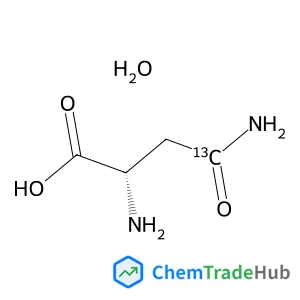
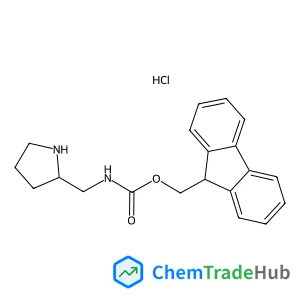
(S)-(9H-Fluoren-9-yl)methyl (pyrrolidin-2-ylmethyl)carbamate hydrochloride
CAS号:
1217813-15-4
分子式:
C20H23ClN2O2
![2-Methyl-2-propanyl {3-[4-(4,4,5,5-tetramethyl-1,3,2-dioxaborolan-2-yl)phenyl]-3-oxetanyl}carbamate structure](https://cnstatic.chemtradehub.com/structs/127/1279090-25-3-1b84.webp "2-Methyl-2-propanyl {3-[4-(4,4,5,5-tetramethyl-1,3,2-dioxaborolan-2-yl)phenyl]-3-oxetanyl}carbamate structure")
![tert-Butyl 6-chloro-4-oxospiro[chroman-2,4'-piperidine]-1'-carboxylate structure](https://cnstatic.chemtradehub.com/structs/101/1011482-37-3-88a5.webp "tert-Butyl 6-chloro-4-oxospiro[chroman-2,4'-piperidine]-1'-carboxylate structure")
tert-Butyl 6-chloro-4-oxospiro[chroman-2,4'-piperidine]-1'-carboxylate
CAS号:
1011482-37-3
分子式:
C18H22ClNO4
推荐供应商





免责声明
本页面提供的学术期刊信息仅供参考和研究使用。我们与任何期刊出版商均无关联,也不处理投稿事宜。如有投稿相关咨询,请直接联系相关期刊出版商。
如发现页面信息有误,请发送邮件至 support@chemtradehub.com 联系我们。我们将及时核实并处理您的问题。