


Engineering of parallel plasmonic–photonic interactions for on-chip refractive index sensors
文献信息
发布日期
2015-06-15
DOI
10.1039/C5NR03159A
影响因子
7.79
作者
Linhan Lin, Yuebing Zheng
查看原文
摘要
Ultra-narrow linewidth in the extinction spectrum of noble metal nanoparticle arrays induced by the lattice plasmon resonances (LPRs) is of great significance for applications in plasmonic lasers and plasmonic sensors. However, the challenge of sustaining LPRs in an asymmetric environment greatly restricts their practical applications, especially for high-performance on-chip plasmonic sensors. Herein, we fully study the parallel plasmonic–photonic interactions in both the Au nanodisk arrays (NDAs) and the core/shell SiO2/Au nanocylinder arrays (NCAs). Different from the dipolar interactions in the conventionally studied orthogonal coupling, the horizontal propagating electric field introduces the out-of-plane “hot spots” and results in electric field delocalization. Through controlling the aspect ratio to manipulate the “hot spot” distributions of the localized surface plasmon resonances (LSPRs) in the NCAs, we demonstrate a high-performance refractive index sensor with a wide dynamic range of refractive indexes ranging from 1.0 to 1.5. Both high figure of merit (FOM) and high signal-to-noise ratio (SNR) can be maintained under these detectable refractive indices. Furthermore, the electromagnetic field distributions confirm that the high FOM in the wide dynamic range is attributed to the parallel coupling between the superstrate diffraction orders and the height-induced LSPR modes. Our study on the near-field “hot-spot” engineering and far-field parallel coupling paves the way towards improved understanding of the parallel LPRs and the design of high-performance on-chip refractive index sensors.
期刊推荐

NDT & E International

Atomization and Sprays

Acta Metallurgica Sinica-English Letters

Critical Reviews in Solid State and Materials Sciences

Topics in Catalysis
Bioorganic & Medicinal Chemistry

Herald of the Russian Academy of Sciences

Biocatalysis and Biotransformation
Polycyclic Aromatic Compounds
Journal of Asian Natural Products Research
相关文献
Characterization of a shallow-bound 0g+ valence state of I2 using emission from the D 0u+(3P2) and F′ 0u+(1D2) ion-pair states populated by amplified spontaneous emission
Trevor Ridley, Kenneth P. Lawley, Robert J. Donovan, Vadim A. Alekseev
2007-09-26
Paper
DOI: 10.1039/B710924E
Influence of the d orbital occupation on the nature and strength of copper cation–π interactions: threshold collision-induced dissociation and theoretical studies
Chunhai Ruan, Zhibo Yang, M. T. Rodgers
2007-09-25
Paper
DOI: 10.1039/B709820K
Intersystem crossing driven by vibronic spin–orbit coupling: a case study on psoralen
Jörg Tatchen, Natalie Gilka, Christel M. Marian
2007-09-03
Paper
DOI: 10.1039/B706410A
Fully state-selected VMI study of the near-threshold photodissociation of NO2: variation of the angular anisotropy parameter
S. J. Matthews, S. Willitsch, T. P. Softley
2007-09-06
Paper
DOI: 10.1039/B706428D
Dependence of the nascent vibrational distribution of NO(v) on the photolysis wavelength of NO2 in the range λ = 266–327 nm measured by time-resolved Fourier transform infrared emission
C. Brooks, G. Hancock, M. Saunders
2007-08-03
Paper
DOI: 10.1039/B710594K
Single-wall carbon nanotubes and peapods investigated by EPR
B. Corzilius, K.-P. Dinse, K. Hata
2007-07-24
Perspective
DOI: 10.1039/B707936M
您可能还喜欢
化合物问答
4-[4-三氟甲基苯基]恶唑(CAS号:1126636-40-5)通常如何合成?
4-[4-三氟甲基苯基]恶唑通常通过将4-三氟甲基苯酚与异硫氰酸苯酯在有机溶剂中进行酯化反应合成。该反应可在无水条件下,使用适当的催化剂,如四丁基氢氧化铵,以提...
1126636-40-54-(4-(Trifluoromethy...
59729-32-71-[3-(Dimethylamino)...
化合物问答
RockPhos Pd G3(CAS号:2009020-38-4)通常如何合成?
RockPhos Pd G3 通常通过钯催化偶联反应合成,使用配体 (2'-Amino-2-biphenylyl)(methanesulfonato-kappa...
2009020-38-4(2'-Amino-2-biphenyl...
化合物问答
1-哌啶甲酰胺(CAS号:2158-03-4)的市场或研究趋势如何?
1-哌啶甲酰胺作为有机合成中的重要中间体,其市场需求主要受医药、农药、染料等行业推动。近年来,随着新药开发和绿色化学的发展,该化合物的研究趋势集中在开发更高效、...
2158-03-41-Piperidinecarboxam...
化合物问答
2-(二苯基膦基)乙胺(CAS号:4848-43-5)适用哪些法规指南?
2-(二苯基膦基)乙胺适用于多种法规指南,包括但不限于《全球化学品统一分类和标签制度》(GHS),欧盟《化学品注册、评估、授权和限制》法规(REACH),以及美...
4848-43-52-(Diphenylphosphino...
化合物问答
如何储存间苯二甲酸二烯丙酯(CAS号:1087-21-4)?
间苯二甲酸二烯丙酯应储存在阴凉、干燥、通风良好的地方,远离火源和热源。储存容器应密封,避免光照和高温。储存温度应控制在25℃以下,相对湿度应低于80%。避免与其...
1087-21-4Diallyl isophthalate
化合物问答
什么是间甲苯异硫代异氰酸酯(CAS号:621-30-7)?
间甲苯异硫代异氰酸酯是一种有机化合物,分子式为C7H7NO2S,具有刺激性气味。它是一种重要的有机合成中间体,在合成其他化合物时广泛应用。
621-30-71-Isothiocyanato-3-m...
化合物问答
在合成中是否有N-Boc-D-苯丙氨醇(CAS号:106454-69-7)的替代品?
在合成中,可以考虑使用N-Cbz-D-苯丙氨醇或N-Fmoc-D-苯丙氨醇作为替代品。这些化合物同样具有保护氨基的功能,且在合成过程中表现出良好的反应性能。
106454-69-72-Methyl-2-propanyl ...
化合物问答
3-羟甲基-2-氧异丙基吡啶(CAS号:954240-50-7)的主要用途是什么?
3-羟甲基-2-氧异丙基吡啶主要用于有机合成领域,可以作为合成其他药物、农药或精细化学品的中间体。此外,它还可能在实验室研究中作为特定反应的前体或溶剂。
954240-50-7(2-Isopropoxy-3-pyri...
化合物问答
6-氨基-9-甲基嘌呤(CAS号:700-00-5)应用于哪些行业?
6-氨基-9-甲基嘌呤目前主要应用于医药行业,作为某些药物的中间体。此外,它还可能用于聚合物、传感器和半导体的某些领域,作为功能性单体或掺杂剂。
700-00-59-Methyl-9H-purin-6-...
来源期刊
Nanoscale
CiteScore:
12.1
自引率:
5.2%
年发文量:
1681
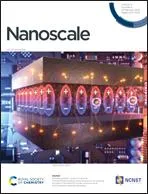
Nanoscale is a high-impact international journal, publishing high-quality research across nanoscience and nanotechnology. Nanoscale publishes a full mix of research articles on experimental and theoretical work, including reviews, communications, and full papers. Highly interdisciplinary, Nanoscale appeals to scientists, researchers and professionals interested in nanoscience and nanotechnology, quantum materials and quantum technology, including the areas of physics, chemistry, biology, medicine, materials, energy/environment, information technology, detection science, healthcare and drug discovery, and electronics. For publication in Nanoscale, papers must report high-quality reproducible new work that will be of significant general interest to the journal's wide international readership. Nanoscale is a collaborative venture between the Royal Society of Chemistry Publishing and a leading nanoscience research centre, the National Center for Nanoscience and Technology (NCNST) in Beijing, China. image block The journal publishes weekly issues, complementing and building on the nano content already published across the Royal Society of Chemistry Publishing journal portfolio. Since its launch in late 2009, Nanoscale has established itself as a platform for high-quality, cross-community research that bridges the various disciplines involved with nanoscience and nanotechnology, publishing important research from leading international research groups.
推荐化合物
推荐供应商




免责声明
本页面提供的学术期刊信息仅供参考和研究使用。我们与任何期刊出版商均无关联,也不处理投稿事宜。如有投稿相关咨询,请直接联系相关期刊出版商。
如发现页面信息有误,请发送邮件至 support@chemtradehub.com 联系我们。我们将及时核实并处理您的问题。