![[2',6'-bis(propan-2-yloxy)-[1,1'-biphenyl]-3-yl]dicyclohexylphosphane structure](https://cnstatic.chemtradehub.com/structs/787/787618-22-8-dda2.webp "[2',6'-bis(propan-2-yloxy)-[1,1'-biphenyl]-3-yl]dicyclohexylphosphane structure")
[2',6'-bis(propan-2-yloxy)-[1,1'-biphenyl]-3-yl]dicyclohexylphosphane
CAS号:
787618-22-8
分子式:
C30H43O2P
John Moraes, Ioana-Maria Simionca, Hedi Ketari, Harm-Anton Klok
Controlled radical polymerization techniques such as RAFT allow fine control over polymer molecular weight and architecture. These techniques, however, do not eliminate compositional drifts in copolymerizations, which are the consequence of differences in monomer reactivity and can lead to compositionally non-uniform polymers that may hamper establishing structure–property relationships. One way to avoid compositional drifts is to use controlled monomer feeding techniques. Using the N-(2-hydroxypropyl)methacrylamide/N-acryloxysuccinimide (HMPA/NAS) comonomer pair for a first proof-of-concept, this manuscript reports an alternative approach to avoid compositional drifts and generate uniform copolymers by judicious selection of the initial monomer feed composition and controlling monomer conversion. Screening the copolymerization kinetics and copolymer composition of HPMA/NAS copolymers generated under various reaction conditions revealed that RAFT copolymerization of HPMA and NAS in DMF with an initial feed of 30 mol% NAS only resulted in a minimal compositional drift. While these reaction conditions are specific to the NAS/HPMA comonomer pair studied here, this approach may be applied to other comonomer pairs as well. The reactive NAS groups in a poly(HPMA-stat-NAS) copolymer obtained via this strategy could be post-modified with near-quantitative conversion with a amine-functionalized crown ether, which illustrates the versatility of this protocol to generate uniform reactive scaffolds for further post-polymerization modification.
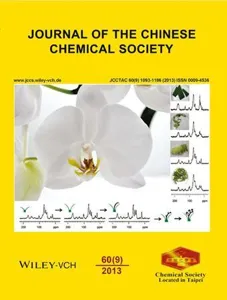
Journal of the Chinese Chemical Society
Chemistry of Natural Compounds
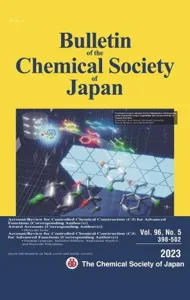
Bulletin of the Chemical Society of Japan
Cement and Concrete Research

Anti-Corrosion Methods and Materials

Australian Journal of Chemistry
Advances in Colloid and Interface Science

Biopolymers
Accounts of Chemical Research
Journal of the American Chemical Society
Tomasz Wocjan, Jan Krieger, Oleg Krichevsky, Jörg Langowski
DOI: 10.1039/B911857H
Po-Hsun Lin, Shau-Jhu Tong, Selva Roselin Louis, Yung Chang
DOI: 10.1039/B907763D
F. Lankaš, O. Gonzalez, L. M. Heffler, G. Stoll, M. Moakher, J. H. Maddocks
DOI: 10.1039/B919565N
William C. Chueh, Sossina M. Haile
DOI: 10.1039/B910903J
Ilya V. Yudanov, Notker Rösch
DOI: 10.1039/B916855A
Zhi-Jian Wu, Zhen-Jun Si, Xiao-Juan Liu, Hong-Jie Zhang
DOI: 10.1039/B912243E
Sergei Y. Ponomarev, Vakhtang Putkaradze, Thomas C. Bishop
DOI: 10.1039/B910937B
Peter Linton, Juan-Carlos Hernandez-Garrido, Paul A. Midgley, Håkan Wennerström, Viveka Alfredsson
DOI: 10.1039/B913755F
4-[4-三氟甲基苯基]恶唑通常通过将4-三氟甲基苯酚与异硫氰酸苯酯在有机溶剂中进行酯化反应合成。该反应可在无水条件下,使用适当的催化剂,如四丁基氢氧化铵,以提...
RockPhos Pd G3 通常通过钯催化偶联反应合成,使用配体 (2'-Amino-2-biphenylyl)(methanesulfonato-kappa...
1-哌啶甲酰胺作为有机合成中的重要中间体,其市场需求主要受医药、农药、染料等行业推动。近年来,随着新药开发和绿色化学的发展,该化合物的研究趋势集中在开发更高效、...
2-(二苯基膦基)乙胺适用于多种法规指南,包括但不限于《全球化学品统一分类和标签制度》(GHS),欧盟《化学品注册、评估、授权和限制》法规(REACH),以及美...
间苯二甲酸二烯丙酯应储存在阴凉、干燥、通风良好的地方,远离火源和热源。储存容器应密封,避免光照和高温。储存温度应控制在25℃以下,相对湿度应低于80%。避免与其...
间甲苯异硫代异氰酸酯是一种有机化合物,分子式为C7H7NO2S,具有刺激性气味。它是一种重要的有机合成中间体,在合成其他化合物时广泛应用。
在合成中,可以考虑使用N-Cbz-D-苯丙氨醇或N-Fmoc-D-苯丙氨醇作为替代品。这些化合物同样具有保护氨基的功能,且在合成过程中表现出良好的反应性能。
3-羟甲基-2-氧异丙基吡啶主要用于有机合成领域,可以作为合成其他药物、农药或精细化学品的中间体。此外,它还可能在实验室研究中作为特定反应的前体或溶剂。
6-氨基-9-甲基嘌呤目前主要应用于医药行业,作为某些药物的中间体。此外,它还可能用于聚合物、传感器和半导体的某些领域,作为功能性单体或掺杂剂。

Polymer Chemistry welcomes submissions in all areas of polymer science that have a strong focus on macromolecular chemistry. Manuscripts may cover a broad range of fields, yet no direct application focus is required.