


![(2E)-3-(3-Chlorophenyl)-N-{2-[4-(methylsulfonyl)-1-piperazinyl]-2-oxoethyl}acrylamide structure](https://cnstatic.chemtradehub.com/structs/250/2505001-54-5-c1e9.webp "(2E)-3-(3-Chlorophenyl)-N-{2-[4-(methylsulfonyl)-1-piperazinyl]-2-oxoethyl}acrylamide structure")
Dual stimuli-responsive oligo(ethylene glycol)-based microgels: insight into the role of internal structure in volume phase transitions and loading of magnetic nanoparticles to design stable thermoresponsive hybrid microgels
文献信息
发布日期
2015-10-22
DOI
10.1039/C5PY01078K
影响因子
5.582
作者
Elise Deniau-Lejeune, Valérie Alard, Jean-François Tranchant, Laurent Billon, Maud Save
查看原文
摘要
Multi-responsive biocompatible microgels with long term stability were synthesized by precipitation copolymerization of oligo(ethylene glycol) methyl ether methacrylate (OEGMA), di(ethylene glycol) methyl ether methacrylate (MEO2MA), methacrylic acid (MAA) and crosslinkers in aqueous dispersed media. Different crosslinkers, i.e. ethylene glycol dimethacrylate (EGDMA), oligo(ethylene glycol) diacrylate (OEGDA) or N,N-methylenebisacrylamide (MBA) were used for the synthesis of the microgels. The present work investigates for the first time how the inner structure of the biocompatible P(MEO2MA-co-OEGMA-co-MAA) microgels impacts their swelling-to-collapse transition in response to both temperature and pH. The EGDMA-crosslinked microgels obviously differ from the OEGDA- and MBA-crosslinked microgels. The OEGDA-crosslinked P(MEO2MA-co-OEGMA-co-MAA) microgels are ideal candidates to prepare robust thermoresponsive hybrid magnetic microgels by a straightforward method involving simple loading of pre-formed magnetic nanoparticles (NP) in the absence of NP release. The crosslinker distribution is at the origin of differences in the distribution of iron oxide nanoparticles. The homogeneous distribution of both MAA units and the OEGDA crosslinker in the P(MEO2MA-co-OEGMA-co-MAA) microgels ensured a sharp VPTT of microgels over a wide range of pH values (from pH 4 to 9) and the retention of the thermoresponsiveness of the corresponding hybrid microgels for the different contents of magnetic nanoparticles (from 7 to 33 wt% of γ-Fe2O3versus polymer). Turbidimetry measurements highlighted the unique stability of the hybrid microgels over several hours even for the highest content of iron oxide nanoparticles.
期刊推荐
Chemical Communications
Russian Journal of Bioorganic Chemistry
Russian Journal of General Chemistry
Journal of Saudi Chemical Society
Russian Journal of Applied Chemistry

Acta Materialia
Journal of Natural Medicines
Russian Journal of Coordination Chemistry
Organic Process Research & Development
Russian Chemical Bulletin
相关文献
Ion speciation of lithium hexafluorophosphate in dimethyl carbonate solutions: an infrared spectroscopy study
Kristen D. Fulfer, Daniel G. Kuroda
2018-08-13
Paper
DOI: 10.1039/C8CP03315C
Self-adaptive multiscaling algorithm for efficient simulations of many-protein systems in crowded conditions
2018-10-29
Paper
DOI: 10.1039/C8CP05517C
A proton transfer network that generates deprotonated tyrosine is a key to producing reactive oxygen species in phototoxic KillerRed protein
Wook Lee, Inkoo Kim, Young Min Rhee
2018-08-03
Paper
DOI: 10.1039/C8CP02939C
Operando investigations of lithiation and delithiation processes in a BiVO4 anode material
Amund Ruud, Jonas Sottmann, Ponniah Vajeeston, Helmer Fjellvåg
2018-11-09
Paper
DOI: 10.1039/C8CP05330H
Structural analysis of the initial lithiation of NiO thin film electrodes
Guennadi Evmenenko, Timothy T. Fister, Fernando C. Castro, Byeongdu Lee, D. Bruce Buchholz, Vinayak P. Dravid, Paul Fenter
2019-04-05
Paper
DOI: 10.1039/C9CP01527B
The evolution in graphitic surface wettability with first-principles quantum simulations: the counterintuitive role of water
Jin-You Lu, Chia-Yun Lai, Ibraheem Almansoori
2018-08-08
Paper
DOI: 10.1039/C8CP03633K
Excited state dynamics study of the self-trapped exciton formation in silicon nanosheets
Naeem Ullah, Shunwei Chen
2018-10-29
Paper
DOI: 10.1039/C8CP04806A
Ab initio paramagnetic NMR shifts via point-dipole approximation in a large magnetic-anisotropy Co(ii) complex
Jiří Mareš, Juha Vaara
2018-08-20
Paper
DOI: 10.1039/C8CP04123G
Understanding the influence of disorder on the exciton dynamics and energy transfer in Zn-phthalocyanine H-aggregates
Nicolò Azzaroli, Justin R. Caram, Timothy S. Sinclair, Lorenzo Cupellini, Sandro Jurinovich, Benedetta Mennucci, Gloria Zanotti, Anna Maria Paoletti, Giovanna Pennesi
2018-08-03
Paper
DOI: 10.1039/C8CP02172D
您可能还喜欢
化合物问答
如何储存1,2-环己二酮环乙缩醛(CAS号:4746-96-7)?
1,2-环己二酮环乙缩醛应储存在阴凉、干燥、通风良好的地方,避免阳光直射。建议使用密封容器保存,并保持环境温度在室温范围内,远离火源和热源。
4746-96-71,4-Dioxaspiro[4.5]d...
化合物问答
Ecopladib(CAS号:381683-92-7)的市场或研究趋势如何?
Ecopladib作为一种新型的药物,主要应用于治疗高胆固醇等疾病。目前,市场和研究趋势显示,Ecopladib因其独特的药理作用而受到关注。随着对心血管疾病治...
381683-92-7Ecopladib
化合物问答
2,3-Dimethyl-3H-imidazo[4,5-c]pyridine(CAS号:52538-09-7)通常如何合成?
2,3-二甲基-3H-咪唑[4,5-c]吡啶通常通过咪唑和2,3-二甲基吡啶的缩合反应合成。具体来说,将咪唑和2,3-二甲基吡啶在适当的溶剂中进行加热或加压反应...
52538-09-72,3-Dimethyl-3H-imid...
化合物问答
2,3,4,5-tetrahydro-1H-3-苯并氮杂环;盐酸盐(CAS号:17379-01-0)的市场或研究趋势如何?
该化合物在药物化学和有机合成中有一定的应用。近年来,随着对新型药物化合物的需求增加,该化合物的研究趋势主要集中在探索其生物活性,尤其是其在神经系统疾病治疗中的潜...
17379-01-02,3,4,5-Tetrahydro-1...
68-90-6(2-Ethyl-1-benzofura...
化合物问答
如何储存盐酸甘氨酸丁酯(CAS号:13048-99-2)?
盐酸甘氨酸丁酯应储存在阴凉、干燥、通风良好的地方,避免阳光直射和高温环境,温度应控制在25℃以下。储存容器应密封,避免与空气中的水分和酸性物质接触,以防发生水解...
13048-99-2Butyl glycinate hydr...
化合物问答
什么是2-Iodo-N,N-dimethylbenzamide(CAS号:54616-46-5)?
2-碘-N,N-二甲基苯胺是一种有机化合物,化学名为2-Iodo-N,N-dimethylbenzamide。其分子式为C<sub>9</sub>H<sub>1...
54616-46-52-Iodo-N,N-dimethylb...
16817-90-6N-Cyclohexylglycinam...
化合物问答
5-溴-2-(4H-1,2,4-三唑-4-基)吡啶(CAS号:959240-99-4)的市场或研究趋势如何?
随着医药、农药和新材料领域的发展,该化合物作为关键中间体的应用日益增多。特别是在药物合成中,由于其独特的化学性质,可以用于合成多种药物分子。未来的研究趋势可能集...
959240-99-45-Bromo-2-(4H-1,2,4-...
化合物问答
2,4-二溴-6-三氟甲基嘧啶(CAS号:785778-00-9)通常如何合成?
2,4-二溴-6-三氟甲基嘧啶通常通过溴化反应合成。首先,将6-三氟甲基嘧啶与溴化剂(如液溴)在适当的溶剂(如二氯甲烷、四氢呋喃)中反应,加入适当的催化剂(如四...
785778-00-92,4-Dibromo-6-(trifl...
来源期刊
Polymer Chemistry

CiteScore:
8.6
自引率:
7.3%
年发文量:
457
Polymer Chemistry welcomes submissions in all areas of polymer science that have a strong focus on macromolecular chemistry. Manuscripts may cover a broad range of fields, yet no direct application focus is required.
推荐化合物
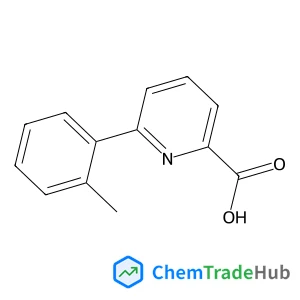
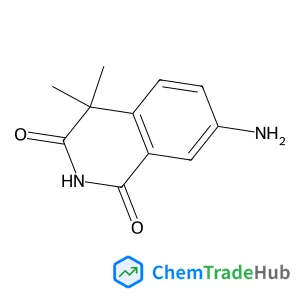
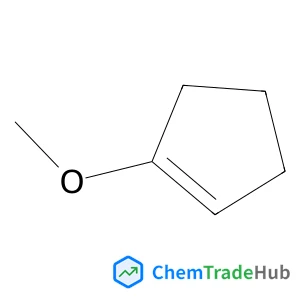
推荐供应商






免责声明
本页面提供的学术期刊信息仅供参考和研究使用。我们与任何期刊出版商均无关联,也不处理投稿事宜。如有投稿相关咨询,请直接联系相关期刊出版商。
如发现页面信息有误,请发送邮件至 support@chemtradehub.com 联系我们。我们将及时核实并处理您的问题。